
Our insights on responsible governance and integrity

Articles

Videos

Creating Certainty in an Uncertain World: The Evolving Role of Gatekeepers.

OECD Global Anti-corruption and Integrity Forum 2025

Powering the Future: Integrity to Drive Net Zero

World Economic Forum - Strategic Intelligence 2025

The Integrity Advantage: A Blueprint for SMEs

World Economic Forum - Strategic Intelligence 2024

Business integrity in real estate: Tackling illicit financial flows

World Built Environment Forum 2024

Navigating Compliance Amidst Global Uncertainty

World Economic Forum - Strategic Intelligence 2024

Being Honest about Governance

World Economic Forum - Annual Meeting 2024

Defending Transparency

World Economic Forum - Annual Meeting 2023

Investing Responsibly in Sustainable Governance 

World Economic Forum - Annual Meeting 2022

The Role of Anti-Corruption Amid the ESG Revolution

International Anti-Corruption Conference (IACC) 2022

What’s Next for Tech for Integrity: Emerging Opportunities, Persisting Challenges & Potential Risks

International Anti-Corruption Conference (IACC) 2022

Uniting Gatekeepers Against Illicit Financial Flows – A Framework for Action

UN Special session of the General Assembly against corruption 2021

In Good Governance We Trust 

World Economic Forum - Sustainable Development Impact Summit 2021

Corruption and Democracy

World Economic Forum - Annual Meeting 2020

Publications

Investing in Integrity in an Increasingly Complex World: The Role of Anti-Corruption amid the ESG Revolution

June 2022

Defining the ‘G’ in ESG: Governance Factors at the Heart of Sustainable Business

June 2022

The Role and Responsibilities of Gatekeepers in the Fight against Illicit Financial Flows: A Unifying Framework

June 2021

Podcasts

Transformation maps

Transformation Maps are the World Economic Forum’s dynamic knowledge tool  driven by an intelligent system that lets users explore and make sense of complex and interlinked forces that are transforming economies, industries and global issues. The map below present insights on governance topics written by experts.

Learn more 

Keir Starmer’s administration is attempting to reform the UK civil service, expressing dissatisfaction with its performance and highlighting an urgency for change. Reforms include performance reviews for officials, minimizing the influence of regulators, and promoting the use of artificial intelligence to enhance productivity. Starmer advocates for "mission-led government," focusing on long-term goals, inter-agency cooperation, greater autonomy for frontline staff, and input from external organizations. However, significant challenges exist due to entrenched practices in Whitehall, a rigid accountability system, and skepticism about empowering outside interest groups in the policy process.
Financial services
Keir Starmer’s civil service reforms: what is mission-led government and why is it so hard to achieve?

The recent dispute within the Reform party, involving Nigel Farage and suspended MP Rupert Lowe over alleged violence, has not diminished public support for the party. A March 10 YouGov poll shows Reform at 23%, maintaining competitive positioning with Labour and Conservatives. The party has shifted from attracting protest voters to establishing a stable base centered on English nationalism, akin to the SNP in Scotland. Evidence suggests a strong negative correlation between Reform's vote share and the number of spoilt ballots, indicating it appeals to potential protest voters. Additionally, there is a significant correlation between support for Reform and English identity, suggesting a growing base of loyal supporters.
United Kingdom
Two charts that explain why Reform isn’t being dented by its scandals

The Supreme Court is actively working to limit administrative power, a strategy linked to broader conservative legal and political movements. This trend can be traced back to the 1930s, where judicial resistance to federal governance caused a constitutional crisis. The potential overturning of the Chevron doctrine could undermine agencies' authority to interpret ambiguous laws, jeopardizing environmental protections, financial regulations, and public health policies. Recognizing this historical context is crucial for anticipating future legal and political conflicts regarding government roles in American society.
The Supreme Court and the Dismantling of Government Power

Iraqi Kurdistan is experiencing a severe economic crisis characterized by delayed and unpaid salaries for public sector workers, averaging $50,000 owed per employee. This situation stems from ongoing political and financial conflicts between the Kurdish Regional Government (KRG) and Iraq's federal government, particularly over oil revenue management and territorial disputes. Economic downturns, exacerbated by inadequate public services and a weak private sector, have led to widespread frustration and dependency on government jobs. Mismanagement of oil revenues by the ruling elite has resulted in significant public suffering, debt accumulation, and social issues, such as rising divorce rates.
Iraqi Kurdistan faces a deepening economic crisis as unpaid wages pile up

Geopolitical shifts are disrupting globalization and intensifying systemic risks, necessitating anticipatory governance as a proactive decision-making strategy for governments and organizations. This approach enables entities to foresee, prepare for, and mitigate crises, fostering the agility needed in a volatile multipolar world marked by trade wars, economic decoupling, and shifting alliances. Rapid changes, such as climate impact and the rise of AI, demand effective forecasting through advanced predictive analytics. However, early warnings often face delays due to bureaucratic inertia, highlighting the need for institutionalized early action and local resilience to navigate future challenges.
Latin America | Financial services, Health, Education
Building an anticipatory governance strategy for an increasingly risky world

The global illicit drug trade is valued at over half a trillion US dollars annually, with major revenue sources in Colombia, Bolivia, China, Afghanistan, and Southeast Asia. Most profits are generated by various dealers along the supply chain, where about 70% to 80% of revenue is retained by local wholesalers and retailers in high-demand countries like the US and UK. Money laundering plays a crucial role, using techniques such as offshore wire transfers, shell companies, and cash businesses. Professional money launderers often collaborate with drug cartels, facilitating the transfer of large sums, as exemplified by a case involving TD Bank and networks linked to the Sinaloa cartel.
Afghanistan, Burkina Faso, Colombia, Mexico, Myanmar, Pakistan | Financial services
Money laundering plays a key role in every part of the illegal drugs industry – here’s how it works

A high-level international conference will be held in Ljubljana, Slovenia, from March 10 to 11, 2025, organized by the Ministry of Justice of Slovenia and the Global Initiative against Transnational Organized Crime with UK support. This event follows previous conferences in Šibenik, Croatia, and Tirana, Albania, and aims to unite representatives from various sectors to address enhancing integrity within criminal justice systems. Participants will focus on combating corruption, sharing experiences, and promoting effective anti-corruption strategies to ensure responsible public resource management and to address connections between organized crime and corruption.
Croatia, Serbia, Slovenia
Towards the EU: Enhancing Integrity and Independence of Criminal Justice in the Western Balkans

A second online dialogue on environmental crime was hosted on January 23, 2025, by the Global Initiative Against Transnational Organized Crime (GI-TOC) and the Government of France. The event focused on persistent obstacles in combating environmental crime, including geopolitical tensions, weak implementation of conventions, and poor coordination between agencies. It aimed to provide a platform for stakeholders to discuss challenges and develop strategies within the multilateral system. The series of dialogues seeks to align political priorities with actionable solutions and inform upcoming international meetings, including the UN Crime Congress in 2026.
Health
Second Security and Development Dialogue on Environmental Crime
The report outlines strategies to combat corruption and enhance integrity in law enforcement within the SSG/R framework. It defines law enforcement corruption as abuses for personal gain, emphasizing drivers like low pay and weak oversight. Five key interventions are proposed: assessing corruption risks, strengthening ethical codes, enhancing accountability in investigations, improving HR management, and reinforcing financial oversight. Essential lessons highlight the need for senior leadership commitment, a systems approach to reforms, local adaptation of standards, and the importance of whistleblower protection. The report underscores that measuring impact requires time as institutional changes evolve gradually.
Corruption control and integrity-building in law enforcement

The justice system has repeatedly failed innocent individuals, leading to wrongful convictions and prolonged imprisonment. Notable cases include Sean Hodgson, who served 27 years for a crime he didn't commit, and Sam Hallam, wrongfully jailed at 17 despite evidence proving his innocence. The article highlights the persistence of miscarriages of justice, pointing to historical examples like the Birmingham Six and Guildford Four. Despite public perception that such issues have been resolved, a resurgence of wrongful convictions suggests systemic flaws remain, raising concerns about the integrity of the criminal justice system.
Convicting the innocent: how a rotten system ensures miscarriages of justice will continue
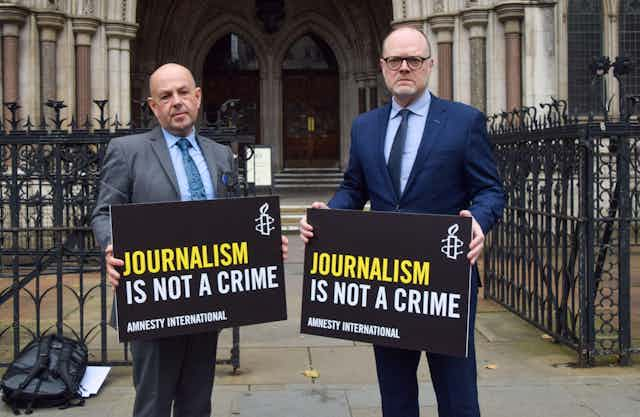
The Investigatory Powers Tribunal ruled that the Police Service of Northern Ireland (PSNI) and the Metropolitan Police unlawfully surveilled journalists Barry McCaffrey and Trevor Birney, leading to £4,000 in damages. Their arrests in 2018 over leaked documents from their documentary about the Loughinisland massacre were deemed unlawful. The PSNI's extensive surveillance practices, including monitoring communications of numerous journalists, have raised concerns about press freedom and the legitimacy of covert policing. The tribunal highlighted that the PSNI failed to demonstrate a public interest justification for their actions, undermining trust in policing.
Police in Northern Ireland unlawfully spied on journalists – this is not how covert policing is meant to work
Netflix’s drama "Toxic Town" recounts the true story of women from Corby, UK, who had children with limb differences in the 1980s and 90s due to pollution from local steelworks. The show highlights their struggle for justice while emphasizing the dangers of weakened environmental protections. Following the industrial decline, hazardous waste was poorly managed, leading to toxic dust exposure for residents. The case established a significant link between airborne pollution and birth defects, with the council found liable for negligence. The narrative serves as a critical reminder of the ongoing challenges in environmental regulation.
Netflix’s Toxic Town offers a stark warning on environmental rollbacks
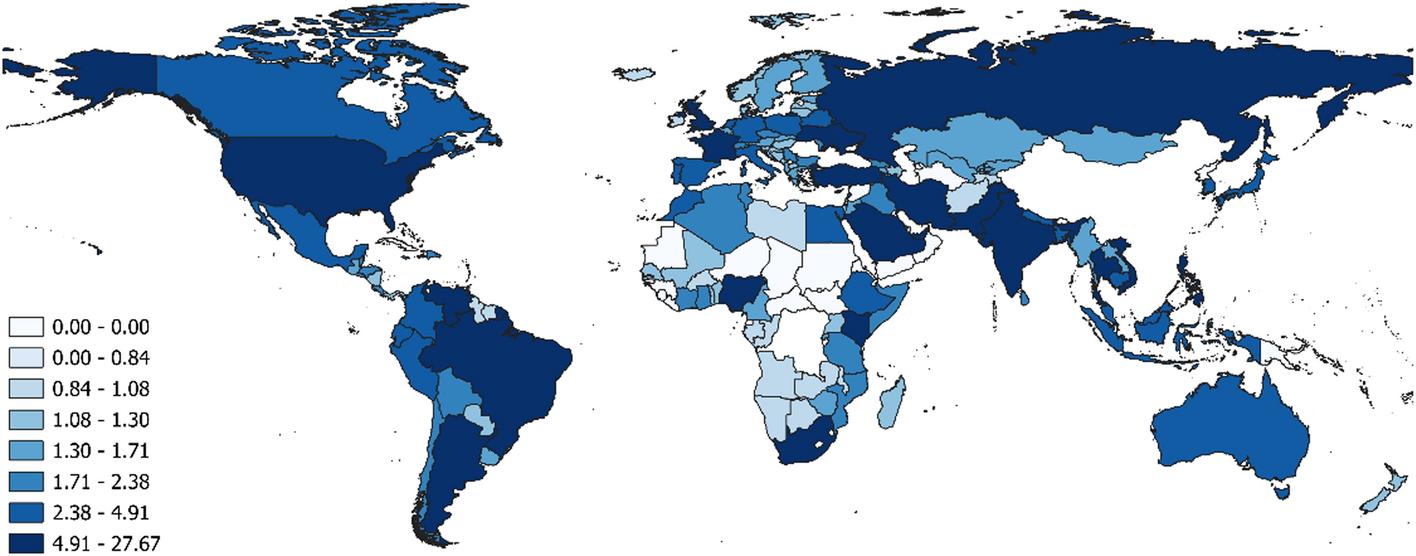
Cryptocurrency adoption is rapidly increasing, driven by pricing dynamics and economic instability, particularly in countries with unbanked populations and high inflation. This study employs Generalized Linear Models and Spatial Autoregressive Models to analyze global adoption patterns, revealing that factors such as infrastructure availability and spatial dynamics significantly impact adoption rates. Countries with limited access to traditional financial systems experience higher cryptocurrency adoption. The research emphasizes the evolving perception of cryptocurrencies as alternatives to conventional banking, with notable growth observed in nations like El Salvador, China, Lebanon, and Nigeria.
Austria, Azerbaijan, Bahrain, Barbados, Benin, Bolivia, Burkina Faso, Cambodia, Chad, Cyprus, Egypt, El Salvador, Gabon, Georgia, Ghana, Hungary, Ireland, Jamaica, Jordan, Kazakhstan, Luxembourg, Malaysia, Malta, Moldova, Morocco, Russian Federation, Singapore, Taiwan, China, Thailand, Tunisia, Ukraine, Zambia, Zimbabwe | Financial services
Global surge: exploring cryptocurrency adoption with evidence from spatial models

Homeless individuals in the UK, like 32-year-old Patrick, face modern slavery due to addiction. Over the past five years, more than 59,000 potential victims have been identified, often exploited through forced labor in various sectors or subjected to sexual exploitation. Patrick’s addiction to the drug G linked him to an older man who manipulated and abused him for sex in exchange for basic necessities. Legal cases have highlighted the exploitation of homeless people, particularly those with addictions, showing a direct connection between their vulnerabilities and victimization.
Homeless Britons say cost of addiction is forcing them into modern slavery – so why are they not being recognised as victims?

Istanbul Mayor Ekrem İmamoğlu faces two legal investigations, including charges of “insulting and targeting a public official” and “attempting to influence a trial.” This legal action is viewed as part of Turkish President Erdoğan's strategy to eliminate potential challengers ahead of the 2028 elections. Erdoğan's regime has increasingly targeted the opposition, particularly through judicial means, raising concerns over the erosion of political rights and freedoms. The appointment of state trustees in municipalities previously governed by the opposition signals a broader crackdown that threatens the integrity of future elections in Turkey.
Turkey’s Authoritarian Drift Accelerates: Istanbul Mayor Faces Imprisonment

Former Labour MP Mike Amesbury has been sentenced to ten weeks in jail for assaulting a man in Runcorn. Although he has lost the Labour whip and now serves as an independent MP, current parliamentary rules allow him to remain in office as the sentence is under a year. The public can potentially initiate a recall petition if certain conditions are met, but this process hinges on his appeal outcomes. Recall triggers include convictions resulting in imprisonment or significant suspensions from the House, with a petition requiring 10% of registered voters' support to succeed.
Labour’s Mike Amesbury has been jailed for punching a man – here’s why he’s still an MP

Mike Amesbury, MP for Runcorn and Helsby, received a ten-week prison sentence after pleading guilty to assaulting a man. His Labour whip has been withdrawn, but he can continue serving as an independent MP due to the short length of his sentence. Current regulations allow MPs convicted of minor offenses to remain in office unless sentenced to over a year in prison. Additionally, under the Recall of MPs Act, constituents can initiate a recall petition if he exhausts his appeal and meets specific criteria.
Mike Amesbury guilty of punching a man – here’s why he’s still an MP
Wales is considering measures to penalize elected politicians and candidates who deliberately lie, with aims to restore trust in politics ahead of the 2026 Senedd elections. Proposed options include defining political deception, banning misleading statements, and implementing sanctions like formal retractions or voter recall. However, making deception a criminal offense was not recommended. Public surveys indicate a significant decline in trust, with politicians being the least trusted profession. Proposed reforms also suggest appointing lay members to oversee complaints about conduct, amid concerns regarding the enforcement and potential politicization of disqualification processes.
Wales wants to punish lying politicians – how would it work?

US aid reorganization is projected to significantly disrupt economies, with several experiencing up to a 3% drop in gross national income (GNI) by 2025. The private sector must actively participate in sustaining civil society rather than relying solely on traditional aid. A collapse of civil society threatens essential governance, community engagement, and innovation, impacting both citizens and businesses. Corporate actors are urged to identify at-risk social ecosystems and create partnerships to preserve critical assets. The establishment of a “people and planet” fund is necessary to provide sustainable financing for poverty reduction and climate resilience. Collaboration with civil society is crucial for economic development and addressing global challenges.
Financial services, ICT, Education, Health
Why businesses must step up to sustain global civil society

Elon Musk's Department of Government Efficiency has implemented a $1 spending limit on credit cards for employees of the General Services Administration (GSA) and several other federal agencies, with broader restrictions anticipated across the government. This decision follows efforts to simplify the government credit card program and reduce costs. Employees will face significant challenges in their workflows, as existing procedures for travel and purchase expenses become more complicated. The GSA manages the SmartPay program, which includes over 250 agencies. Critics argue the restrictions may not effectively address rare instances of fraud, while Musk's team has been accused of misrepresenting findings related to government expenses.
DOGE Puts $1 Spending Limit on Government Employee Credit Cards

PACI Community

A World Economic Forum Initiative