Description
Bridge financing is a temporary funding solution designed to cover a company or project short-term expenses until it secures long-term financing. All-equity bridge financing means that the temporary funding is equity rather than debt as bridge loans typically carry very high interest rates.
Benefits
All-equity bridge financing offers several advantages in project finance. Like other forms of bridge financing, it can be secured more quickly than long-term financing. Additionally, all-equity bridge financing allows equity investors to absorb specific risks associated with phases of the project too risky for debt investors. It can mitigate the financial risk and enhances the project's overall attractiveness to future debt financiers by demonstrating initial progress and stability.
Case Study
AFC all-equity bridge financing for 60MW Djibouti wind farm
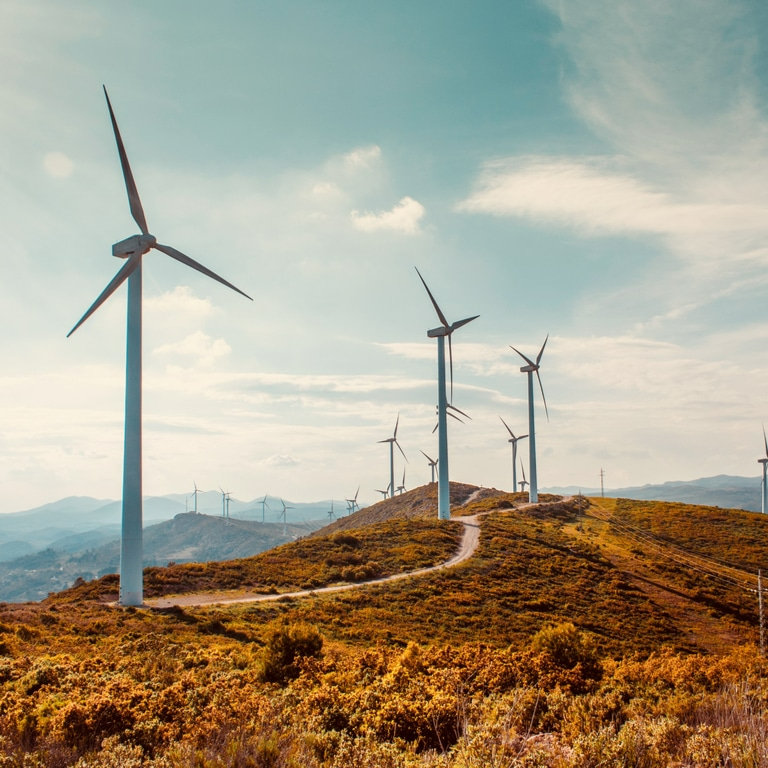
Between 2018 and 2020, the Africa Finance Corporation (AFC) – as lead developer of the Red Sea Power (RSP) 60MW wind farm in Djibouti – initiated an all-equity bridge financing to advance the project.
The use of all-equity bridge financing helped de-risk the project's initial phases, separating construction risk from operational risk, and making it more attractive to subsequent investors. This approach not only mitigated early-stage risks but also showcased the project’s commercial viability, paving the way for future investments in the region.
This de-risking and financing approach was pivotal for attaining financial close in ~2 years (as compared to the 3-5 years it typically takes projects in the continent), and enabled the project to commence construction in January 2020, despite global supply challenges due to COVID-19 lockdowns.
The innovativeness of this approach is testament to the solution-oriented mindset required to get projects done on the continent. It also illustrates that capital can be raised in relatively “difficult” markets for projects that are well structured with risks appropriately mitigated. As the first IPP in the country, this project helped build capacity and knowhow within the Government and established bankable templates for project documents that can now be leveraged by future projects and investors.
This project also underlined the importance of quality partners in development: AFC’s financial and technical capacity, together with contributions from the Dutch development bank (FMO) and Climate Fund Managers (CFM), and coupled with the ability of the local sponsor to intervene on the ground were all critical to this success.
Additional Sources
- https://corporatefinanceinstitute.com/resources/commercial-lending/bridge-financing/
- https://www.fmo.nl/news-detail/438cc35f-3075-4c21-a058-8899fc24564f/djibouti-inaugurates-red-sea-power-country-s-first-wind-farm
- https://www.africafc.org/news-and-insights/news/djibouti-inaugurates-debut-wind-farm-a-milestone-in-quest-to-be-first-african-country-fully-reliant-on-green-energy
- AFC Presentation during WEF virtual meeting of the Deputies (Network to Mobilize Investment for Clean Energy in the Global South), 18 April 2024