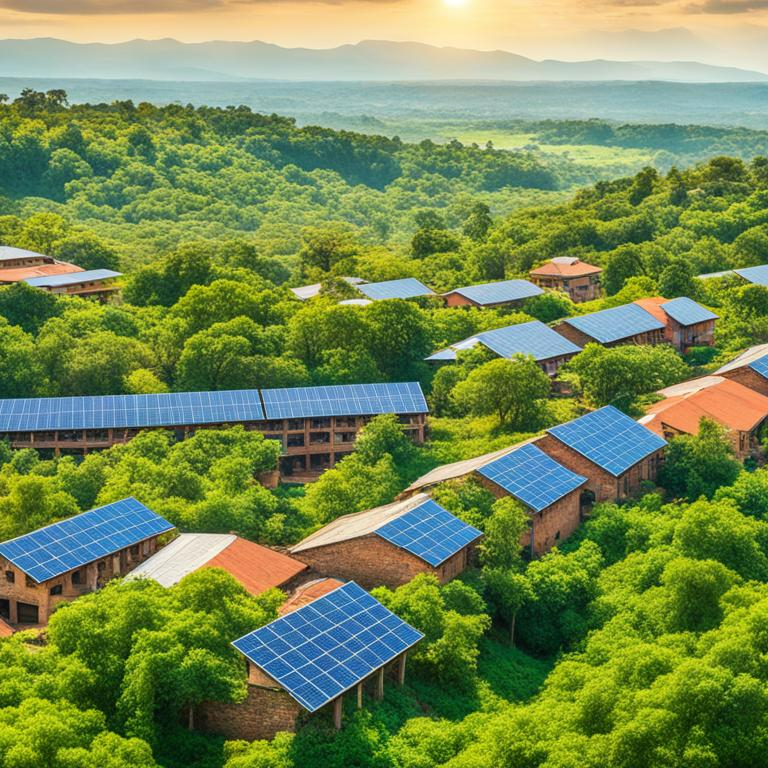
Description
The Clean Development Mechanism was a project-based mechanism established in 2006 under the Kyoto Protocol, allowing industrialized countries and sometimes companies with emission-reduction commitment to invest in emission reduction projects in developing countries. In return, the investing country received Certified Emission Reductions (CERs) that could be used to meet their own emissions reduction targets. A CDM project had to achieve emission reductions beyond what would have occurred without the project, requiring approval through a thorough registration process by Designated National Authorities (DNA). While the CDMs expired at the end of the Kyoto Protocol in 2020, a number of projects built under this mechanism are still in operation. Moreover, the CDM concept itself provides useful inspirations for potential future mechanisms facilitating investments in clean energy in EMDEs.
Benefits
CDMs facilitated investment in emission reduction projects in developing countries by improving their financial viability. The sale of CERs generated revenue, making projects more attractive to investors and enabling further capital inflows. The CDM scheme also encouraged foreign investment, often from diverse international sources, and contributed to cost-effective compliance with emission reduction commitments. In addition, the mechanism promoted market efficiency by incentivizing projects with low abatement costs, thus ensuring an optimal allocation of resources for sustainable development.
Case Study
CDM biomass conservation program in Malawi
In 2019, the Malawi Government approved a Clean Development Mechanism for a biomass energy conservation program. The program led to the switch from traditional three-stone fires to the Chitetezo Mbaula stove. This project reduced particulate emissions by 46% and carbon monoxide emissions by 44%. The Chitetezo Mbaula, handmade from local materials, significantly reduced firewood consumption, with optimal stoves achieving up to 80% efficiency gains. This was crucial for Malawi, which experienced 57% deforestation from 1972 to 1992, as it helps combat further deforestation.
Modifications and lab tests showed that simple adjustments, like adding air holes and reducing the pot gap, increased the stove's thermal efficiency. Further enhancements, including the addition of a Jet-Flame and a metal skirt, boosted efficiency to +45% and significantly reduced emissions. The project, supported by organizations like United Purpose and funded through CO2 credit sales, has led to income generation and skills diversification in local communities.
Additional Sources
- https://unfccc.int/process-and-meetings/the-kyoto-protocol/mechanisms-under-the-kyoto-protocol/the-clean-development-mechanism
- UNFCCC, Benefits of the Clean Development Mechanism, 2012, https://cdm.unfccc.int/about/dev_ben/ABC_2012.pdf
- https://www.persefoni.com/blog/carbon-offset-programs
- https://offset.climateneutralnow.org/biomass-energy-conservation-programme?searchResultsLink=%2Fee-households
- https://cdm.unfccc.int/UserManagement/FileStorage/AG250T71CBWRXJI34LKHEMY8OS6N9D
- https://offset.climateneutralnow.org/biomass-energy-conservation-programme?searchResultsLink=%2Fee-households