Challenges to investment
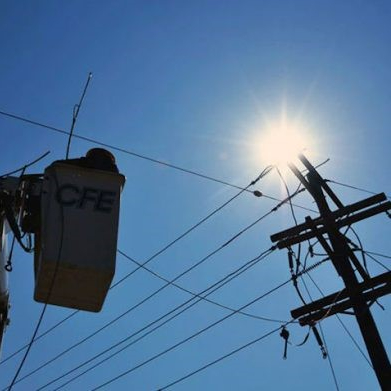
Mexico’s energy reform (2013-2014) transformed the state-owned electricity company, the Federal Electricity Commission (Comision Federal de Electricidad, CFE) into a holding company with exclusive rights over transmission and distribution. However, the national energy grid came under the supervision of the independent National Energy Control Center (Centro Nacional de Control de Energía, CENACE), which guaranteed access to the transmission and distribution networks. The idea was to provide equal conditions for all market participants. However, underinvestment and outdated guiding frameworks and compliance standards threatened the grid stability, where the grid was fully utilized (saturated) and demand exceeded the grid’s capacity to carry power (congestion). As a result, overcharges, disruptions, and blackouts led to inefficiencies and an unreliable electric supply. Hence, Mexico needed to develop a new set of technical and operational regulations in order to ensure safety, reliability, and efficiency.
Approach
On 8 April 2016, the initial Grid Code (Código de Red, GC) became mandatory in Mexico, and had been updated several times since then. The GC is an official document outlining a series of rules and technical criteria set by the Energy Regulatory Commission (Comisión Reguladora de Energía, CRE). All users of the electricity system are required to comply with the GC, including generators, transmission and distribution agents, business consumers and all load centers connected at medium and high tension, regardless of their consumption level.
The GC sets national standards in efficiency, quality, reliability, continuity, safety, and sustainability for the electric system. Specifically, mid- and high-tension users with a demand greater or equal to 1 MW have to maintain an average power factor of at least 0.95 during 95% of the time. Th GC also states that power factor might only drop below 0.95 for up to 36 hours during a month. Failure to comply with the GC could be sanctioned with (i) a penalty of 2-10% of the company’s previous year gross income revenue or (ii) a penalty of 50,000 to 200,000 times the daily minimum wage, depending on the degree of violation.
Key Enabling Conditions
The urgency of providing reliable electricity supply and avoiding economic costs forced the CRE to address grid stability by implementing new compliance rules. The updated grid code, in adherence to the mandate of the Energy Reform, demonstrated the commitment to keep up the requirements as technologies and new market conditions advanced.
Impact / Outcomes
One key outcome of the GC has been the reliable standards for the National Electric System (Sistema Eléctrico Nacional, SEN)’s operational and planning activities. In addition, Mexico’s electric infrastructure improved in terms of measurement, control, and usage. The average total duration of outages (in hours) experienced by a customer in a year declined from 0.79 in 2014 to 0.58 in 2019. Along with other reforms (i.e., General Act on Climate Change [2012], Energy Reform [2013], Energy Transition Act [2020]), the GC supported the integration of renewable energy sources by establishing specific conditions for their connection and operation. Between 2017 and 2021, generation from renewable sources grew from 19% to 27%. Finally, the GC set equitable rules for all users and thereby encouraged competition as well as new market entries. Thus, consumers benefited from competitive prices and technological innovations.
Additional Sources
- Chanona Robles, A. (2016), Tracking the progress of Mexico’s power sector reform, https://www.wilsoncenter.org/sites/default/files/media/documents/publication/tracking_progress_of_mexicos_power_sector_reform.pdf
- Geddes, A., et al. (2020), Rethinking Eskom: Lessons from electricity sector reform in India and Mexico, https://www.iisd.org/system/files/publications/rethinking-eskom.pdf
- IMCO (2022). The Energy Mexico needs: Infrastructure, Regulation, and Rule of Law for a Sector that Triggers the Country’s Competitiveness, https://imco.org.mx/en/wp-content/uploads/2024/04/The-energy-Mexico-needs-2022.pdf
- IRENA (2022). Grid Codes for Renewable Powered Systems, https://www.irena.org/-/media/Files/IRENA/Agency/Publication/2022/Apr/IRENA_Grid_Codes_Renewable_Systems_2022.pdf
- Linvill, C., Brutkoski, D. (2017), Designing Distributed Generation in Mexico, https://www.nrel.gov/docs/fy17osti/66026.pdf
- https://enerlogix-solutions.com/en/grid-code-compliance/
- https://www.globalcompliancenews.com/2022/01/24/mexico-energy-regulatory-commission-issues-new-network-code130122/
- https://grupoindustronic.com/en/how-important-is-the-grid-code/
- https://mexicobusiness.news/energy/news/new-house-rules-grid-code-20
- https://prosperitydata360.worldbank.org/en/indicator/WB+DB+55