Challenges to investment
Despite Egypt’s clear and comprehensive Sustainable Energy Strategy to 2035, launched in 2016, which emphasized the importance of renewable energy (RE) with clear targets, initial progress was limited due to barriers in project implementation and financing. The Strategy set the target for renewable sources to provide 20% of electricity generation by 2022, which is further complemented by the 42% target by 2030, as per the latest Nationally Determined Contribution announced in July 2023. In the years leading to these latest policy developments, the private sector was expected to play a pivotal role in achieving these targets, yet faced challenges including domestic financial constraints, high perceived risk for first movers, infrastructure limitations, and a need for enhanced institutional capacity for administering RE tenders.
Approach
On 20 February 2017, the Green Climate Fund (GCF) and the European Bank for Reconstruction and Development (EBRD) proposed the Egypt Renewable Energy Financing Framework, which was approved in April of that year. The GCF-EBRD framework aimed to overcome the investment barriers in RE through a two-component approach.
Component 1 focused on enhancing RE integration, policies, and planning through a technical assistance program comprising three sub-components: (i) enhancing planning and RE integration, (ii) enhancing capacity for administering RE tenders, and (iii) promoting gender equality in accessing and benefitting from employment and economic benefits related to RE development.
Component 2 aimed to increase investment in RE by combining financing from the EBRD and the GCF and mobilizing additional debt financing from international and development finance institutions, as well as private sector investment. The GCF-EBRD framework supported the development and construction of RE projects with a total value of USD 1 billion. The GCF and the EBRD provided up to USD 500 million in debt financing, with USD 150 million in loans from the GCF, co-financing up to 15% of the total project cost in each individual project. The EBRD provided financing representing up to 35% of project costs, with other international or development financial institutions or commercial lenders expected to provide the remaining debt. The private sector contributed 25% of project costs (USD 250 million) in the form of equity.
Key Enabling Conditions
The EBRD's reputation and experience in financing large-scale energy generation projects, as the executing entity, played a crucial role in attracting private investments and positively influencing the risk perception of private investors. Moreover, the Feed-in Tariff (FiT) framework was crucial in attracting investors to the Egyptian market and building trust in the regulatory framework. Finally, the GCF-EBRD framework was comprehensive, covering both the financial aspects of the projects and providing technical assistance for integration and institutional support.
Impact / Outcomes
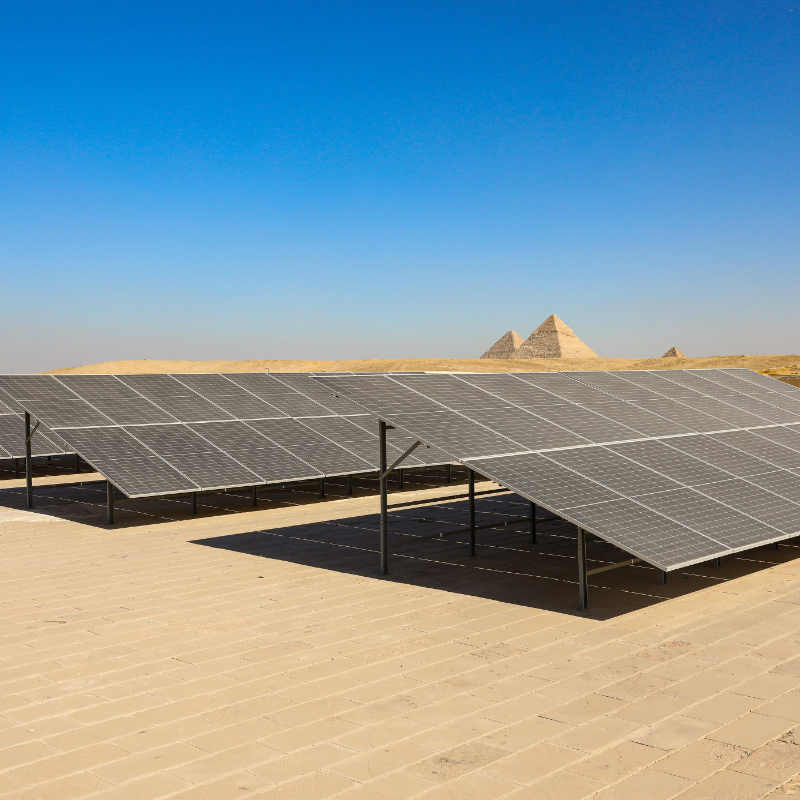
The GCF-EBRD framework helped clean energy projects in Egypt like the Benban solar megapark to tap international capital markets for both debt and equity funding, accelerating investment in the sector. In 2020 alone, RE projects implemented under the GCF-EBRD framework generated 1,178 GWh of electricity and avoided over 684 ktCO2 in GHG emissions that year.
During its conception, the proponents of the GCF-EBRD framework expected the RE projects would generate 1,400 GWh of electricity annually and avoid GHG emissions of about 800 ktCO2 per year once all projects were operational. In particular, the completion of the Benban solar park and other capital-intensive wind projects in the Gulf of Suez increased Egypt's RE generation capacity to 5,878 MW, compared to 3,487 MW in 2015, reflecting an increase of 68.6%.
Furthermore, technical assistance provided within the framework to the Egyptian Electricity Transmission Company (EETC) has strengthened its capacity for managing renewable energy competitive tenders. This support facilitated the adoption of reverse auctions, which have significantly driven down the costs of bids for producing renewable energy, complementing the earlier implementation of the feed-in tariffs program. These auctions have reduced the price of bids submitted by renewable energy providers to EETC from around 8.5 cents per kilowatt-hour to approximately 3 cents per kilowatt-hour. As a result, the framework led to the successful award of the 200MW Kom Ombo tender, Egypt's first solar competitive tender, achieving a record low tariff of 2.47 US cents/kWh.
Additional Sources
- GCF-EBRD (2020). FP039 GCF-EBRD Egypt Renewable Energy Financing Framework:
- Annual Performance Report 2020, https://www.ebrd.com/documents/donor-co-financing/egypt-renewables-public-apr-2020.pdf
- GCF-EBRD (2017). Funding Proposal: FP039: GCF-EBRD Egypt Renewable Energy Financing Framework, https://www.greenclimate.fund/sites/default/files/document/funding-proposal-fp039-ebrd-egypt.pdf
- GCF-EBRD (2017). Environmental and Social Management System (ESMS), https://www.ebrd.com/sites/Satellite?c=Content&cid=1395255104365&d=&pagename=EBRD%2FContent%2FDownloadDocument
- GCF-EBRD (2022). Revised Environmental and Social Management System (ESMS), https://www.ebrd.com/sites/Satellite?c=Content&cid=1395306969452&d=&pagename=EBRD%2FContent%2FDownloadDocument
- https://www.greenclimate.fund/document/environmental-and-social-safeguards-ess-report-fp039-gcf-ebrd-egypt-renewable-energy
- https://www.greenclimate.fund/news/climate-finance-drives-down-renewable-price-in-egypt-by-half
- https://www.greenclimate.fund/project/fp039