Description
Corporate Power Purchase Agreements (CPPAs) allow corporate buyers to commit to purchasing a specified volume of electricity over a predetermined period, often spanning several years. The contract stipulates a fixed price or a predefined escalation rate, offering the offtaker long-term confidence while the buyer enjoys cost stability and potential savings relative to conventional utility rates. There are two main types of CPPAs: physical CPPAs (e.g., one-site, off-site), and virtual CPPAs.
CPPAs are “physical” when green electrons are either delivered on-site to the buyer of transmitted through the grid to an off-site facility, provided both parties are in the same electricity market to allow for physical delivery. These agreements detail key aspects such as commercial operation date, delivery schedules, penalties for underperformance and payment terms. The corporate customer receives the actual electricity generated along with Renewable Electricity Certificates (RECs). The seller typically remains responsible for the operation and maintenance of the facility.
Unlike physical CPPAs, virtual CPPAs are financial instruments that do not involve the physical flow of electricity between the corporate buyer and the renewable energy project. Instead, the electricity generated is sold on the wholesale market. The contract sets a fixed price for the electricity, known as the “strike price”. If the market price exceeds the strike price, the buyer receives the difference. Conversely, if the market price falls below the strike price, the buyer pays the difference. The buyer also receives the associated RECs and benefits from the environmental attributes of the renewable energy produced.
Benefits
In an EMDE context, CPPAs help hedge against energy price volatility while supporting sustainable energy initiatives. They offer long-term cost stability and predictability for electricity prices and also enable corporates to access renewable energy without bearing the upfront capital costs, as it is the third-party seller who handles system installation and maintenance.
On the generator side, the CPPA provides a predictable revenue stream which assists in customer and risk diversification, and eases access to capital. It also enables developers to construct new renewable infrastructure without relying on government tariffs, especially in regions where renewable resources and electricity prices are strong enough for projects to be economic without such support.
Emerging markets and developing economies with favorable CPPA regimes (e.g., Chile, Taiwan) have seen enhanced foreign investment in clean energy projects. By encouraging new renewable energy projects, these agreements can aid national targets and generate employment.
Case Study
Amazon first offsite CPPA in Indonesia
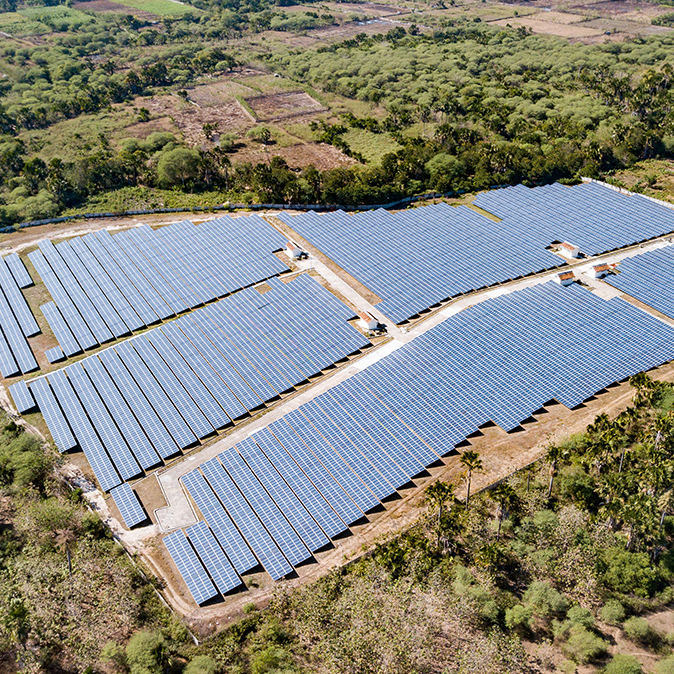
In 2021, Amazon's AWS division entered a 210 MW Corporate PPA with Indonesia's state-owned utility PLN to source power from four solar projects on Bali and Java islands. This agreement represented the first offsite CPPA in Indonesia, marking a significant step in Amazon's commitment to decarbonize its global operations by 2025.
Historically, CPPAs in Indonesia were challenging due to PLN's exclusive rights to sell electricity, alongside regulatory hurdles. However, policy shifts and Indonesia's ambitious renewable energy targets have started to foster a more favorable environment for corporate clean energy procurement. This growing trend was further exemplified by Nickel Industries' decision earlier in the year to secure over 400 MW of solar power through long-term PPAs. These developments indicate a maturing CPPA market in Indonesia, driven by increased corporate demand for sustainable energy solutions and evolving regulatory frameworks.
Additional Sources
- World Economic Forum, Accelerating Renewable Energy Corporate Power Purchase Agreement in Emerging Economies, 2021, https://www3.weforum.org/docs/WEF_Renewable_Energy_Corporate_PPA_2021.pdf
- https://www.enelx.com/n-a/en/stories/physical-ppa-vs-virtual-ppa
- https://www.epa.gov/green-power-markets/physical-ppa
- https://www.energy-storage.news/acwa-signs-ppa-with-south-africa-state-for-1-2gwh-hybrid-project/
- https://enerdatics.com/blog/corporate-ppa-amazon-signs-first-renewable-energy-ppa-in-indonesia-agrees-to-off-take-210-mw-of-solar-power/