Challenges to Investment
In the 2000s, electricity demand in Thailand was increasing by 4-5% per year. The Thai government sought to reduce its dependence on fossil-fuel generation, which represented 81% of total energy supply in 2007 and was reliant on imports. Despite a goal to raise renewable energy to 20% of final energy consumption by 2022 (per Thailand’s Renewable Energy Development Plan 2008-2022), subsidies for fossil fuels meant solar and other renewables were not competitive. Potential renewables investors also faced high duties on imported equipment, limited participation from local banks, constrained fiscal support for investment, and restrictions on foreign investment in energy transmission and distribution (per Foreign Business Act 1999).
Approach
To address these challenges, in 2007, Thailand introduced a policy which provided a feed-in premium, known as an "adder", for eligible clean energy projects (solar, wind, hydro, biogas). The adder had a simple, easy-to-understand structure for investors to estimate project returns and reduce risk, encouraging adoption by guaranteeing an electricity purchasing price. The premium added THB 8/kWh (USD0.27/kWh) on top of the base tariff for 10 years. In 2010, the rate was reduced to THB 6.5/kWh (USD0.22/kWh), as the measure was over-subscribed and solar energy costs had fallen.
Key Enabling Conditions
By 2007, Thailand had already established key enabling legislation and complementary initiatives that allowed the adder policy to be successful. The Renewable Energy Development Plan (REDP 2008-2022) and, later, the Renewable Alternative Energy Development Plan 2012-2021 (AEDP 2012-2021), set ambitious targets for clean energy deployment, while the Energy Conservation Promotion Act 1992 established the Energy Conservation (ENCON) fund, which supports clean energy projects via equity/debt arrangements, credit guarantees, and technical assistance. Thailand had also established a Carbon Credit guarantee facility and several fiscal incentives for clean energy investment, including import duty exemptions and income tax exemptions for clean energy manufacturing and consulting. The combination of incentives and well-developed policy allowed the simple adder measure to have a greater impact. At the time of writing, the Ministry of Energy (MOE) was in the process of developing the new Power Development Plan (PDP 2024) and the new Alternative Energy Development Plan (AEDP 2024) which respectively aimed to increase the share of RE electricity generation to 50%, and the share of RE consumption to 30% by 2037. These ambitious targets shall act as additional positive signals to boost investors confidence on top of the already strong Feed-in-Tariff (FiT) system put in place since 2013.
Impact / Outcomes
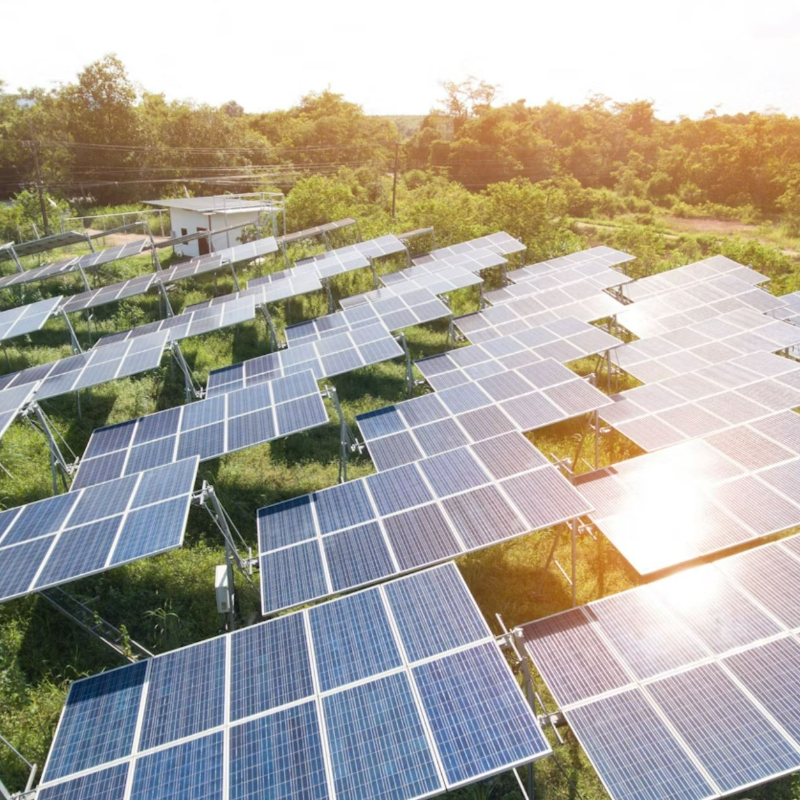
While the measure was an intermediary step to jump start clean energy projects before a Feed-in-Tariff (FiT) was later on introduced [see below], it was very successful in increasing solar energy generation, especially solar farms which contributed 99% of Thailand's solar power capacity by the end of 2013 (782 MW). It also contributed to increased access to electricity, which rose from 94% in 2007 to 99% by 2014 and a 3% increase in renewables’ share of total energy consumption over the same period. However, after some time, the government became concerned that the adder measure was over-subscribed due to the attractive tariff prices, at significant cost to the government. In addition, the adder measure meant that higher electricity costs would be passed on to consumers. As a result, the government temporarily suspended solar energy purchasing and lowered the adder premium in 2010.
In 2013, the government shifted from the adder premium to a fixed Feed-in-Tariff (FiT), creating a more dynamic pricing system based on market prices rather than a fixed premium. Under the current Thai FiT system, energy producers who generate electricity from renewable sources can sell the electricity they produce to the national grid at a predetermined, fixed rate for a specific period. This fixed rate is often set above market prices to encourage investment in renewable energy projects, following a 3-part formula that includes (1) a FiT fixed (FiTF) which is calculated from the cost of power plant construction, operation, and maintenance (O&M) throughout the life of the plant; (2) a FiT variable (FiTV) which is calculated from the cost of fuel used in electricity generation, which changes over time (used for renewable energy in the bioenergy group); (3) a FiT Premium, which incentivizes investment in certain types of fuels, such as waste, biomass, biogas, and select projects that can enhance energy security of the southern provinces.
Additional Sources
- International Institute for Sustainable Development, ‘Incentives for Renewable Energy in Southeast Asia: Case Study of Thailand”, February 2013 https://www.iisd.org/system/files/publications/investment_incentives_thailand.pdf
- International Energy Agency, “Energy Statistics Data Browser: Thailand”, 21 December 2023, https://www.iea.org/data-and-statistics/data-tools/energy-statistics-data-browser?country=WORLD&fuel=Energy%20supply&indicator=TESbySource
- International Renewable Energy Agency, “Energy Profile: Thailand (2023)”, https://www.irena.org/-/media/Files/IRENA/Agency/Statistics/Statistical_Profiles/Asia/Thailand_Asia_RE_SP.pdf
- Economic Research Institute for ASEAN and East Asia, “Status on Renewable Energy SPP and VSPP”, August 2019 https://www.eria.org/uploads/media/8_RPR_FY2018_09_Chapter_1.pdf
- https://citeseerx.ist.psu.edu/document?repid=rep1&type=pdf&doi=02b3767bb1f4c09f5caaf813cb2d4ef3359d47f0
- https://www.researchgate.net/publication/285781983_Assessment_of_Feed-in_Tariff_Policy_in_Thailand_Impacts_on_National_Electricity_Prices
- https://www.adb.org/sites/default/files/linked-documents/49087-001-so.pdf