Description
Investor Accelerator Platforms, or Collective Donor Platforms by Development Finance Institutions (DFIs) refer to frameworks or systems where multiple DFIs collaborate by co-mobilizing resources, sharing knowledge and best practices, and co-financing for specific development initiatives or projects. Key activities include developing missing investment-related intelligence, market analysis, capacity building, engaging DFIs, development partners, regulators, and other stakeholders to enhance the investment environment.
Benefits
In addition to simply crowding funding and mobilizing a higher amount of capital, investor accelerator platforms increase investment readiness in target markets. By collectively addressing DFI-specific challenges such as limited capacity and resources to invest in opportunity identification the platforms enable DFIs to turn unbankable opportunities into bankable projects. Such platforms also support DFIs to access concessional funding and leverage it for scaling impactful development projects and private sector participation.
While not a requirement, investor accelerator platforms often target frontier markets and fragile states, where DFIs have a mandate to provide investment to but have demonstrated mixed investment results. In addition to high-level support from European governments and headquarter offices of DFIs, country-based teams provide long-term sustainable investment in the markets of operation.
Case Studies
1. Africa Resilience Investment Accelerator (ARIA)
ARIA mobilizes investment in frontier markets across Africa. It is supported by the UK’s DFI, British International Investment (BII); FMO, the Dutch entrepreneurial development bank; and Proparco, the private sector financing arm of the Agence française de développement Group (AFD Group).
ARIA operates in seven markets in Africa: Benin, the Democratic Republic of Congo (DRC), Ethiopia, Guinea, Liberia, Sierra Leone and Togo. In these markets, ARIA’s country-based teams develop longer term pipelines of investable opportunities for its funding DFIs; provide technical assistance to local businesses on active deals; and work with a broad coalition of DFIs, companies, investors, governments and donor agencies to help build business-enabling environments.
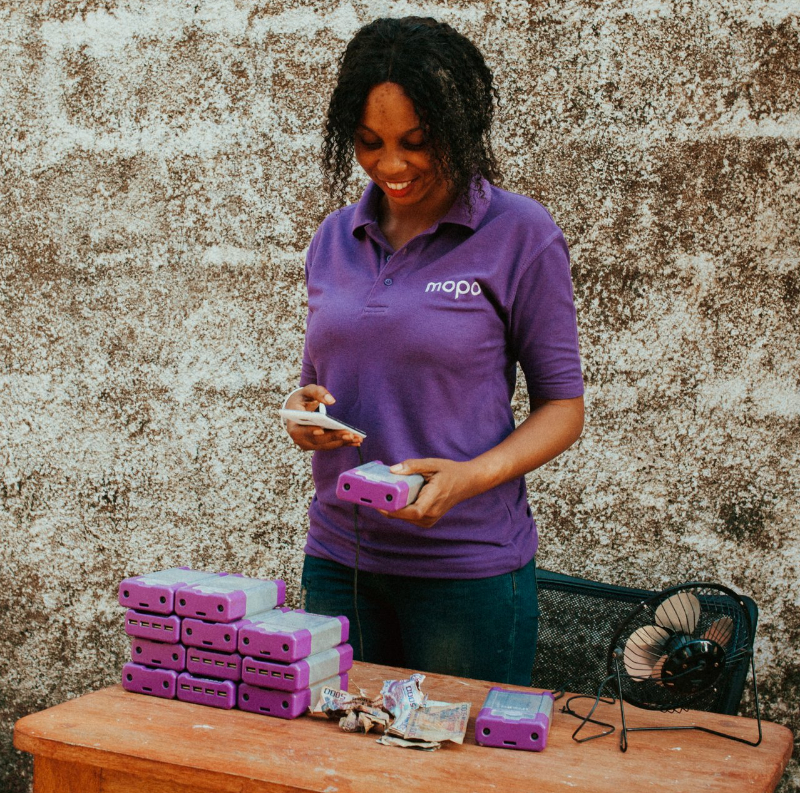
To date, ARIA has identified more than 180 investable opportunities in frontier markets and unlocked more than $50 million in investment. While ARIA works across sectors, energy is a key target for its partner DFIs and the DFI community more broadly. An example of an ARIA-supported energy deal is BII’s $8 million investment in MOPO, a clean energy business operating in the DRC. The company installs solar-powered recharging hubs, which rent MOPO batteries to customers to use in their homes and small businesses.
2. Invest for Impact Nepal (IIN)
Launched in February 2021 by BII, FMO and the Swiss Agency for Development (SDC), the Investment Innovation Network (IIN) is a pioneering collaboration between DFIs and development partners to accelerate transformative foreign investment in Nepal. It aims to drive economic growth, create jobs, and foster an equitable and sustainable economy by supporting financial institutions, private equity, and venture capital funds in accessing DFI resources and expertise, and attracting foreign impact investors to Nepali businesses. After an initial research phase to assess market and ecosystem constraints, IIN began implementation in August 2022. It has been recognized by the Oxford Fragility Forum, the leading forum that brings together DFIs for an action-oriented discussion on how to improve investment in fragile and conflict-affected environments, as one of the most successful global examples of collaboration.
Specially in the field of energy, BII has signed a $15 million trade loan agreement in 2025 with Sanima Bank Limited, an A-class national level bank in Nepal, to support the country’s renewable energy growth with an emphasis on hydropower. This investment will catalyze the import of capital goods related to hydropower development, such as equipment for food, agriculture, and manufacturing.
Additional Sources