Description
Subordinated or mezzanine financing is a hybrid form of capital, positioned between senior debt and equity within a company or project capital structure. This layer of financing typically takes the form of unsecured debt or preferred equity, offering a flexible solution for businesses seeking to bridge the gap between traditional loans and equity financing. Mezzanine investors often have the option to convert their investment into equity, providing them with a potential ownership stake. Sitting between pure equity and senior debt in terms of priority of payment and cost of capital mezzanine’s payment structure often includes interest paid in cash or shares and a component to calculate the conversion of debt-to-equity.
Benefits
Subordinated or mezzanine financing allows to raise capital without significantly diluting existing ownership. Often unsecured and junior to senior debt, it can help secure additional senior loans by leaving collateral free for other lenders. It also helps strengthen the alignment between the company or project and mezzanine investors as they benefit from its growth and profitability. This approach helps reduce the overall cost of capital by balancing a blend of senior debt, mezzanine debt, and equity. For investors, mezzanine financing provides an attractive opportunity, offering high returns compared to traditional debt, along with the potential for equity conversion. Additionally, the interest payments are often tax-deductible, enhancing the investment's overall appeal.
Case Study
In January 2022, Westa.Solar, a subsidiary of Austrian group RP Global, secured a USD 1.5 million mezzanine loan agreement with the Development Bank of Austria (OeEB). The financial resources were provided by the African-Austrian SME Investment Facility (AAIF) of the Austrian Federal Ministry of Finance.
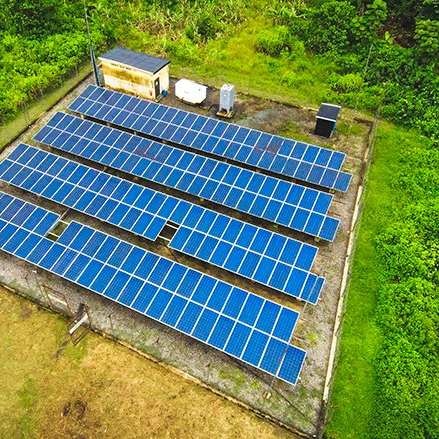
The fund allowed Westa.Solar to accelerate the development of solar projects in Nigeria, with a total of four to six photovoltaic projects being set up, totaling a capacity of 2.5 MW. Projects were to focus on commercial and industrial customers as part of a joint venture with an established Nigerian photovoltaic developer (Oolu). The first reference project, developed in the Nigerian state of Kano involved a 500kWp rooftop photovoltaic system installed on a factory.
Additional Sources
- https://triplejump.eu/wp-content/uploads/2021/08/TJ-EEGF-A2E-Mezzanine-Paper_Final-2.pdf
- https://corporatefinanceinstitute.com/resources/commercial-lending/mezzanine-financing/
- https://assets.bbhub.io/professional/sites/24/BNEF-Financing-India%E2%80%99s-2030-Renewables-Ambition_FINAL.pdf
- https://www.oe-eb.at/en/our-projects/projects-at-a-glance/westa-solar.html
- https://ceobusinessafrica.com/westa-solar-secures-us1-58m-mezzanine-loan-to-develop-solar-projects-in-nigeria/