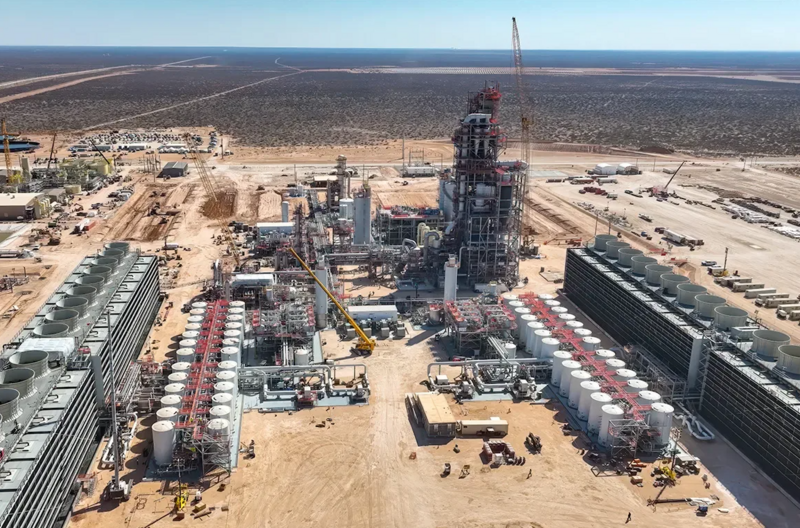
STRATOS - 1PointFive Direct Air Capture: A Path to Decarbonized Fossil Fuels
Description
The STRATOS Direct Air Capture (DAC) facility is engineered to remove atmospheric CO₂ from ambient air using a chemical absorption process with liquid solvents. By lowering the CO₂ concentration in the air stream, the facility delivers measurable carbon dioxide removals. The capture media is regenerated for continuous reuse, producing a concentrated CO₂ stream during regeneration.
At full capacity, STRATOS is designed to capture up to 500,000 metric tons of atmospheric CO₂ per year, operating continuously and co-capturing emissions from on-site fuel combustion. Key inputs will include ambient air, non-potable water, electricity, and natural gas. The primary output is a high purity CO₂ stream, purified and compressed on-site, ready for transport and either storage in a saline aquifer or utilization via Enhanced Oil Recovery (EOR). Only the captured atmospheric CO2 that is stored in a saline aquifer will generate Carbon Dioxide Removal credits (CDRs).
STRATOS and the related transportation and storage infrastructure will enable full measurement and verification of volumes that are captured and sequestered. STRATOS is designed with robust monitoring systems to provide accurate control, quantification, and reporting of CO₂ removal, sequestration and utilization activities.
Lessons Learned
- Managing risks associated with a First-of-a-Kind project at commercial scale. Years of dedicated research, development, and continuous refinement at the pilot facility allowed to validate the DAC technology and determine readiness for full‑scale deployment. This disciplined approach is intended to minimize technical risk and build confidence in the technology
- Building market demand for technological carbon removal credits. Having a predictable market for CDRs and products such as decarbonized fossil fuels will de-risk DAC projects for financiers. To help build the market, this project demonstrates the advantages of DAC and its high integrity, including precise measurement, verifiability, permanence, and transparency.
- Proactively managing regulatory requirements: with Oxy being awarded the first two U.S. Environmental Protection Agency (EPA)‑certified Monitoring, Reporting, and Verification (MRV) programs for CO₂ injection. Today, Oxy operates three EOR facilities within these managed regulatory compliance plans, complemented by transparent reporting, ensuring the highest standards of accountability. Oxy anticipated the rigorous nature and extended timelines associated with US EPA Class VI carbon storage permits for saline aquifer storage and generation of CDRs. By submitting our applications well in advance of the DAC facility startup, our intent was to have sequestration capacity available when needed, avoiding delays and aligning operations with regulatory milestones.
- STRATOS site selection: The STRATOS site was strategically selected to provide proximity to extensive existing CO₂ pipeline infrastructure, and high‑quality subsurface formations suitable for long‑term CO₂ storage. The location optimizes integration with transportation, storage, and utilization pathways, thereby enhancing project efficiency and reliability.
Key metrics:
- Designed to annually capture up to 500,000 metric tons (mT) of atmospheric CO2 when fully operational
- Capital Investment ~ $1.3 Billion
- Anticipated operational timeframe: Commissioning of Phase 1 underway in 2025
- Project Activity is designed to have a 25-year operating life.
- Estimated GHG emissions removal of over 3 million mT over first 7 years of operation.
- The Project Activity has resulted in providing over 1,000 jobs for the construction of the STRATOS DAC facility and is expected to bring up to 120 positions during the operational phase of the Project.
- Captured CO2 can either be sequestered in Class VI wells and generate Carbon Dioxide Removal (CDR) certificates or be utilized to produce decarbonized transportation fuels via EOR.
Additional sources
https://www.1pointfive.com/projects/ector-county-tx