Quantum Application Hub

A platform where the forefront of commercial quantum technology is not only displayed but experienced. This hub serves as a vital intersection for executives and policy makers, offering them a firsthand look at the state-of-the-art in commercial quantum technology.
September 2024

Launched

18

Applications

14

Contributing Organizations

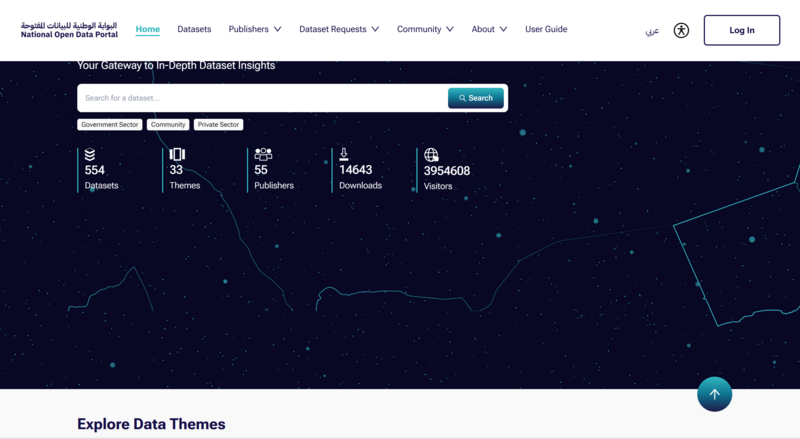
OverviewThis initiative aims to strengthen transparency and accountability by making government data accessible to citizens, researchers, and developers across sectors such as health, education, economy, and environment. The portal features an interactive user-friendly interface and advanced analytical tools designed to stimulate innovation and support research projects.Currently, 57 government entities contribute their data to the portal. There are more than 400 datasets available, covering diverse topics including tourism, transport, education, business, and more. This extensive availability of data supports research, innovation, and informed decision-making across sectors, reinforcing Oman’s commitment to transparency and open government initiatives.
National Open Data Portal
Brief Description HSBC and Quantum Dice have been exploring quantum random number generators (QRNGs) for stochastic modelling in insurance, specifically for pricing embedded guarantees. Initial findings, on this particular use case, reveal enhanced model accuracy and efficiency, enabling faster simulations with reduced computational costs or higher confidence outcomes.Detailed Description In financial services, stochastic models are essential tools for simulating various scenarios and assessing risks, including pricing embedded guarantees within insurance contracts. These models simulate various financial scenarios, relying on high-quality random inputs to predict future outcomes. Traditionally, these inputs are generated using pseudo-random number generators (PRNGs), which, despite being effective, are ultimately deterministic and can introduce biases. Quantum random number generators (QRNGs) offer a novel approach by capitalizing on the inherent unpredictability of quantum mechanics to produce true randomness. A collaborative project by HSBC and Quantum Dice explored whether QRNGs could improve the accuracy and efficiency of actuarial models used for insurance modelling.  Central to this effort, Quantum Dice’s QRNG uses a beamsplitter to direct a single photon to one of two detectors with equal probability, harnessing the quantum principle of unpredictability. This technique allows for continuous monitoring of quantum entropy to ensure true randomness. These photonic systems are well-suited for high-demand applications like financial modelling and simulations due to their ability to operate at high speeds.In the project, PRNG-generated inputs were replaced with QRNGs. This transition led to several significant improvements when testing at 1,000 simulations, a typical production level:1.    Enhanced Model Precision: When examining the moments of the random numbers, the standard error of the standard deviation was reduced by more than 50% with QRNGs. This suggests that QRNGs more consistently represented the underlying distribution across various sample choices.2.    Better Scenario Validation: Financial models often run numerous hypothetical scenarios that test how the model performs under different conditions. With QRNGs, the sample rejection rate decreased to less than 50%, compared to up to 90% with PRNGs, indicating more consistent and reliable modelling within the scope of this project.3.    Reduced Model Leakage: Model leakage refers to the gap between expected and actual results, which can lead to financial discrepancies. The use of QRNGs minimized this gap by more than 50% when compared to PRNGs, resulting in more accurate predictions.4.    Operational Efficiency: By providing more reliable random inputs, QRNGs paved the way for significant cost, time, and energy savings, or the ability to make better-informed decisions. These advancements highlight the potential of QRNGs to improve the adaptability and responsiveness in financial models, particularly in rapidly changing markets. While quantum computing continues to evolve, QRNG technology is mature and ready for practical applications. Future research could focus on applying QRNGs to more complex economic models, potentially further enhancing their benefits.Key Highlights ·      Objective: The project aimed to assess whether quantum random number generators (QRNGs) could enhance the accuracy and efficiency of actuarial models used for insurance modelling.·      Technology Used: Quantum Dice’s QRNG applies quantum mechanics to generate true randomness, replacing traditional pseudo-random number generators (PRNGs) and providing more reliable inputs for financial simulations.·      Improvements Observed: In this instance, QRNGs significantly reduced model leakage (the gap between expected and actual results) by more than 50%, leading to more accurate financial predictions.·      Benefits: By reducing inconsistencies and improving scenario validation, QRNGs enhanced operational efficiency, allowing for faster, more cost-effective modelling, which could be used to achieve better-informed decision making.·      Practical Application: QRNG technology is a promising candidate for real-world insurance modelling, potentially offering enhanced adaptability and responsiveness to market dynamics. Customer Testimonials:·       “HSBC has been exploring how quantum technologies could impact real business applications today. We are working with Quantum Dice to address whether quantum random number generators can enhance Monte Carlo simulations. These are important tasks in financial services with applications such as computing risk analytics and pricing complex derivatives. Our joint work with Quantum Dice started under an Innovate UK grant, and continued with a commercial PoC.”-           Philip Intallura, Group Head of Quantum Technologies at HSBC·       “This collaborative study with Quantum Dice allowed us a first look at what might be achieved by applying quantum technologies to our modelling applications and how it may benefit our work." - Michael Taylor, Head or Risk Methodology, HSBC
Financial services
Enhancing Simulations with Quantum Entropy

Quantum Dice, HSBC
Brief DescriptionOur interdisciplinary collaborative team is developing an efficient quantum computing framework to simulate properties of light activated drugs with near-term quantum computers, hence demonstrating the impact of quantum computers to one of the major global challenges in medicine: the treatment of cancer.Detailed DescriptionPhotodynamic therapy is a safe and effective outpatient cancer treatment with no long-term side effects. The therapy uses a drug, called a photosensitizer, that is activated by light at the specific cancer location. Understanding and accurately simulating light-drug interactions is necessary for the design and selection of drug molecules that maximize the effectiveness of the drug. However, designing optimal light-drug interactions comes with many computational challenges, as the computation time increases exponentially with the size of the drug molecule. Computations are currently carried on high performance computing clusters but cannot provide accurate predictions for larger drug candidates. By contrast, hybrid quantum-classical computing can significantly reduce the computation time while enabling a scale up to larger molecular systems and accelerate discovery of novel drugs.Our interdisciplinary collaborative team is developing an efficient quantum computing framework to simulate properties of light activated drugs with near-term quantum computers, hence demonstrating the impact of quantum computers to one of the major global challenges in medicine: the treatment of cancer.Key Highlights·      Value proposition: More effective light activated cancer drugs with minimal side effects·      Benefits/outcomes: An efficient quantum computing framework to simulate properties of light activated drugs with near-term quantum computers·      Advantage of adopting quantum technology, and additionally any advantage v/s classical technology:Designing optimal light-drug interactions comes with many computational challenges, as the computation time increases exponentially with the size of the drug molecule. Computations are currently carried on high performance computing clusters but cannot provide accurate predictions for larger drug candidates. By contrast, hybrid quantum-classical computing can significantly reduce the computation time while enabling a scale up to larger molecular systems and accelerate discovery of novel drugs.Publicly Available Technical Data:·      https://arxiv.org/abs/2404.16149
Health
Quantum Computing for the Discovery of Light Activated Cancer Drugs
Algorithmiq
Brief DescriptionThis application provides a selectable multi-truck, multi-stop, and multi-depot optimization of costs in traveling mileage, time, and labor, in a supply chain.Detailed DescriptionThis demo uses D-Wave's quantum computing hybrid solver to optimize routing for package delivery. We begin by formulating mathematical representation of all elements of a supply chain in the form of a mixed integer programming problem (MIP). The solution space of the MIP derived from this formulation grows at the rate of X^n, meaning we rapidly reach the limits of classical computing to discover optimal solutions. Quantum computing approaches scale polynomially and may be able to solve massive supply chain networks in real time. We've leveraged D-Wave and a classical computation to show you how that can be done.This demo employs a novel quantum computing approach to find an optimal solution for supply chain planning. This includes the stores from where the packages are picked up, the number of vehicles used for the delivery, as well as the delivery addresses for the packages being dropped off.Key HighlightsThis demo is an anonymized version of a real-world delivery routing problem. The experience features a selectable multi-truck, multi-stop, multi-depot, optmization for mileage, labor, and duration using quantum computing.It starts with a typical multiple truck routing problem and is then enhanced with the ability to perform package pickups prior to delivery throughout the day for up to 100 packages, 3 stores and 10 trucks.The problem formulation runs using D-Wave BQM and DQM Hybrid Solvers, D-Wave Ocean SDK and IBM Qiskit to map the problem to a shortest path graph problem and then QUBO to be solved for residential addresses in the DC-Metro area.DisclaimerThis Demo is for demonstration purposes only and not for any other intent. Accenture owns all rights, titles, and interests in this Demo. Accenture makes no representations or warranties regarding this Demo. To the extent permitted by law, Accenture disclaims all liability, including direct and indirect, incidental or consequential damages, including loss of profits, arising out of or relating to the use of this Demo. The laws designated by the Accenture entity providing this Demo will govern without referencing conflicts of law principles.
Supply Chain & Transportation
Reimagining Supply Chain Management Using Quantum Computing
Accenture
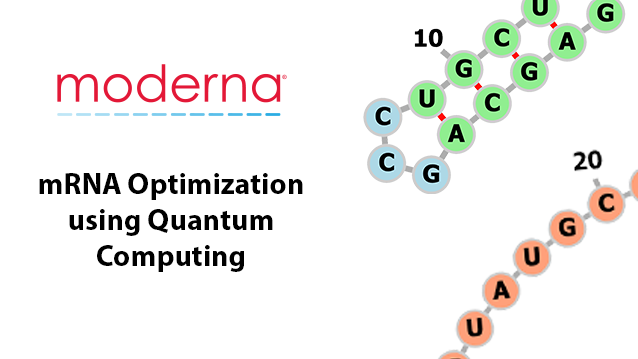
Brief DescriptionThe emergence of mRNA-based therapeutics has ignited a paradigm shift in the landscape of medicine. Accurate prediction of mRNA secondary structure is critical in designing RNA-based therapeutics as it dictates various steps of an mRNA life cycle, including transcription, translation, and decay. Our application explores how quantum computers could enable scientists to predict mRNA secondary structures at greater scale, accuracy and efficiency than ever before. Key HighlightsPredicting mRNA secondary structures is a formidable combinatorial problem due to the vast number of possible configurations and their associated energy state. Predicting RNA secondary structures with pseudoknots motives is known to be NP-complete. State-of-the-art classical approaches are still constrained by the combinatorial explosion of possible structures, lack of generalization to novel RNAs, and the approximations required to make the problem tractable. As a result, there is a growing interest in leveraging quantum computing to overcome these limitations and achieve more accurate predictions of mRNA secondary structures. Value Proposition: We demonstrate that optimization schemes like CVaR-VQE running on noisy quantum hardware with careful calibration and nominal error-mitigation, can produce sufficiently reliable outputs even for relatively large problem instances. Advantage vs Classical: Our results indicate that quantum computing offers valuable insights into RNA folding mechanisms and enables rapid identification of functional RNA structures. This work lays the groundwork for future research in quantum-assisted bioinformatics and highlights the importance of developing scalable quantum algorithms for real-world biological problems. Availability: As quantum hardware continues to advance, any improvements in algorithmic techniques will further bolster prospects of using quantum computers for optimization. This study, which primarily focused on the capabilities of utility-scale quantum hardware, only considered a subset of available quantum approaches; however, our future work will explore more advanced optimization techniques. Detailed Description Moderna and IBM examine the feasibility of solving the mRNA secondary structure prediction problem on a utility-scale quantum computer with sequence lengths up to 60 nucleotides representing problems in the qubit range of 10 to 80. Our approach utilizes: Conditional Value at Risk Variational Quantum Eigensolver (CVaR-VQE), that employs CVaR values of the energy eigenfunctions as the objective function, to achieve better convergence Nakanishi-Fujii-Todo (NFT) as a classical optimizer along with a hardware-efficient “two-local” ansatz that is relatively robust against hardware noise and exhibits better convergence properties Hardware runs on IBM Quantum Eagle and Heron processors To our encouragement, even with “minimal” error mitigation and fixed-depth circuits, our hardware runs yield accurate predictions of minimum free energy (MFE) structures that match the results of the classical solver CPLEX. Our results provide sufficient evidence for the viability of solving mRNA structure prediction problems on a quantum computer and motivate continued research in this direction. Publicly Available Technical Datahttps://arxiv.org/html/2405.20328v1 DisclaimerThis Demo is for demonstration purposes only and not for any other purposes. Moderna & IBM own all right, title, and interest in this Demo. Moderna makes no representations or warranties regarding this Demo. To the extent permitted by law, Moderna disclaims all liability including direct and indirect, incidental, or consequential damages, including loss of profits, arising out of or relating to the use of this Demo. The laws designated by the Moderna entity providing this Demo will govern without reference to conflicts of law principles. 
Health
Quantum mRNA Optimization
Moderna
Brief DescriptionFocused on estimating financial crashes within a network of small and medium enterprises (SMEs) that are customers of Yapi Kredi Bank.Detailed DescriptionFinancial crash estimation problem has been a significant subject within the finance sector, focused on the prediction of prospective collapses in capital markets or organizations. These financial crashes are likely to have devastating impacts, resulting in crucial economic repercussions and diminished investor confidence. Accurately and timely estimating financialcrashes are essential for preserving economic stability, achieving risk mitigation, and making informed decisions to safeguard investments and avoid extensive financial crises. We developed a quadratically constrained quadratic program as a mathematical optimization model aiming at identifying significant vulnerabilities and potential failure points in this network. By defining key parameters such as crossholding ratios, self-holding fractions, asset ownership proportions, and failure cost functions, we capture the intricate dependencies between these entities. The model is inherently nonlinear due to the quadratic terms and constraints, reflecting the real-world complexities of financial networks. Solving this NP-hard problem using classical methods is challenging; therefore, we leverage quantum computing technology to efficiently explore the solution space and produce decision variables that indicate the likelihood of financial distress for each SME in the network. The difficulty of this problem lies in the potential domino effect, where a single delayed payment can trigger subsequent financial distress among connected entities, leading to a cascading collapse within the financial network.Customer TestimonialsThis Application was started as a Proof of Concept (PoC) project albeit the results achieved from it have been discussed with business units especially the credit loan departments. Our commercial credit loan director stated : “The first outputs of this POC, which we conducted in light of the principles of responsible banking and know your customer, are very valuable; because financials consider the past; These equilibrium points reveals crises that have not yet been reflected in our customers' financials. Since we expect the sales turnover of our creditor customers who will be affected by the financial crisis to decrease, it will be visible on the screens of portfolio managers“Publicly Available Technical Data:https://www.youtube.com/watch?v=bcNAe-TKmu0https://www.aeaweb.org/articles/pdf/doi/10.1257/aer.104.10.3115Prediction for Financial Crisis Based on Data from 14 Developed Counties | Advances in Economics, Management and Political Sciences (ewadirect.com)DisclaimerThis Application is for demonstration and proof of concept purposes only and not for any other purposes. YKT owns all right, title, and interest in this Application. YKT makes no representations or warranties regarding this Application. To the extent permitted by law, YKT disclaims all liability including direct and indirect, incidental, or consequential damages, including loss of profits, arising out of or relating to the use of this Application. The laws designated by the YKT entity providing this Application will govern without reference to conflicts of law principles.
Financial services
Financial Crash Estimation in Enterprises
Yapi Kredi Bank
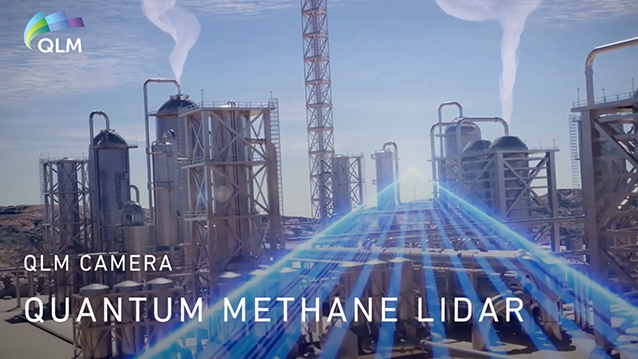
Brief DescriptionA new low-cost lidar technology that can detect, image, locate, quantify and autonomously report on methane and other greenhouse gas emissions and thereby help control climate change.Detailed DescriptionReducing industrial methane emissions is one of the most efficient ways to combat climate change. Unfortunately, existing technologies that locate and quantify methane leaks are complex, expensive, and require expert operators. QLM is revolutionizing the control of methane with affordable, innovative autonomous lidar cameras that use advanced quantum lidar technology to detect, image, precisely locate and accurately measure greenhouse gas emissions. QLM’s lidars are now being installed like methane security cameras in cloud-networked systems that monitor emissions at natural gas production sites like gas wells, waste-water treatment plants, gas distribution terminals and coal mines. They are already starting to help the planet and will do much more as these game-changing gas lidars prove themselves with customers and government regulators worldwide.  We founded QLM at the University of Bristol to develop a new low-cost lidar technology that can monitor greenhouse gas emissions better than any existing technology and thereby help identify and control climate changing emissions. We have started with methane but have also developed a carbon dioxide version and our lidar can be adapted to measure many other gases. Essential to having impact on climate change will be our scaling to millions of greenhouse gas monitors around the world. An important part of growing is promoting our technology and we have received recognition from notable organisations such as Innovate UK, Net Zero Technology Centre, UK Institute of Physics, LBS Enterprise 100, Green Angel Syndicate, Bloomberg New Energy Futures and the Spectator. QLM has a highly differentiated product that addresses an urgent need with global environmental and economic impact. We can see methane leaks from more than 200m away at any time day or night and in all sorts of difficult weather, allowing users to monitor their operations continuously for potential methane emissions anywhere over a wide area and respond promptly to fix any new leaks. We are beating all other approaches in competitive trials of methane detection technology around the world. We will be deploying more than 100 lidar in 2024 and many 1000s in 2025 and beyond. 2000 lidar systems will identify and allow prevention of emissions that are equivalent to taking 1 million cars off the roads. You cannot control what you cannot see and measure. QLM’s Quantum Gas Lidar will allow the world to see its industrial greenhouse gas emissions and stop climate change.Key Highlights ·      Value Proposition: Time-correlated single-photon gas lidar is a new low-cost technology that can continuously and autonomously monitor greenhouse gas emissions better than any existing technology. In 2023, QLM’s technology was tested against 10 competitors at Colorado State University’s Methane Emissions Technology Evaluation Centre (METEC) in a continuous 11-week blind trial. QLM demonstrated the best performance of all entries in four key categories: speed to detect a leak, accuracy of determining the leak position, accuracy in quantifying the leak size, and ability to measure leaks below the lower limit required by recently defined EPA regulations. Deploying lidar systems at fossil fuel and renewable methane gas producers, distributors and users worldwide will lead to identification and control of industrial methane emissions and help control climate change.·      Benefits/Outcomes/Advantage vs Classical: Our gas monitoring lidar uses semiconductor lasers developed for telecommunications and single-photon detectors developed for quantum communication in a unique practical and robust architecture. We have received 6 patents already and have another 10 in process. The single-photon quantum detector allows accurate operation with very low signal levels, which allows us to use very low power, low cost and completely eye-safe lasers and be able to detect gas at very long range. We can accurately quantify methane leaks from more than 200m away at any time day or night and in all sorts of extreme weather (snow, fog, rain and high wind) allowing us to identify gas emissions over a wide area anywhere our lidars are deployed. QLM’s cameras are easy to deploy even on remote sites with solar power and satellite communications. Our 365 degrees pan and tilt pointing control and high resolution 20x optical zoom imaging system can detect and visualize individual emission sources and pinpoint them with 3D accuracy without interference from other gas or water vapour. The lidar cameras auto-calibrate with an internal NIST traceable gas cell meaning zero long-term maintenance. The highly credible, high resolution, full-site measurement of emissions allows autonomous continuous monitoring for regulatory compliance purposes. Our lidar’s are controlled by a cloud-based customisable software platform that visualises and manages lidar imagery and data (live and historical) and can be tailored for specific site needs. The system is fully customizable enabling readings in specific areas at pre-defined intervals Data is presented in bespoke screens and reports that can provide actionable information to help customers reduce methane emissions. The technology is designed to be passed to top-tier contract manufacturers for scaling to very low cost at high volume. It uses many of the same components as mature vehicle lidar that saw drastic size and cost reductions over last decade.·      Availability: We have already established the commercial viability of the technology on large, complex, facilities throughout the world. It is ready to scale today.Customer Testimonials·      “QLM's gas imager technology demonstrators have achieved detection levels that are remarkable for uncooled detector technology and very limited laser power, both are key requirements to get certification for the use in hazardous environments for 24/7 monitoring. I believe that as products these will allow our industry to move from intermittent scheduled inspections under hot working permit to much more effective continuous monitoring, a major step forward.” Peter Droegmoeller, Director of Innovation and Technology, Ametek LAND.·      “With the Methane Lidar Camera you can know everything there is to know about methane leaks in your facility at any time. Size, shape, gas emission rate, duration, location, persistence, timing - everything.” Michael Kenison, Engineering Project Manager, SLB.Publicly Available Technical Datahttps://qlmtec.com/assets/downloads/whitepaper.pdfhttps://methane.app.cloud.gov/review/26https://qlmtec.com/https://www.linkedin.com/company/qlm-technology-ltd
Energy & utilities, Food & agriculture, Civil society, Energy, Energy Technologies, Mining & Metals, Oil & Gas
Quantum Lidar Methane Camera
QLM Tec
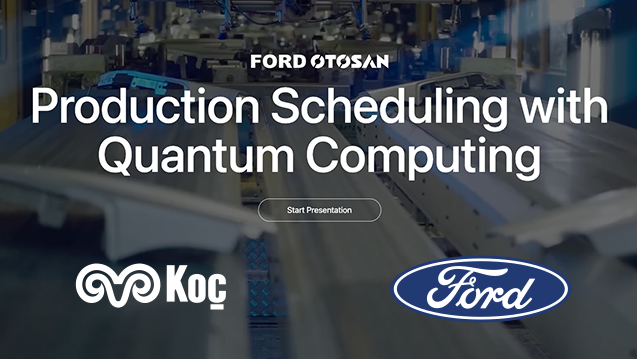
Brief DescriptionSchedule production of Ford Transit vehicles’ chassis at the body shop to minimize consecutive model spec changes (e.g., roof height, wheelbase length) and balance hourly labor requirements, while adhering to shop constraints (e.g., producing Jumbo type vehicles in groups of four).Key Highlights·      Enhanced Flexibility of body shop and all lines downstream to unforeseen events such as parts delivery delays or unplanned maintenance requirements.·      Reduction in Scheduling Time and reduced risk of feasible problems not being solved compared to Classical Computing.·      Ability to Scale the Optimization Problem to include other processing line requirements from both upstream and downstream productions, thanks to the high constraint limits of quantum hybrid solvers.Detailed Description·      Customer orders from around the world are consolidated into a pool, with each vehicle’s specifications and delivery deadlines predetermined. In body production, each spec change requires the programmable logic controller of the welding robots to load a new set of instructions. With 250 welding stations, frequent spec changes can lead to production delays.·      Sequencing these vehicles to maximize throughput and adhere to physical and workforce constraints of the Body Shop, Paint Shop, and Assembly Line, is a highly constrained optimization problem. Additionally, due to our supply chain dynamics, the optimized schedule may need to be altered on-demand by removing vehicles requiring specific parts to prevent production halts. Similar challenges arise with unplanned maintenance events due to machine breakdowns.·      The classical optimization model we developed, alongside our Quantum algorithm, solves this problem in approximately 10 minutes for 1,000 vehicles using a commercial solver. In contrast, Open-Source tools can take over an hour with less optimal results. Quantum annealing (via D-Wave’s hybrid solvers) solves the same problem under 5 minutes (c.16,000 constraints for 1000 vehicles). Preliminary observations (without extensive testing) suggest that as the problem constraints tighten, the commercial classical solver is more likely to fail to find a feasible solution.·      Current scheduling problem can be extended to cover other considerations from up and down stream productions with Quantum Annealing, thanks to increasing nature of upper constraint limits observed in newer quantum chips.Publicly Available Technical Data·      https://www.dwavesys.com/media/5v4axazz/production-scheduling-data-sheet.pdf (Page 2)·      https://www.dwavesys.com/media/5d0gxhqk/d-wave-optimization-guide.pdf (Page 14)·      https://www.youtube.com/watch?v=9jwmLrdPpCU (Qubits 2024 – Boston; Customer Story)
Automotive
Body Shop Scheduling Optimization
Ford Otosan
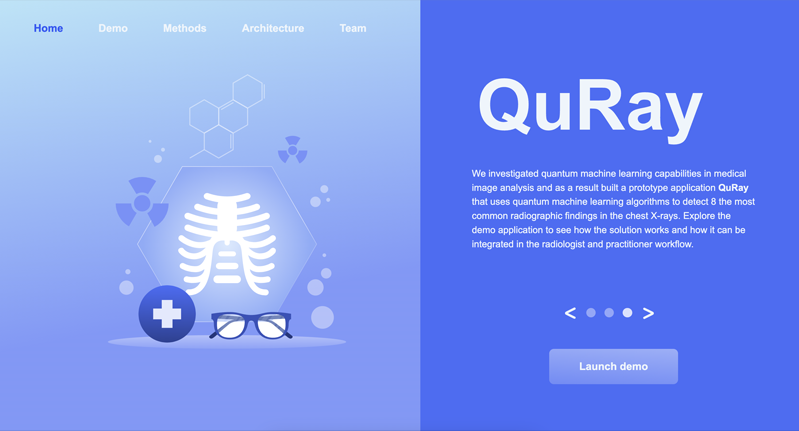
Brief DescriptionMedical imaging techniques, such as CT, MRI, and X-ray scans, have become an integral part of patient diagnosis and treatment around the globe. Although imaging technology has advanced significantly over the years, the human interpretation errors remain the same. Studies on average report a 3 – 5 % error rate in daily practice. However, when evaluating abnormal scans, there is an approximately one in three chance the medical problem is misdiagnosed even by an experienced radiologist.Problem StatementComputer-aided detection and diagnosis methods are being introduced into medical practice by acting as a prospective peer review tool for radiologists. However, there is an upper limit to how large and complex the AI models can become. Reaching satisfactory accuracy and reliability consumes a lot of computational power and can take weeks to train. To deal with growing machine learning model complexity, future machine learning models will require computational power of a quantum computer to deliver results in real-time.SolutionWe investigated quantum machine learning capabilities in medical image analysis and as a result built a prototype application QuRay that uses quantum machine learning algorithms to detect 8 the most common radiographic findings in the chest X-rays. Explore the demo application to see how the solution works and how it can be integrated in the radiologist and practitioner workflow.DisclaimerThis Demo is for demonstration purposes only and not for any other intent. Accenture owns all rights, titles, and interests in this Demo. Accenture makes no representations or warranties regarding this Demo. To the extent permitted by law, Accenture disclaims all liability, including direct and indirect, incidental or consequential damages, including loss of profits, arising out of or relating to the use of this Demo. The laws designated by the Accenture entity providing this Demo will govern without referencing conflicts of law principles.
Health, Technology
QML for Radiographic Detection in Chest X-Rays
Accenture
Brief DescriptionCommercially useful quantum computing introduces a threat to all encryption used today – bringing on yet another paradigm shift in the algorithms used to perform encryption. This most recent threat has highlighted a perennial issue with encryption: these algorithms are tightly coupled to the software that leverages it, making upgrades extremely difficult, time and resource intensive, and custom for each application. Academic and industry leaders such as IBM assert that “cryptographic agility” or the ability to modularize and swap out cryptography is the “most sustainable and effective way to make cryptosystems resilient for the quantum era”. This demonstration shows the capabilities of a NIST Level 4 cryptographic agility platform applied to real-world scenarios.Problem StatementOrganizations across various sectors rely on secure communication of sensitive data over untrusted networks, which are increasingly vulnerable to the threat posed by quantum computers. With advancements in quantum computing, particularly through Shor’s Algorithm, a quantum computer with just over 4,000 error-corrected qubits could potentially break public-key cryptographic algorithms currently used to protect data in transit, including electronic health records, financial transactions, and blockchain systems. This creates an urgent need for organizations to upgrade their cryptographic frameworks to post-quantum cryptography (PQC). However, treating this transition as a one-time overhaul ignores the necessity for cryptographic agility—essential for addressing ongoing cybersecurity risks and future migrations as quantum and AI threats evolve.SolutionThe QuProtect platform offers a comprehensive solution to ensure cryptographic agility across complex digital networks and infrastructures. Its key capabilities include the seamless adoption of both PQC and crypto-agility, compatibility with legacy systems, and the real-time ability to change cryptographic algorithms and libraries as needed. The platform enables organizations to proactively secure communications and data transmissions by transitioning to advanced cryptographic methods as new threats or regulations emerge, thus mitigating the risk of future long-term cryptographic migrations. QuProtect ensures that industries, such as healthcare and financial services, can maintain secure communications, protect sensitive data, and adapt quickly to evolving cybersecurity challenges without extensive infrastructure changes.Key HighlightsValue Proposition:Crypto-Agility as demonstrated enables the administrator to change encryption algorithms and libraries on live systems without code changes or downtime which is a significant advantage over historical cryptography migration processes that can take years to complete.The system does not have a pre-requisite of cryptographic discovery or inventory to be deployed, enabling users to begin deploying immediately to the highest risk encryption use cases.The solution does not require quantum technologies to remediate the quantum threat, however it is compatible with QRNG (Quantum Random Number Generation) and QKD (Quantum Key Distribution) technologies which are sometimes used in quantum-safe networking solutions.Advantage vs Classical: The solution is unique for the Quantum Applications Hub in that it presents a classical – not quantum - solution to the quantum computing threat to encryption. As such, it does not demonstrate advantage over classical algorithms, however the deployed post-quantum cryptographic algorithms are now standardized via the NIST competition to be quantum-resilient where their classical encryption counterparts are not.Availability: The solution is commercially available and meets Soc2 and FIPS Standards.DisclaimerThis Demo is for demonstration purposes only and not for any other purposes. QuSecure, Inc. owns all right, title, and interest in this Demo. QuSecure, Inc. makes no representations or warranties regarding this Demo. To the extent permitted by law, QuSecure, Inc. disclaims all liability including direct and indirect, incidental, or consequential damages, including loss of profits, arising out of or relating to the use of this Demo. The laws designated by the QuSecure, Inc. entity providing this Demo will govern without reference to conflicts of law principles.
Energy & utilities, Financial services, Health, Government, Other, Aerospace, Energy, Oil & Gas, Technology
Real World Cryptographic Agility

QuSecure
Brief DescriptionThe Vehicle-to-Grid Kit from Accenture optimizes electric vehicle feed-in to and charging from an energy network to shift demand peaks to times with lower market prices. The usage of V2G is implemented as a so-called Feed-in Reward Program (FiRP): the utility provider offers (participating) EV users a reward price to incentivize them to feed into the energy grid at specific times. The utility provider can control the amount of feed-in energy depending on the prices. The optimal reward prices for this demo maximize the utility provider’s profit. Finding them is the goal of a complex optimization problem that can be solved with classical, quantum, and quantum-inspired methods.Problem StatementWith increasing regenerative power generation, adapting the energy supply to the demand becomes increasingly difficult. This results in network instabilities and utility provider losses due to expensive energy and fluctuating market prices. Vehicle-to-grid (V2G) technology allows electric vehicles (EVs) to be connected to the power grid and send and receive electricity. V2G can help to balance the grid by enabling EVs to provide power back to it when demand is high and to charge their batteries when demand is low. It also allows energy providers to optimize their profits by shifting energy loads to times of cheaper market energy. Additionally, V2G can help increase EVs' utilization and value by allowing them to be used as a distributed energy storage. This can also help reduce the need for expensive, centralized energy storage solutions and promote using renewable energy sources.Key HighlightsLeveraging real-world data from the German energy market and user profiles based on a scientific study.Based on real-world German market data, the capability estimates a substantial profit gain of up to €2B in 2022.The app's custom optimization framework offers various backends and algorithms, some showcased in this demo. The full version can access/includes, e.g., Operator-Splitting Quadratic Program (OSQP) solver, Covariance Matrix Adaption Evolution Strategy (CMA-ES) algorithm, Quantum Approximate Optimization Algorithm (QAOA), Quantum Annealing and Quantum-inspired Algorithms (Microsoft QIO)DisclaimerThis Demo is for demonstration purposes only and not for any other intent. Accenture owns all rights, titles, and interests in this Demo. Accenture makes no representations or warranties regarding this Demo. To the extent permitted by law, Accenture disclaims all liability, including direct and indirect, incidental or consequential damages, including loss of profits, arising out of or relating to the use of this Demo. The laws designated by the Accenture entity providing this Demo will govern without referencing conflicts of law principles.
Energy & utilities, Energy, Energy Technologies
Quantum Vehicle-to-Grid (V2G)

Accenture
Brief DescriptionCardiAQ is a next-generation non-invasive cardiac quantum imaging device that operates without cryogenic cooling or magnetic shielding. It combines cutting-edge quantum sensors and advanced AI algorithms to provide actionable clinical insights and improve cardiac health decisions.Detailed DescriptionCardiovascular diseases (CVDs) are the leading cause of death worldwide, claiming 18 million lives annually and imposing a significant financial burden on global health systems and economies.Magnetocardiography (MCG) is a non-invasive cardiac imaging technology that captures the magnetic fields generated by electrical activity in myocardial fibers using an array of sensitive quantum magnetometers placed near the patient’s chest. Mounting scientific evidence suggests that MCG offers several advantages over existing diagnostic methods for CVDs, such as electrocardiogram (EKG) and troponin tests.However, previous MCG systems relied on technologies requiring cryogenics and magnetic shielding, making them bulky, expensive, and complex to operate. These limitations hindered the widespread adoption of MCG in clinical settings, despite its promise for improving diagnostics.Problem StatementDespite the potential benefits of Magnetocardiography (MCG) in diagnosing cardiovascular diseases, it has not been widely adopted due to the high fixed and operational costs associated with previous-generation systems, which required cryogenics and magnetic shielding. These requirements made the systems bulky, expensive, and impractical for everyday clinical use, limiting accessibility and hindering the deployment of this technology in diverse healthcare settings, especially in rural areas.SolutionSandboxAQ has developed a novel MCG system called CardiAQ that overcomes the limitations of previous MCG technologies. CardiAQ is a portable, non-invasive imaging device that uses an array of quantum sensors to capture detailed magnetic field maps of the cardiac cycle. The device operates without the need for cryogenic cooling or magnetic shielding, making it more practical and cost-effective. Advanced AI algorithms analyze the captured data to provide rapid and accurate cardiac insights.CardiAQ is already deployed in real-world clinical settings, such as emergency rooms, where it assists in diagnosing patients with chest pain at risk of heart attacks. By offering a portable solution, CardiAQ can be deployed in rural hospitals, reducing the need for costly transportation and providing timely diagnosis and care. This approach not only improves health outcomes but also fosters equity by ensuring access to quality healthcare, regardless of geographical location.Additionally, the deployment of CardiAQ on a larger scale can facilitate more extensive research and understanding of cardiovascular diseases, accelerating advancements in cardiovascular health and improving patient outcomes globally.DisclaimerThis demo is for demonstration purposes only and not for any other purposes. SandboxAQ owns all rights, title, and interest in this demo. SandboxAQ makes no representations or warranties regarding this demo. To the extent permitted by law, SandboxAQ disclaims all liability including direct and indirect, incidental, or consequential damages, including loss of profits, arising out of or relating to the use of this demo. The laws designated by SandboxAQ providing this demo will govern without reference to conflicts of law principles. 
Health, Technology
CardiAQ - Magnetocardiography using Quantum Sensors
SandboxAQ
Brief DescriptionA novel High-Frequency Trading (HFT) solution powered by Toshiba’s quantum-inspired technology SQBM+, aiming to find short-lived profitable arbitrage opportunities in the currency market in real time.Key HighlightsThis system will make microseconds level and high success rate HFT available and could help algorithmic trading teams in financial services build a competitive advantage. All results shown are historical data from when the experiment was conducted.Supports multiple currencies and flexible HFT trading strategies.Value Proposition: help algorithmic trading teams miss less and profit more.Advantage vs Classical: The demo achieved industry-breaking performance in HFT trading speed and success rate far beyond the limits of using classical technologies and algorithms.Availability: The demo HFT system is available today through implementing SQBM+ on a FPGA board.Detailed DescriptionCurrency arbitrage High-Frequency Trading (HFT) is a common algorithmic trading strategy in financial services. The key is to find as many profitable currency combinations (or trading paths) as possible and avoid unprofitable transactions or wrong trades. There are two industry-wide challenges in this use case. Firstly, profitable arbitrage opportunities can be very short-lived as less than 1 ms. Existing technologies can hardly identify these opportunities due to speed limits. Secondly, it is difficult to maintain a consistent 50% higher trading success or profit rate. These challenges form a bottleneck to all currency arbitrage HFT solutions on the market.Therefore, we proposed an SQBM+ powered currency arbitrage HFT system that breaks the speed limit, achieves 30 µs trading capacity and increases the success rate to 98%. As a result, the system is able to capture sub-millisecond short-lived opportunities without mistake, which was not possible before using SQBM+. In other words, it solved the industry-wide bottleneck and can significantly increase the trading speed and profitability of HFT systems.The above breakthrough is owing to SQBM+’s unique ability to analyze vast datasets quickly and optimize trading strategies in tens of microseconds timeframes. SQBM+ is Toshiba’s flagship novel quantum-inspired technology that has demonstrated speedups on combinatorial optimization tasks by emulating specific quantum phenomena on classical infrastructures (GPU, FPGA) and achieving a step-change parallel computing capability.DisclaimerThis Demo is for demonstration purposes only and not for any other purposes. Toshiba Digital Solutions Corporation (TDSL) owns all right, title, and interest in this Demo. TDSL makes no representations or warranties regarding this Demo. To the extent permitted by law, TDSL disclaims all liability including direct and indirect, incidental, or consequential damages, including loss of profits, arising out of or relating to the use of this Demo. The laws designated by the TDSL entity providing this Demo will govern without reference to conflicts of law principles.
Financial services
Quantum-inspired High-Frequency Trading system

Toshiba
Please use these credentials to login to the applicationquantumapps@weforum.org // Weforum2030Brief DescriptionOur solution utilizes quantum computing to optimize portfolio assignment decisions for a reinsurance contract. We deliver an interactive crash-course on reinsurance, take you through a quick tutorial and let you compete with a real quantum computer on a large reinsurance problem.Problem StatementNatural disasters and catastrophes pose a serious risk to the business stability of major insurance companies. Insurers purchase reinsurance to protect themselves from very large losses that may result in an unacceptable volatility. Deciding which portfolios should be covered by the reinsurance contract can be formulated as a mathematical optimization problem. However no classical solution has been found yet to solve the resulting problem. SolutionOur solution leverages a physics-based computing method known as annealing to calculate good solutions to the reinsurance problem in a fraction of the time necessary for classical exhaustive search. By formulating our reinsurance parameters as a mathematical optimization that runs on both quantum and classical annealers, we’ve shown near optimal results for small and medium sized problems. With this experimental app, AXA demonstrates the viability of quantum as a solution to bridge the gap between today’s classical computing methods and business-relevant optimization challenges within insurance.Key ImportancePhysics-based computing for optimizing high value reinsurance contractsClassical methods such as exhaustive search are time-prohibitiveAnnealing shows future promise for production problems with business-relevant time-to-solutionGiven the size of the market, even small percentage improvements could lead to large financial benefitsKey HighlightsValue Proposition & Benefit: Our approach shows promise for calculating reinsurance parameters, which maximizes the ratio of net profit over volatility of retained losses, within a business-relevant response time.Advantage of Quantum TechnologyClassical methods such as exhaustive search are non-viable due to time and memory constraints, even on HPCs. Using quantum computing, we’ve demonstrated a viable pathway to calculating reinsurance contract parameters, that overcomes the classical constraints.DisclaimerThis demo is for demonstration purposes only and not for any other purposes. AXA owns all rights, title, and interest in this demo. AXA makes no representations or warranties regarding this demo. To the extent permitted by law, AXA disclaims all liability including direct and indirect, incidental, or consequential damages, including loss of profits, arising out of or relating to the use of this demo. The laws designated by AXA providing this demo will govern without reference to conflicts of law principles.
Financial services
Optimization of Reinsurance Contracts
AXA XL
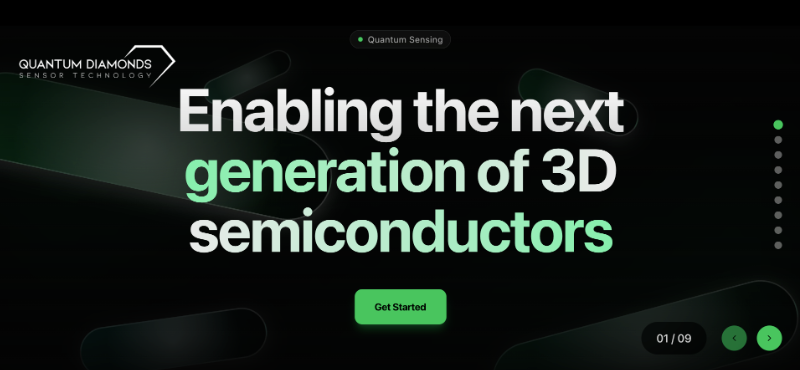
Brief DescriptionThe Quantum Diamond Microscope is an advanced tool that leverages the quantum properties of diamonds, specifically nitrogen-vacancy (NV) centers, to see invisible magnetic fields in computer chips. It works like an advanced scanner, creating detailed images of a chip's electrical activity with the help of smart software and AI. This breakthrough technology can find hidden flaws in chips without causing any damage, making it a game-changer for testing today’s increasingly complex electronics. Detailed DescriptionSemiconductors are the backbone of the global economy, powering everything from everyday electronics to advanced systems like AI, high-performance computing, and the Internet of Things (IoT). As technology evolves, manufacturers face challenges in producing increasingly complex semiconductor designs, such as stacked microchips, a process called heterogeneous integration. While this method boosts performance, it also increases the risk of hidden flaws that can lead to higher failure rates, financial losses, and production delays. Traditional testing methods struggle to keep up with these advancements. Techniques like optical scanning or thermal imaging are often invasive, slow, or lack the precision needed for modern manufacturing demands. These limitations make it harder for manufacturers to detect flaws early, resulting in wasted materials and increased costs. QuantumDiamonds has introduced a breakthrough solution: the Quantum Diamond Microscope (QDM). This innovative device uses the unique quantum properties of diamonds to create precise 3D images of magnetic fields within chips, detecting faults without causing any damage. Unlike older methods, the QDM operates at room temperature and avoids the need for complex setups like vacuum chambers or cryogenics. An initiative of the World Economic Forum’s Quantum Economy Network By enabling faster, more accurate, and non-invasive testing, the QDM helps manufacturers design better chips, improve production efficiency, and significantly lower costs. It’s a game-changer for the semiconductor industry, leading to more reliable and affordable technology. The impact of the QDM extends far beyond manufacturing. By reducing waste and optimizing material use, it lowers the environmental footprint of electronics production. These efficiencies make advanced technologies such as AI-driven healthcare devices and smart city systems more accessible andaffordable, fostering innovation and equity worldwide. Additionally, the QDM enhances cybersecurity by detecting malicious alterations in chips and uncoveringvulnerabilities to side-channel attacks. This strengthens the reliability of critical digital systems, from financial networks to infrastructure, ensuring they can safely support modern society’s needs. Key HighlightsQuantumDiamonds has already made significant strides:·      Collaborations: Working with 7 of the top 10 global semiconductor manufacturers, QuantumDiamonds is pushing the boundaries of innovation.·      Market Presence: The first QDM installation is operational at Fraunhofer EMFT in Munich (seen in the image below) , setting a new standard for quantum-enabled semiconductor metrology.·      Recognition: The European Innovation Council has highlighted QuantumDiamonds’ potential to revolutionize the industry, comparing it to ASML in post-production enablement. Additionally, the company is collaborating with research institutes to expand its technology from magnetic sensing to include temperature sensing using NV Diamonds. This advancement supports QuantumDiamonds' long-term vision of broadening the technology’s applications, from biological and medical research to energy systems. Customer TestimonialsNvidia: “Quantum Diamonds solution is considered a promising technology, and it has been validated that such technology could play a transformative role in the semiconductor industry”TSMC: “Quantum Diamond’s device could play a transformative role in the semiconductor industry, as it would enable improved failure analysis for the next gen of integrated circuits” Publicly Available Technical Data●      https://journals.aps.org/prapplied/abstract/10.1103/PhysRevApplied.21.014055●      https://www.youtube.com/watch?v=iaVK71V-rsk●      https://www.youtube.com/watch?v=CRfTe9gBOQA●      https://www.quantumdiamonds.de/ DisclaimerThe measurement data or images we provide are confidential and represent the most up-to-date measurement results. However, this information is not intended for public disclosure and should not be published on any website or other publicly accessible platforms.
Technology, IT and Communications (ICT)
Enabling the Next Generation of 3D Semiconductors Using Quantum Diamond Sensors
Quantum Diamonds
Brief Description:Accelerated chemistry R&D and materials discovery for a sustainable clean energy future using AI and Quantum technologies.Problem StatementThe world is facing pressing challenges in transitioning to a sustainable clean energy economy. This involves overcoming obstacles in renewable energy adoption, developing clean energy sources, and achieving decarbonization goals. Traditional methods of materials discovery and energy storage optimization are time-consuming and costly, hindering progress in this crucial transition.SolutionOur solution lies in harnessing advanced computational chemistry simulations powered by transformative technologies such as Artificial Intelligence (AI) and Quantum computing. By integrating AI, Quantum, and machine learning (ML), alongside modern high-performance cloud computing, we revolutionize material design, energy storage optimization, and accelerate the path to decarbonization. These technologies enable efficient screening of millions of compositions, pinpointing promising materials with specific properties for clean energy applications. Our approach not only addresses near-term challenges but also prepares for the quantum computing era, ensuring continuous innovation and efficiency gains.Key ImportanceAccelerated materials discovery for renewable energy technologies.Optimization of energy storage solutions for electric vehicles and renewable energy integration.Cost and time efficiency in developing novel materials and formulations.A seamless transition to quantum computing era for future advancements.DisclaimerThis demo is for demonstration purposes only and not for any other purposes. SandboxAQ owns all rights, title, and interest in this demo. SandboxAQ makes no representations or warranties regarding this demo. To the extent permitted by law, SandboxAQ disclaims all liability including direct and indirect, incidental, or consequential damages, including loss of profits, arising out of or relating to the use of this demo. The laws designated by SandboxAQ providing this demo will govern without reference to conflicts of law principles. 
Health, Aerospace, Automotive, Chemicals, Energy, Energy Technologies, Materials, Oil & Gas, Technology
Materials Discovery for a Clean-Energy Future

SandboxAQ
Brief DescriptionThe PFAS Molecular Bond analysis kit from Accenture uses chemistry simulation on quantum computers to calculate the energies needed for breaking chemical bonds in PFAS molecules, which are human-made carcinogenic "forever chemicals".Detailed DescriptionPFAS (short for per- and poly-fluoroalkyl substances) are human-made chemicals used in coatings and products to make them resistant to heat, oil, stains, grease, water, and more. For example, waterproof clothing, non-stick pans, and fire-fighting foams all use PFAS chemicals. PFAS chemicals are designed to be tough and use carbon-fluorine bonds – one of the strongest chemical bonds. Thus, PFAS don’t biodegrade and are known as the “forever chemicals,” often polluting our air and water. Scientific research is still ongoing on how different levels of exposure to different PFAS can lead to various adverse health effects, with some research linking it to hypertension and pre-eclampsia in pregnancy, cancer, thyroid disease, and more.We built a scalable end-to-end platform that creates parallel jobs and orchestrates their execution on both quantum and HPC hardware. We simulated molecular bonds at scale on Kay, a high-performance computer at ICHEC, and implemented integration with IonQ’s trapped ion quantum hardware. We demonstrated multiple results, calculated on this platform, which are key to understanding the best methods to destroy PFAS. The solution can be applied to a wide range of other use cases such as discovery of drugs, sustainable fertilizers, and carbon capture methods.Key Highlights•	Accenture partnered with ICHEC (Irish Center for High-End Computing) to conduct an experiment providing the ground state energy of small molecules, including some with the same chemical bonds as those found in PFAS.•	The application enables you to simulate molecules and visualize the results using pre-built application parameters. All results shown are historical data from when the experiment was conducted.•	The demonstrated solution, which leverages a novel quantum computing platform to simulate molecular bonds, will be used by chemical research scientists and engineers as a tool to understand the problem of eliminating PFAS. •	The demo concludes by mentioning ongoing collaborative efforts with hardware partners and outlining a future roadmap for simulating larger molecules within the PFAS family. This underscores the potential of quantum computers in advancing our understanding of PFAS molecules and, ultimately, in devising effective mechanisms for their breakdown.•	The roadmap for sufficiently mature quantum computers to run full PFAS molecules at high-level accuracy leads us to conclude this will possible near the end of the decade.DisclaimerThis Demo is for demonstration purposes only and not for any other intent. Accenture owns all rights, titles, and interests in this Demo. Accenture makes no representations or warranties regarding this Demo. To the extent permitted by law, Accenture disclaims all liability, including direct and indirect, incidental or consequential damages, including loss of profits, arising out of or relating to the use of this Demo. The laws designated by the Accenture entity providing this Demo will govern without referencing conflicts of law principles.
Health, Chemicals
Remediation of PFAS Chemicals Using Quantum Computing

Accenture
Quantum technology is moving from research into real-world use across cybersecurity, manufacturing, finance, and energy. As this shift happens, countries are preparing by updating policies and building the right infrastructure. Saudi Arabia is leading this effort as the first country to pilot the World Economic Forum's Quantum Economy Blueprint - identifying high-impact use cases and putting in place rules to ensure safe and responsible adoption.In 2026, C4IR Saudi Arabia will continue this work into Phase 3, focusing on preparing regulations, supporting adoption across sectors, and coordinating efforts nationally in line with Vision 2030.
Saudi Arabia | Government, Energy, Technology, IT and Communications (ICT)
Quantum Economy Project

Quantum for Society Challenge

The Quantum for Society Challenge was launched in November 2024 in collaboration with UpLink and the Centre for the Fourth Industrial Revolution Saudi Arabia. It called for impactful, scalable solutions for a sustainable future aligned with the SDGs, using quantum technology to tackle critical needs in climate, materials & manufacturing, healthcare, agriculture, food systems, and freshwater systems. The challenge received an outstanding 100 submissions, and the 10 winners have been announced on World Quantum Day 2025 in Riyadh, Saudi Arabia.

Contribute to the hub

We are now accepting new submissions. We look forward to reviewing your use case and working with you to launch your showcase application on the hub.