AquaForest: Pioneering mangrove restoration and coastal nature-based solutions
Project overview
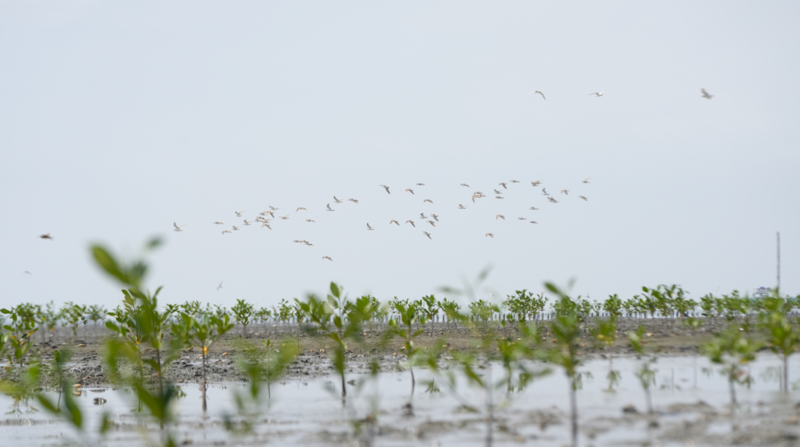
The AquaForest project, coordinated by Jan De Nul Group, is a pioneering initiative in coastal nature-based solutions and ecological restoration. Running from 2019 to 2025, it rehabilitates 50 hectares of mangrove habitat in the Guayas River Delta near Guayaquil, Ecuador, by repurposing dredged sediments from the nearby access channel to the Port of Guayaquil.[1] The project addresses Ecuador’s alarming mangrove loss – over 50% since 1980 – driven by urbanization, aquaculture and deforestation. In addition to restoring ecosystems, AquaForest strengthens climate resilience by improving flood protection (adaptation) and supporting carbon sequestration (mitigation). The consortium includes local academics (ESPOL), an NGO (Calisur) and private-sector partners, with engagement from the Municipality of Guayaquil, Ecuadorian Navy, Ministry of Environment, crab fishing associations and national NGOs.
Approach
AquaForest implements a green-grey infrastructure strategy, combining traditional marine engineering with nature-based solutions.[2] Its core components include:
- Sediment reuse: Transforming dredged material into a regenerative asset by constructing the mangrove-supportive island.
- Eco-engineering: Designing the island with precise elevation, drainage and hydrodynamic adaptations to mimic natural mangrove conditions.
- Community engagement: Partnering with local stakeholders – including crab fishers – for the planting of over 12,000 mangrove trees and 21,500 propagules, with a 90% survival rate,[3] building stewardship and local ownership.
- Research and monitoring: Collaborating with academic and scientific partners to monitor biodiversity, carbon storage and social impact.
This co-creation model includes international partners – among them Belgian universities UA and VUB, consultants Mantis, Haedes, and South Pole, Escuela Superior Politecnica del Litora (ESPOL) and Fundación CALISUR – and engages entities such as the Municipality of Guayaquil, Ecuadorian Navy, Ministry of Environment and local fisher associations. Funding comes from the Flanders International Climate Action Programme and the Blue Natural Capital Financing Facility (IUCN).
Business and economic value
The AquaForest project demonstrates a unique case of coastal nature-based solutions and active ecological restoration that create enduring economic and operational value for infrastructure developers. By reusing dredged sediment, Jan De Nul significantly reduces the costs and environmental impact of dredged material disposal, transforming what would traditionally be a waste product into a regenerative asset. This circular approach has the potential to lower dredging-related expenses but also contribute to the creation of high-value coastal ecosystems and coastal protection.[4]
The restored mangroves enhance biodiversity, protect local shorelines from erosion and flooding, and provide critical breeding grounds for crab, fish and other marine life – supporting climate and economic resilience of the nearby communities. Over time, these ecological benefits also translate into economic benefits through boosted fisheries, eco-tourism and natural disaster risk reduction. In areas vulnerable to sea-level rise and extreme weather events, mangroves act as natural buffers, potentially saving millions in future climate adaptation costs.
Therefore, there is a significant potential for replication of the AquaForest approaches in the field of conventional dredging and coastal infrastructure, by addressing the needs of port authorities, coastal management agencies and coastal infrastructure developers, who are already involved in sediment management and actively seeking sustainable, circular alternatives aligned with climate resilience and biodiversity restoration goals.
From a climate finance perspective, the project’s focus on mangrove restoration positions it to benefit from emerging blue carbon markets. Given that mangroves can sequester up to four times more carbon per hectare than terrestrial forests, the site could generate tradable carbon credits and access nature-based financing mechanisms. This makes AquaForest not just an environmental restoration effort, but a financially strategic one – blending nature-based solutions with long-term investment planning.
While the AquaForest approaches have been demonstrated in Ecuador, Jan De Nul has identified new prospects in tropical and subtropical regions, particularly in Southeast Asia, West Africa and Latin America, where coastal zones, deltas and degraded mangrove areas overlap. These regions hold strong potential for replication, as governments increasingly prioritize nature-based coastal protection and climate-adaptive infrastructure development.
By aligning ecological performance with socio-economic development and financial innovation, AquaForest demonstrates that nature-positive infrastructure is not only feasible, but a smart and scalable strategy for developers operating in sensitive coastal regions.
References:
- Aquaforest, from dredged sediments to mangrove forests - Jan de Nul
- AquaForest: A nature-based solution for dredged sediments - International Association of Dredging Companies (IADC)
- Mangrove grows spectacularly fast on island built from scratch - Jan de Nul
- Nature-based Solutions for restoring and developing new mangrove habitats through eco-engineering - EGU General Assembly