Case Studies from Around the World

A collaboration between the World Economic Forum and the Clean Energy Ministerial
August 2025
 

Foreword & Executive Summary

Responsible deployment of clean energy is more than a sustainable practice - it's a strategic advantage. This collection of case studies, developed in collaboration between the World Economic Forum, Clean Energy Ministerial (CEM) and knowledge partner Accenture, showcases best-in-class  renewable energy projects that integrate environmental and social priorities into their design and delivery.

Use Cases

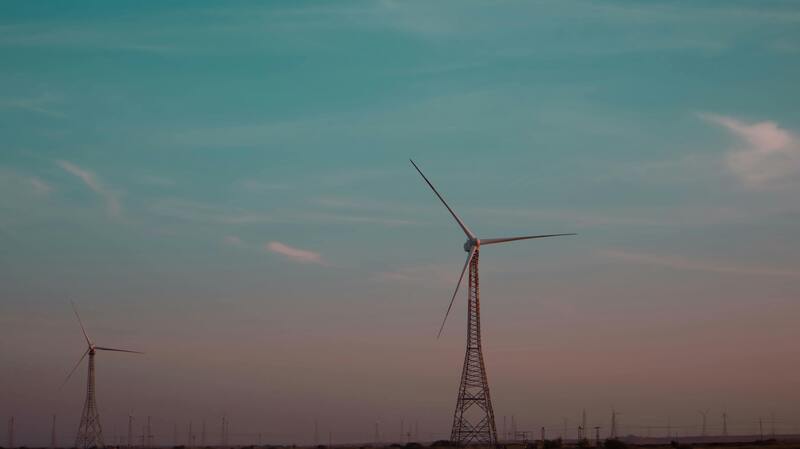
Project overview ReNew’s Round-the-Clock (RTC) Hybrid Renewable Energy Project is a landmark initiative aimed at delivering uninterrupted, 24/7 clean power by integrating wind, solar, and battery storage. With a total capacity of 3.3 GW spread across the Indian states of Rajasthan, Karnataka, and Maharashtra, the project combines three wind farms, a solar park, and a 100 MWh Battery Energy Storage System (BESS) to address the intermittency challenges traditionally associated with renewable energy. This innovative model is designed to provide firm and dispatchable renewable power, supporting India’s ambitious goal of achieving 500 GW of non-fossil fuel energy capacity by 2030.Approach ReNew’s strategy involved deploying a geographically diversified portfolio of assets to optimize weather variability across regions and enhance overall reliability. Solar generation in high-irradiance zones was paired with wind generation in high-wind corridors to create complementary production profiles and achieve an 80% plant load factor. A 100 MWh BESS was integrated to store surplus energy and dispatch power during low-generation periods.The project uses advanced technologies, including high-capacity wind turbines (exceeding 3 MW) and high-efficiency solar modules. It is backed by a 25-year Power Purchase Agreement (PPA) with the central-government-backed Solar Energy Corporation of India (SECI), which offtakes the entire output as stable, baseload renewable power. ReNew also invested in robust inter-state grid integration infrastructure and coordinated with local authorities to align land use and community development priorities with the project rollout. Business and economic value Having developed India’s first RTC renewable energy project, ReNew has established a new benchmark for the economic viability of large-scale, firm renewable power. By offering 24/7 clean energy, the project addresses one of the primary barriers to renewable adoption: reliability. RTC projects reduce the need for expensive grid balancing services, saving utilities and grid operators millions annually in backup costs.The project’s long-term PPA ensures predictable revenue streams, enhancing bankability and enabling access to low-cost debt. ReNew secured over US$1 billion in project financing—the largest single clean energy deal in India to date—from a consortium of 16 international lenders for the 1,300 MW mixed-technology RTC project. ReNew’s RTC model also delivers power at significantly lower costs than conventional energy sources: the tariff begins at INR 2.90/kWh in year one and averages around INR 3.5–3.6/kWh over 25 years—well below the typical cost of thermal, hydro, or nuclear power in India (INR 4–6/kWh).The project generated approximately 2,000 direct and 10,000 indirect jobs during the construction phase, with 300 ongoing operational roles, contributing to local employment across the three states. Beyond employment, ReNew implemented targeted community development programs that have benefited approximately 40,000 people. Initiatives included solar electrification and computer labs in schools; solar energy systems in hospitals; infrastructure for water conservation and piped water supply; and women’s empowerment programs through self-help groups, skill-building, and solar street lighting to improve safety and mobility.References: ReNew Power signs India’s first Round-the-Clock PPA with SECI - ReNewReNew secures over $1 billion project finance for 1,300 MW RTC renewable energy project - ReNewDelivering Power Round the Clock - ReNew Sustainability Report.India Energy Outlook 2023 - International Energy AgencyAchievements - Ministry of New and Renewable Energy (MNRE) Government of India
India
ReNew's Round-the-Clock (RTC) Hybrid Renewable Energy Project: Pioneering 24/7 Clean Energy in India under India’s 1st RE RTC Project
ReNew
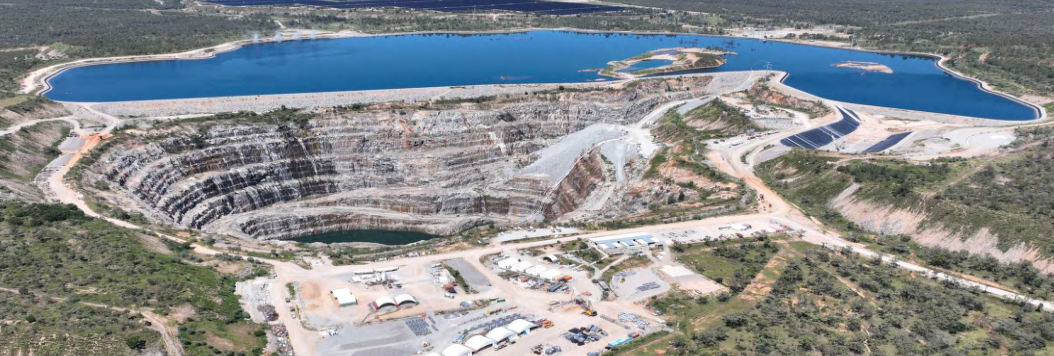
Project overviewThe Kidston Renewable Energy Hub is Australia’s first integrated solar and pumped hydro storage project, developed by Genex Power on a 1,500-hectare former gold mine in Far-North Queensland. Operational since 2017, the Kidston Stage 1 Solar Project (KS1) has a capacity of 270 megawatts (MW) and uses 540,000 single-axis tracking solar panels to maximize energy yield in one of Australia’s highest solar irradiation zones.  Repurposing existing mining infrastructure helped avoid typical land-use and permitting challenges. Building on this foundation, Genex Power[1] is developing the 250-MW/2,000-MWh Kidston Pumped Storage Hydro Project (K2-Hydro), designed to provide up to eight hours of continuous energy storage. The project repurposes two former mine pits as the upper and lower reservoirs, minimizing environmental impact while revitalizing disused infrastructure. Backed by a $396 million loan from the Northern Australia Infrastructure Facility (NAIF) and a $30 million grant from the Australian Renewable Energy Agency (ARENA),[2] K2-Hydro will be Australia’s first new pumped hydro project in over 40 years and is set to begin operation in 2025. ApproachKidston’s strategy combines renewable energy with industrial land reuse by converting an abandoned gold mine into a clean energy hub, avoiding land clearing and stakeholder conflicts. The solar output is secured by a 20-year Revenue Support Deed, while the pumped storage hydro project is backed by a 30-year energy storage services agreement with EnergyAustralia,[3] ensuring long-term revenue stability.  Advanced solar tracking systems boost efficiency and a 186-km, 275-kilovolt (kV) transmission line connects the site to the national grid – ensuring both solar and hydro outputs can be efficiently dispatched. The project reuses existing mine pits and sources water from the ground and rainfall. Once operational, the hydro component will be integrated with the solar array, storing excess daytime solar generation and dispatching it during peak demand periods or cloudy conditions, to help smooth the variability of renewable energy.  Business and economic valueAt the site of a former gold mine in Queensland, solar panels now stretch across land once carved out for extraction. By repurposing existing mining infrastructure – including roads, transmission lines and cleared land – the Kidston Solar Project avoided many of the costs and logistical barriers that typically slow down renewable projects. The reuse of mining assets helped reduce initial development costs by an estimated 15-20% compared to greenfield alternatives. Backed by a $5.71 million grant from ARENA, the project secured financing from major banks and was delivered on time and within its $73.81 million budget.[4]  In 2022, the Kidston Solar Project was recognized as Australia’s best-performing solar farm, achieving a 26.4% capacity factor – higher than the national average of ~21-22% for large-scale solar. Each year, it generates approximately 145 gigawatt-hours (GWh) of electricity powering over 26,000 homes and offsetting 120,000 tonnes of carbon dioxide (CO₂).  The economic impact of the Kidston Hub continues to grow with the addition of the hydro project. With a total capital cost of about $396 million, the project is expected to create around 500 direct jobs during construction and 20 ongoing operational roles. Beyond employment, it delivers long-term economic benefits by enhancing energy reliability and attracting investment to the region. Once operational, the project will deliver critical firming services to the national grid, helping Australia meet its renewable energy and emissions reduction targets. At the same time, it positions Far-North Queensland as a major hub for integrated renewable energy innovation.[5]ReferencesKidston Clean Energy Hub Factsheet - Genex Power 50MW Kidston Solar Project (KS1) - Genex Power 250MW Kidston Pumped Storage Hydro Project - Genex Power 270MW Kidston Hybrid Project - Genex Power Kidston Hybrid Project Community Engagement - Genex Power 
Australia
Kidston Renewable Energy Hub: Transforming legacy infrastructure into a multi-technology renewable powerhouse
Energy Australia, Government of Queensland, Australian Renewable Energy Agency (ARENA), Genex Power
Project overviewIn the United Kingdom (UK), Ørsted has committed to sharing the value of offshore wind directly with the communities that host its projects. Through its Community Benefit Funds (CBFs), the company has allocated over $14.7 million to support more than 800 local initiatives[1] across areas such as environmental conservation, education, community services, recreation and skills development. The funds, administered by independent charity GrantScape, are shaped by local advisory groups to reflect community priorities and are administered through transparent, competitive processes. In 2024, Ørsted began piloting a social return on investment (SROI) assessment across three of its funds – Hornsea 3, Walney Extension and the East Coast Community Fund – to quantify the social value created and guide future fund allocation strategies.  ApproachØrsted worked through community consultation to structure the CBFs to deliver sustained support and long-term value to communities in areas in which projects are constructed and operated. From the outset, each fund was developed through a participatory process: Ørsted and GrantScape conducted local consultations to identify funding priorities tailored to each region’s needs, ranging from youth programmes in Grimsby to wildlife conservation on the East Coast.  Community input is embedded at every stage. Local advisory panels, made up of residents and civil society leaders, review project proposals and determine funding allocations. This has helped ensure strong uptake – securing local trust while avoiding “one-size-fits-all” investments. In 2024, Ørsted launched its SROI pilot to evaluate not just how funds are spent, but how much measurable social value they generate. The pilot includes two tiers of analysis: Strategic assessments of the overall fund. Thematic deep dives analyses into five categories: environmental initiatives, community services, public facilities, recreation and skills development. The evaluation uses data-based modelling to assess how much social value and return per pound invested the project delivered. For example, one early finding from the SROI pilot analyzing the skills funds suggests that especially initiatives nurturing soft skill development have the potential to generate a significantly high social impact due to the broad relevance of skills such as improved communication, work readiness and professional confidence. Ørsted is using the pilot to answer three key questions: Where or through which themes does Ørsted create the greatest impact and why? What are the indicators Ørsted can utilize to inform further development of its community funds? Can Ørsted use the SROI framework to build the foundation for an outcome-based approach to its community investments? Business and economic valueA 2022 industry study showed that infrastructure projects with strong local buy-in are 2.5 times more likely to meet budget and schedule targets.[2] Ørsted’s long-term CBF model directly reduces development risk by fostering positive relationships with communities, minimizing local opposition and facilitating local investment in community infrastructure and the local community themselves, leaving a positive lasting legacy in the region. The SROI framework also provides measurable data that reinforces Ørsted’s ESG profile – supporting access to green finance and aligning with investor expectations for transparent impact reporting. The company’s approach has helped secure favourable financing terms and strengthened its position in competitive lease auctions. Skills-related investments through the funds are also addressing a sector-critical constraint: workforce shortages in offshore wind. By supporting science, technology, engineering and mathematics (STEM) education, apprenticeships and maritime training programmes, Ørsted is not only building local capacity, but securing its own talent pipeline for future operations. Moreover, local governments report that mechanisms such as Ørsted’s funds have increased civic participation and strengthened community cohesion[3] – outcomes that reduce the likelihood of delays, litigation or negative press, all of which can carry real financial cost. Ultimately, the CBFs support Ørsted in securing the social licence for building and operating its projects.  Additional informationList of dedicated regional funds: Burbo Bank Extension Community Fund: Approximately £225,000 annually, supporting projects in Merseyside and North Wales. East Coast Community Fund: Around £465,000 per year, including a £75,000 Skills Fund, benefiting areas along Yorkshire, Lincolnshire and North Norfolk coasts. Walney Extension Community Fund: Providing £600,000 approximately per year, with £100,000 ring-fenced for a dedicated skills fund for communities in Cumbria and Lancashire. Hornsea 3 Community Fund: Launched with £700,000 approximately per year, divided into a main Community Fund (£500,000), a Skills Fund (£100,000) and a Legacy Fund (£100,000) for capital green projects. References:Our Community Benefit Funds - Ørsted Project Agreements Can Drive Public Buy-in for Clean Energy - World Resources Institute Community acceptability and the energy transition: a citizens’ perspective - Energy, Sustainability and Society
United Kingdom
Ørsted Community Benefit Funds: Long-term investment in coastal communities
Ørsted
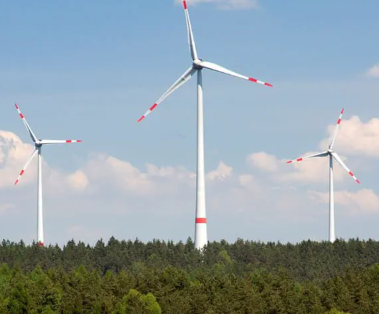
Project overview Located in the Upper Franconian district of Bayreuth, Bavaria, the Rotmainquelle Community Wind Farm is a 15-MW citizen-owned renewable energy project developed by Ørsted Onshore Germany (formerly OSTWIND). Commissioned between December 2015 and March 2016, the project features five Enercon E115 wind turbines and produces enough clean electricity to power the equivalent of around 12,000 German households annually, avoiding approximately 26,000 tonnes of CO₂ emissions each year.[1] What sets Rotmainquelle apart is its financing model: approximately 200 local citizens and two regional energy cooperatives invested a combined $5.75 million through subordinated loans. This structure ensured that financial returns from the wind farm flowed directly back into the community. Approach From the beginning, Ørsted Onshore Germany designed Rotmainquelle to prioritize local participation. The company offered qualified subordinated loans with a minimum investment threshold of just $1,150, enabling participation even from modest-income households. Investment sizes ranged from $1,110 to $55,500 and contributed directly to project construction. The investment offered a base return of 3.75% per year, with performance-linked bonuses pushing returns up to 6%, depending on annual energy output. Investors now receive repayments over a 10-year period beginning 2025, providing long-term, predictable income to local households. To keep benefits within the region, Ørsted prioritized outreach to Bavarian residents and cooperatives. For example, Wilhelm-Raiffeisen Energie eG Creußen – based near the project site – invested over $1.3 million (€1.2 million). These community investors weren’t passive stakeholders; they were actively engaged early in the development phase, which helped Ørsted gain community support, streamline permitting and avoid the delays often associated with wind power development in Germany.[2] Rotmainquelle is part of a broader wind cluster of five regional projects developed by Ørsted in Upper Franconia. Each project showcases a different model of local involvement – from energy cooperatives to municipally owned wind farms. Two nearby wind farms in Pegnitz, for instance, were co-developed and managed with the local city government. Business and economic value For participating citizens, the wind farm provides a stable return on investment, with annual payments reinforcing public support for renewable energy. This income distribution helps broaden the economic base of the energy transition, turning residents into direct financial beneficiaries and reducing the developer’s reliance on commercial debt, thereby reducing the project’s cost of capital. The project’s success has reinforced support for renewables in the region and laid the foundation for replication in other municipalities. By testing and validating a community-financed ownership model, Ørsted now has a scalable template for future citizen-led renewables – not just in Bavaria, but across markets where social acceptance and land access remain barriers. The surrounding municipalities have begun leveraging the model to create new public utilities, strengthen civic participation in energy decisions and foster economic development around clean energy assets. Local stakeholders are no longer just hosts to infrastructure – they are co-developers and long-term beneficiaries. Ultimately, co-ownership is a compelling model, particularly for smaller-scale projects, where it can be a win-win for communities, local authorities, the developer and energy transition. Exploring a variety of ownership and financing structures, tailored to local context, can minimize the risk of opposition and permitting delays[3] – common issues in Germany that can lead to project cancellations and sunk costs of up to $7.5 million.[4]References:  Onshore-Windpark Rotmainquelle | Ørsted Large-scale wind and solar developers concerned about social factors affecting deployment | Energy Markets and Policy Berkley Lab Renewable energy projects are facing increased delays, cancellations, and big losses - EUCI Large-scale wind and solar developers concerned about social factors affecting deployment | Energy Markets and Policy Berkley Lab 
Germany
Rotmainquelle Community Wind Farm: Community co-ownership powering local energy transition
Ørsted, Wilhelm-Raiffeisen Energie eG Creußen, Enercon
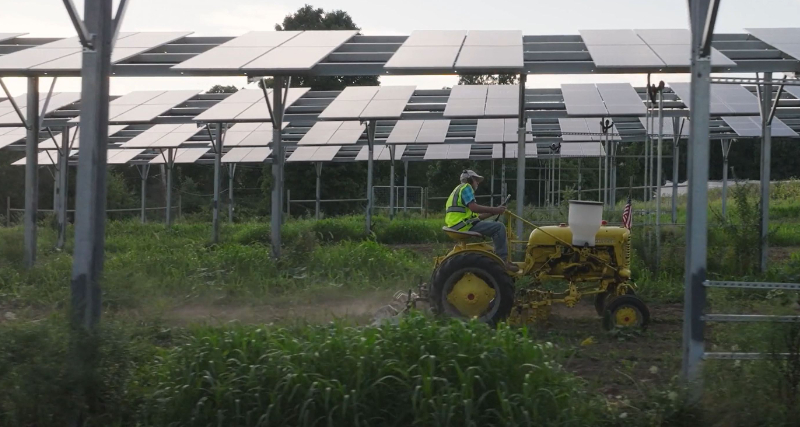
Project overviewLocated in Massachusetts, US, the Grafton Solar project is a 2-MW community solar farm with 1.4-MW of battery storage capacity, integrating solar power generation with active agricultural use. Operated by AES and operational since October 2022, the project demonstrates that at a small scale, energy, land use and community needs can be thoughtfully integrated.[1]The project was co-developed with partners including a local farmer, government, American Farmland Trust and University of Massachusetts Amherst (UMass Amherst),[2] ensuring the design met both energy and agricultural needs from inception. Unlike traditional solar projects that displace agriculture, Grafton Solar is designed for dual use, supporting rotational cattle grazing and crop cultivation beneath elevated solar arrays to co-locate solar infrastructure with active agricultural use.  ApproachGrafton Solar’s implementation centred around redesigning the solar infrastructure to preserve farmland functionality. The agricultural plan, co-developed with farmers, shaped key design choices: solar panels were elevated to a minimum height of 3.2 metres above ground and spaced further apart to accommodate farm machinery and livestock grazing. Although this raised construction and material costs compared to traditional ground-mounted systems, it ensured the continued use of land for food production and created climate co-benefits such as reduced heat stress for cattle and enhanced soil moisture retention. AES partnered with UMass Amherst and American Farmland Trust to research and monitor soil health, crop productivity and microclimatic impacts, contributing data to national agrivoltaics studies.[3] AES also conducted educational tours, farmer engagement and research dissemination to build community awareness and support for integrated energy-agriculture models. Business and economic valueGrafton Solar demonstrates how dual-use renewable energy infrastructure can generate community value and align with long-term land stewardship goals. By co-locating energy production with active agricultural use, the project supports multiple income streams for farmers: lease payments from AES and ongoing agricultural revenue. This diversification reduces exposure to volatility in either sector and reduces reliance on a single source of revenue.  The project avoided common land-use conflicts between farmers and developers, enabling smoother permitting and gaining strong support from farmers, local officials and residents. AES further reinforced its long-term responsibility by securing a financial bond for full decommissioning and site restoration, ensuring the land can return to full agricultural use at project end. The project also benefits from the Solar Massachusetts Renewable Target (SMART) programme,[4] which subsidizes energy bills for low-income households who subscribe to the project’s clean energy output.  Beyond the Grafton project, AES has applied the lessons learned to scale co-location strategies across other developments, with more than 10,000 acres under active grazing at over 50 solar farms across the US and other applications involving crop integration and sustainable ecosystem design. The project has also contributed data and insights to partners like the US Department of Energy, National Renewable Energy Laboratory (NREL) and American Farmland Trust, to demonstrate maintenance of full agricultural potential and how community-centred design and practical adaptation of solar infrastructure can align agriculture with energy transition, strengthening long-term value creation for communities and the planet.[5]References: Case Study: Grafton Solar – AgriSolar Clearinghouse Grafton Solar: Integrating Solar Energy & Agricultural Production-AES Farmland, Family, and the Future of Solar Energy – AgriSolar Clearinghouse  Grafton Solar - AES New reports highlight best practices for combining solar energy and agriculture - US Department of Energy Smart Solar℠ · American Farmland Trust Benefits of agrivoltaics for farmers - AES 
USA
Grafton Solar: Integrating renewable energy with agriculture for economic and environmental gains
AES, American Farmland, University of Massachusetts Amherst, University of Massachusetts
Project overview In Portage County, Wisconsin, US, Doral Renewables is developing the state’s largest solar project, the Vista Sands Solar project – a 1.3-GW (1,315.6-megawatts alternating current, MWAC) solar installation representing an investment of over $1 billion. As the project entered the permitting phase in early 2024, it encountered some local concerns due to its proximity to the Buena Vista State Wildlife Area, a critical habitat for the endangered prairie chicken. Concerns related to land use, environmental integrity and community impact posed potential risks to project approval.  To strengthen the regulatory case, Doral Renewables partnered with research and analytics firm Quantum Energy, to provide a data-driven assessment of the project’s wider benefits – quantifying public health, ecological and economic co-benefits beyond traditional emissions metrics. In December 2024, following this evidence-based approach, Wisconsin state regulators approved Vista Sands while praising the project's approach to community engagement and investment quality data. The project is expected to begin construction in 2026.  Approach Quantum Energy utilized its TotalView Energy Platform, funded by the National Science Foundation, to support the regulatory process. This analytics platform combines hourly electricity grid modelling with life-cycle emissions, land and water use, meteorological and demographic data to quantify avoided pollution, health outcomes, biodiversity impacts and economic returns. For Vista Sands, TotalView modelled reductions in greenhouse gases, particulate matter, human toxicity-causing emissions, photochemical oxidants, acidification-causing emissions, etc. It translated these into disability-adjusted life years (DALYs) saved and avoided healthcare costs. For example, modelling showed that lower air pollution levels would significantly reduce respiratory and cardiovascular-related diseases in nearby residential zones, which is particularly important in a region with above-average rates of such diseases. Ecological assessments focused on the site’s interaction with local species, including land use, water use and changes to pollutant levels in terrestrial and freshwater ecosystems. In conjunction with complementary studies, the analyses concluded that habitats of sensitive species, including the prairie chicken, would improve due to reduced greenhouse gas and terrestrial acidification-related emissions, reduced farming pesticide and insecticide use and an expansion of the ecological reserve (funded by Doral Renewables) that is home to many prairie chickens. Additionally, through siting modifications and habitat corridor protection measures, the project was reconfigured to maintain a 152-metre buffer around critical areas.  In addition to the electricity grid and life cycle impact assessment modelling, Quantum coordinated with legal, public health and environmental experts to co-develop technical submissions for hearings and statutory impact assessments. This ensured that findings could be directly used in regulatory decisions and public comments. Business and economic value The TotalView analysis estimated that the Vista Sands Solar project would displace approximately 1.2 GWh of natural gas and 950 GWh of coal-fired generation annually within the Midcontinent Independent System Operator (MISO) grid. This shift is expected to avoid 1.6 million metric tonnes of CO2 emissions in the first year of operation and provide enough clean electricity to power 446,032 homes.  The public health and ecosystem benefits are equally substantial. The project is projected to save 2,485 DALYs in its first year of operation, corresponding to reduced respiratory illness, fewer premature deaths and lower healthcare expenditures. It also avoids 3,260 metric tons of soil acidification emissions, as well as a number of other emissions affecting terrestrial and freshwater ecosystem quality, protecting the habitat corridors for at least five at-risk species. Financially, during its first year of operations, Vista Sands is expected to deliver $630 million in first year ecosystem and health benefits. When regulators proposed a project capacity reduction of 365 MW, Quantum’s modelling demonstrated that this would eliminate 631 of those DALYs and erase $136 million in benefits in the first year alone. The evidence was instrumental in retaining the project’s full scale, safeguarding both health outcomes and over $450 million in projected energy revenues.The total capital expenditure exceeds $1 billion, with around 500 jobs to be created during construction and 50 long-term operational roles. The project will provide over $6 million annually in utility aid payments to Portage Country and local municipalities. Additionally, its comprehensive co-benefit modelling has improved investor confidence, positioning it to compete for grants and other programs.   References:Home | Vista Sands Solar Farm Vista Sands Solar - Doral LLC Vista Sands Report - Quantum Energy TotalView Energy Platform - Quantum Energy Vista Sands 1.3 GW solar project approved in Wisconsin – pv magazine USA Vista Sands Solar Project Set to Transform Wisconsin’s Energy Landscape with Major Public Health, Environmental, and Economic Benefits - North American Clean Energy News Brief State regulators approve largest solar project in Wisconsin history - WPR Vista Sands Approved by the Public Service Commission of Wisconsin - RENEW Wisconsin U.S. Department of Energy’s Justice40 Initiative - The White House 
USA
Vista Sands Solar: Securing project permitting via data-driven public health and ecosystem impact assessment
Doral Renewables, Quantum Energy
Project overview In the town of Cedillo, located in Cáceres, Extremadura, Spain, Iberdrola has implemented an innovative dual-scale approach to solar energy development. The first is the Cedillo Solar Community, a 355-kilowatt collective self-consumption initiative that delivers direct energy benefits to local households and businesses. The second is a portfolio of large-scale utility solar projects – including the 50-MW Majada Alta and 50-MW San Antonio plants, as well as a larger 375-MW solar plant – which together establish Cedillo as a renewable energy hub.[1]Both initiatives are emblematic of Iberdrola’s Convive Programme, which seeks to align renewable energy deployment with community development, environmental integration and just transition outcomes. Through Cedillo, Iberdrola demonstrates how national-scale climate goals can be pursued in tandem with local socio-economic uplift and sustainability.[2]Approach The Cedillo Solar Community was co-designed with the Cedillo Town Council and local residents to deliver solar energy at no upfront cost. Iberdrola installed rooftop photovoltaic (PV) systems on seven municipal buildings and adjacent land, creating a networked model under Spain’s collective self-consumption law. Households subscribed voluntarily, with energy virtually allocated via smart metering and credited to individual electricity bills. More than 80% of the town’s households opted into the programme in its first year.[3]For the utility-scale developments, Iberdrola prioritized ecological and social integration. The projects were sited and developed with minimal ecological disruption and strong local consultation.[4] Cedillo’s renewables zone is part of Iberdrola’s broader strategy to regenerate rural areas through green industry, job creation and local partnerships. Across both scales, Iberdrola applied principles from its Convive Programme – a company-wide initiative to embed local benefit, biodiversity enhancement and stakeholder inclusion into all renewable energy developments. Through the Convive framework, Cedillo became a showcase for holistic renewables integration.[5]Business and economic value The Cedillo Solar Community has delivered clear economic and social benefits. Residents report electricity bill savings of 30-50%, representing significant relief in a rural area with limited income diversity. The infrastructure was fully financed by Iberdrola, with no capital required from participants. The creation of this first solar community for an entire village aims to contribute to the development of this town of 450 inhabitants and to tackle depopulation by attracting new residents to the municipality. New residents will be able to benefit from this measure for the next five years. This model improves energy affordability, reduces exposure to price volatility and fosters community trust.[6]For Iberdrola, the model builds brand value, enhances customer loyalty and reduces acquisition costs. The company faced no permitting delays or legal opposition in Cedillo. Moreover, the Cedillo community model aligns closely with EU funding priorities under the Green Deal and REPowerEU, unlocking eligibility for public financing streams related to energy equity, rural revitalization and decentralized energy. The large-scale solar plants in Cedillo add economic depth. Combined, the plants will produce enough clean electricity to power hundreds of thousands of homes, while avoiding significant CO₂ emissions annually. The construction phases of these projects have generated over 800 local jobs, with additional employment in maintenance, services and training programmes.[7] Iberdrola’s investment also enhances grid resilience in the Extremadura region – a critical objective for Spain’s energy transition. By pairing community-scale and utility-scale investments, Iberdrola has created a multi-layered business case: stable returns from utility-scale power purchase agreements (PPAs), social licence through local benefit and ESG alignment that supports sustainable finance and impact investment. References: Photovoltaic plants in Cedillo - Iberdrola Convive Programme - Iberdrola We start up the solar village of Cedillo in Extremadura - Iberdrola España Photovoltaic plants in Cedillo, an engineering challenge with minimum environmental impact – Iberdrola The country's first solar community for a village, promoted by Iberdrola Spain, is recognized as Europe's best sustainability initiative - Iberdrola España The country's first solar community for a village, promoted by Iberdrola Spain, is recognized as Europe's best sustainability initiative - Iberdrola España Photovoltaic plants in Cedillo, an engineering challenge with minimum environmental impact – Iberdrola 
Spain
Convive Programme: A just energy transition in action - The Cedillo solar community
Iberdrola, Cedillo Town Council
Project overview  Delays in renewable energy projects are often caused by poor site selection, resulting in legal disputes, community opposition and environmental degradation. As wind and solar power development scales rapidly, identifying suitable locations for these investments is more critical than ever.  In response, digital tools are emerging as powerful enablers. One such tool is Global Renewables Watch (GReW) – a collaboration between The Nature Conservancy (TNC), Microsoft and Planet Labs. GReW leverages artificial intelligence (AI) to help energy developers identify low-conflict sites for renewable energy projects, which can help reduce the cost of delays and accelerate permitting timelines.[1] All data generated through this partnership is publicly available on Global Renewables Watch.[2]Approach GReW is a dynamic, innovative atlas designed to map the location and performance of every utility-scale solar and wind installation worldwide. It uses AI and high-resolution satellite imagery to track development trends and site-level changes over time. The platform supports estimation of wind and solar power capacity and enables progress tracking towards the Paris Agreement targets.[3]Additionally, GReW helps identify where renewable energy development intersects with critical conservation areas, informing TNC and other organizations in prioritizing efforts.[4] The tool enables predictive modelling to locate low-conflict development zones and provides estimates of nameplate capacity and capacity growth over the past seven years – by country and by state or province.  This foundational work inspired TNC to apply AI-driven mapping to solar and wind power development in India, contributing directly to the advancement of the SiteRight tool.[5]Business and economic value The data from GReW, including land use and siting information, can help renewable energy practitioners and policy-makers guide renewable energy development to areas with minimal environmental impacts, ultimately promoting faster deployment. Siting conflicts are among the leading causes of project delays in the renewables sector, often costing developers $2-3 million per year in financing charges for every year a project is delayed.[6] AI-enabled siting tools help mitigate these risks by identifying lower-conflict areas for development. By proactively addressing environmental and social risks, such tools can reduce permitting timelines by 20-30%, improve regulatory alignment and strengthen community acceptance. This leads to faster project execution, reduced legal and permitting complexity and more stable investment outcomes – key priorities for utilities, investors and governments alike.  Additionally, responsible siting improves project eligibility for green finance, ESG-linked investment and government funding schemes focused on nature-positive outcomes. Through smarter siting, reduced risk, faster permitting and enhanced investor appeal, responsible deployment becomes a catalyst for the scalable, profitable growth of the renewable energy sector. As institutional investors increasingly demand evidence of biodiversity protection and local co-benefits, digital siting tools provide a standardized, scalable way to demonstrate impact alignment. At a sector-wide level, broader adoption of siting tools can help mainstream responsible deployment practices. By translating complex social and environmental datasets into actionable insights, these tools reduce conflict, lower costs and accelerate renewables deployment – while ensuring projects align with broader goals of equity, biodiversity and a just energy transition. Ultimately, responsible siting is not a barrier to speed, but a strategic enabler of scalable, investable growth in the renewable energy sector. References:Teaming Up with Microsoft - The Nature ConservancyMicrosoft, Planet and The Nature Conservancy launch the Global Renewables Watch - MicrosoftGlobal Renewables Watch - MicrosoftSustainable Energy Solutions - Microsoft SustainabilityWorld Biodiversity Day: Upgraded MARXAN Platform Changes the Nature of Conservation Planning - The Nature ConservancyA Planetary Computer for a Sustainable Future - Microsoft SiteRight tool - The Nature ConservancyRenewables 2023: Permitting and Financing Risks - IEA
Global
Microsoft-TNC Partnership: Leveraging AI for responsible renewable deployment and environmental protection
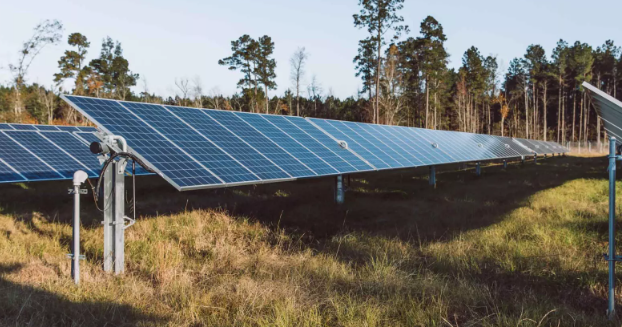
Microsoft, The Nature Conservancy
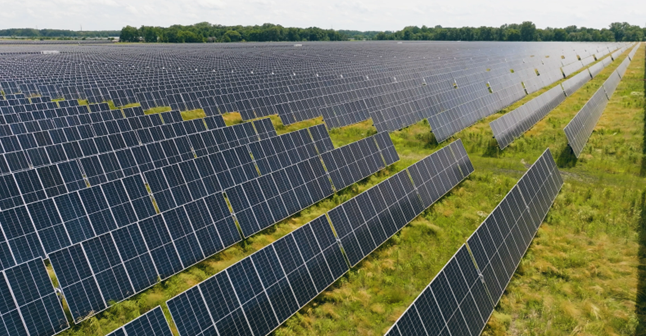
Project overview Wolf Run Solar Park is a 140-MW solar photovoltaic facility developed by EDP Renewables North America (EDPR NA) in Morgan County, Illinois, US. Wolf Run was purpose-built to power renewable energy. Operational since late 2024, the project, which is forecasted to be operational for 35-40 years, features 351,800 bifacial tracking solar panels across roughly 1,000 acres, maximizing solar capture efficiency throughout the day.[1] Through a long-term virtual power purchase agreement (VPPA), Microsoft has committed to procuring electricity and renewable energy credits (RECs) from Wolf Run, aligning its carbon reduction targets with the rapid expansion of high-energy digital infrastructure.[2]Approach The development of Wolf Run Solar Park strategically combined advanced solar technology, strong corporate partnerships and proactive community engagement. EDPR NA deployed bifacial solar panels with single-axis trackers, increasing overall energy yield by capturing sunlight from both sides of the panels. To ensure long-term financial viability, EDPR secured a VPPA with Microsoft early in the project timeline, locking in stable revenue streams and aligning energy production with one of the world’s fastest-growing sectors: AI.  From the outset, the project prioritized community integration and job creation. It accounted for environmental considerations, with the project estimated to save more than 177 million gallons of water each year while preventing air pollution that causes smog, acid rain and climate change. Additionally, Wolf Run’s remote grid integration was carefully managed to support both Microsoft’s energy needs and regional grid stability. Business and economic value By securing a long-term VPPA with Microsoft, the project de-risked its revenue profile, making it highly attractive to investors and financial institutions seeking low-risk, ESG-aligned assets. Over its projected 40-year operational lifespan, in addition to the benefits to Microsoft as the offtaker, the project yields long-lasting economic growth and numerous financial benefits to the region. Wolf Run will contribute approximately $31 million in property tax revenues to local governments, with significant allocations directed to the Triopia School District, supporting local education and workforce development.[3]n addition, the project will generate $4.6 million in total local economic impact – of which $2.3 million will be paid to local landowners and $2.3 million will be spent with small, local and family-owned businesses. The project also supported workforce development with the creation of more than 210 local construction jobs and several permanent operational and maintenance positions.  Microsoft’s partnership not only guarantees energy demand but also positions Wolf Run at an advantage in a fast-growing sector where clean energy procurement is becoming a competitive advantage. Wolf Run will support Microsoft’s sustainability and carbon reduction goals. In 2021, Microsoft launched a “100/100/0 clean energy goal,” with the target being 100% of electricity consumption, 100% percent of the time,[4] matched by purchases from zero-carbon energy sources by 2030.[5] This would add to its prior commitment to use 100% renewable energy in its buildings and data centres globally by 2025. Microsoft has also committed to becoming carbon negative by 2030 and to cover 100% of its electricity consumption in its buildings and data centres globally with renewable energy by 2025.  In broader terms, the project illustrates how digital infrastructure growth can be aligned with responsible energy deployment. By combining clean energy procurement with community engagement, water conservation and low-emission operations, Wolf Run demonstrates a replicable model for meeting corporate energy needs in a way that also supports local economic development and environmental stewardship. This approach provides a clearer pathway for scaling renewables in high-demand sectors like AI and cloud computing, while maintaining public trust, minimizing ecological impact and enabling more equitable energy transitions. References:Wolf Run Solar Park Fact Sheet - EDP Renewables North America.EDP Renewables North America Delivers Three Additional Renewable Energy Projects for Microsoft - EDPWolf Run Solar Park now operational, generating 140MWMicrosoft Launches Cloud Service Enabling Emissions Tracking and Reporting, Sets Zero Carbon Energy Goal - ESG TodayMicrosoft Commits to Carbon Target Moonshot - ESG Today
USA
Wolf Run Solar Park: Powering clean energy with AI and driving local economic growth
EDP Renewables, EDP
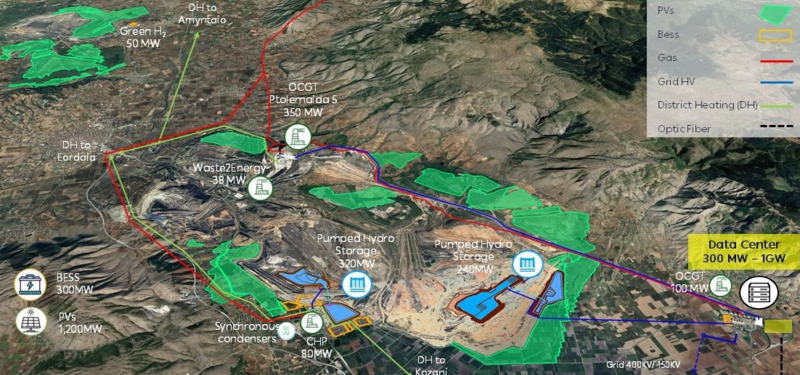
Project overview PPC Group, the leading Southeast European electric utility and the largest power supplier in Greece and Romania, is driving a landmark transformation in Kozani, Northern Greece – Greece’s former lignite heartland – by investing €5.75 billion in renewable energy, green industry and digital innovation. Historically dependent on lignite mining and coal-fired power plants, the region is undergoing one of Europe’s most ambitious energy transitions. This large-scale redevelopment is part of Greece’s national decarbonization strategy and is supported by European Union (EU) recovery and resilience mechanisms.  The PPC initiative is designed to replace fossil-based infrastructure with clean energy assets while creating new economic and social opportunities for local communities. The project offers a replicable example of how fossil fuel-dependent regions can transition towards more diversified, resilient and inclusive clean energy economies.    Approach PPC’s strategy in Kozani combines large-scale renewables deployment with industrial and digital transformation. At the heart of the initiative is the development of 3 GW of new clean energy capacity, including 2.13 GW of solar PV sited on rehabilitated lignite mines. Most of this capacity is expected to be operational by 2025. To support system flexibility, PPC is building 860 MW of pumped hydro energy storage, including an 8-hour, 320-MW facility at the former Kardia Mine and a 12-hour, 240-MW facility at South Field Mine, alongside up to 300 MW of battery storage.[1] This integrated storage infrastructure will help balance the variability of renewables generation, enabling more stable and efficient energy distribution throughout the day. To further enhance grid reliability, the existing generators at the decommissioned Kardia lignite power plant will be converted into synchronous condensers. This will support the stability of the national ultra-high-voltage electricity transmission grid, facilitating greater integration of renewable energy sources.  To drive digital growth, PPC is building a 300-MW data centre (scalable up to 1 GW). The data centre is ready to begin construction once hyperscaler agreements are finalized, with completion anticipated by 2027. A new fibre-optic network will accelerate digital transformation and attract tech-sector investment into the region. The data centre will be powered by new renewables capacity and a converted 350-MW open-cycle gas turbine (OCGT) by 2027, with potential upgrade to a 500-MW combined-cycle gas turbine (CCGT) based on future data centre expansion, all located in Kozani. The plan also includes green hydrogen pilot projects, aiming to attract tech investment, create future-proof jobs and position Kozani as a clean energy innovation hub. Business and economic value The Kozani redevelopment reflects the strong economic rationale behind a responsible and forward-looking energy transition. Replacing uncompetitive lignite plants with clean energy assets reduces operating costs, cuts greenhouse gas emissions, improves local air quality and aligns with EU climate goals and electricity market reforms. According to International Energy Agency (IEA) emissions benchmarks, the solar capacity alone could avoid around 3 million tonnes of CO₂ emissions annually.[2]The initiative is also designed to maximize local economic value. Construction is expected to create 10,000 jobs, with up to 1,000 permanent roles during operation and more if the data centre is expanded. PPC has committed to supporting the workforce transition by investing in skills development and retraining programmes for former coal-sector workers, in collaboration with universities and technical institutes.  Circular economy principles underpin the transition: approximately €400 million is being invested in land restoration and decommissioning, with 95% of dismantled materials to be recycled and 8,000 hectares of degraded mining land returned to the Greek state for ecological and community use. The project also introduces new mechanisms for shared ownership and public participation. PPC recently launched a €5 million social bond available exclusively to Kozani residents, guaranteed by the company and offering a fixed 8% return.[3] This enables community members to directly invest in – and benefit from – the region’s clean energy future. Planning and governance are anchored in the European Union’s Just Transition Mechanism, with oversight provided by Greece’s Governmental Monitoring Committee for Just Transition. This ensures stakeholder engagement, transparency and alignment with national and EU just transition frameworks. Taken together, PPC’s investments in Kozani illustrate how former fossil fuel regions can be transformed through integrated clean energy, and industrial and digital development – enabling faster, more inclusive energy transitions that deliver long-term economic and societal value. References:PPC Group: 5.75 bn investments in green energy and technology transform Western Macedonia - PPC GroupAnnual direct CO2 emissions avoided per 1 GW of installed capacity by technology and displaced fuel - IEACommunity Engagement and Fair Benefit Sharing of Renewable Energy Projects - Climate Action Network Europe
Greece
PPC Group: From lignite to innovation – Kozani’s just transition to a clean energy and technology hub

PPC Group
Project overview Coal-fired power generation accounts for approximately 25% of Chile’s greenhouse gas emissions, making it a major contributor to the country’s climate footprint. In response, the government launched a decarbonization plan in 2019 to retire or repurpose coal-fired power plants – starting with eight units by 2024 and targeting a full phase-out by 2040 through voluntary agreements with operators.[1] This policy is supported by the 2022 Framework Law on Climate Change, which sets a national target of carbon neutrality by 2050. In parallel, the Ministry of Energy developed a Just Energy Transition Strategy emphasizing local economic development, social inclusion and participatory governance.[2] As part of this strategy, the ministry partnered with SERCOTEC, an agency under the Ministry of Economy, to launch an entrepreneurship capacity-building programme for workers and families affected by coal plant closures. The goal was to enable affected households to develop alternative income streams and contribute to the broader energy transition.[3]Approach The initiative was launched in 2024 as part of regional socio-ecological transition action plans in the Antofagasta, Valparaíso and Biobío regions. The programme targeted former coal sector workers, their spouses or civil partners and adult children living in impacted communities, with or without pre-existing business registration. Delivered in two phases, the programme began with in-person training on business model development, pitching skills and green economy principles. Participants then advanced to the implementation phase, receiving professional advisory support and access to startup subsidies for business creation. Emphasis was placed on supporting family-run businesses that could supplement household income and contribute to local economic resilience. The execution period for this programme is March 2024 to February 2025, allowing sufficient time to pilot the approach, assess impact and refine support structures. Business and economic value This programme offers a grounded example of how just transition efforts can deliver local economic benefits while supporting national decarbonization goals. With a total investment of 220 million Chilean pesos, it supported the launch of 50 new entrepreneurship projects across the three participating regions. This included $92 million allocated to Biobío (23 projects), $72 million to Antofagasta (19 projects) and $56 million to Valparaíso (eight projects). Beyond direct job creation, the programme contributes to household income stability and fosters local economic regeneration in regions previously reliant on coal. Structured training and advisory services ensure that beneficiaries are equipped not only to start businesses, but to sustain them – laying a foundation for long-term economic diversification. Importantly, the initiative is closely tied to Chile’s broader energy transition goals. By embedding entrepreneurship support within coal phase-out strategies, the government has created a model for pairing environmental ambition with inclusive development. This strengthens public support for climate policy and helps ensure that communities historically dependent on fossil infrastructure are active participants in shaping the post-carbon economy. References:OECD Environmental Performance Reviews: Chile 2024 - OECDProgress in the Retirement of Coal: Facilities in Chile and the Definition of a Just Energy Transition Strategy - Powering Past Coal AllianceSME Policy Index: Latin America and Caribbean 2024 - OECD
Chile
Entrepreneurship capacity-building for communities affected by coal plant closures in Chile
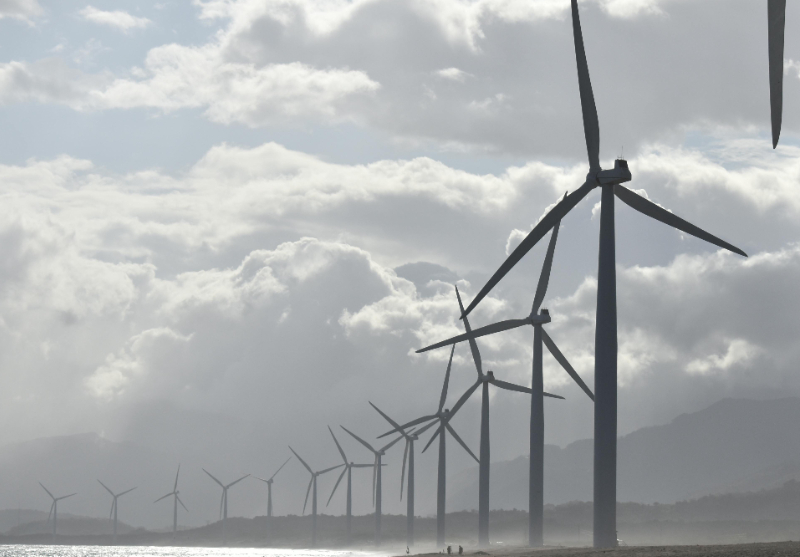
Ministry of Energy of Chile, Technical Cooperation Service (SERCOTEC)
Project overview Launched in 2020 with over £50 million in funding, the OWEC Programme is a flagship initiative led by The Crown Estate in partnership with DESNZ and DEFRA.[1] It supports the scalable, sustainable growth of the UK’s offshore wind sector through a cross-sector collaboration involving government, industry and environmental organizations. OWEC aims to reduce consenting delays which can cost developers up to £200,000 per day, minimize cumulative environmental impacts and build a strategic evidence base for responsible offshore wind deployment.[2]Comprising over 30 interlinked projects, OWEC tackles challenges across environmental data gaps, biodiversity baselining, underwater noise monitoring, mitigation pilots and inclusive community engagement. It contributes directly to the UK’s Marine Spatial Prioritisation programme,[3] aligning with net-zero and marine protection goals. Approach OWEC adopts a systems-based and collaborative governance model, working with over 20 partners across sectors – academia, non-governmental organizations (NGOs), regulators and industry. Its work is structured around four thematic clusters: strategic evidence-building, mitigation and innovation pilots, decision-support tool development, and policy and governance enablement. Notable pilots include POWEM,[4] which explores spatial techniques to reduce seabird collisions and S3 (Subsea Soundscape study), which monitors cumulative underwater noise impacts on marine mammals. The Crown Estate also operates the Marine Data Exchange, the world’s largest repository of offshore marine industry survey data, facilitating transparent and data-rich project development. The programme’s multi-phase governance process includes co-design of research priorities, peer-reviewed evidence generation and coordinated dissemination via policy briefings, industry forums and regulatory working groups. By feeding directly into the UK Marine Spatial Prioritisation programme, OWEC also ensures alignment with national net-zero and marine protection goals. Business and economic value OWEC directly addresses one of the most significant barriers to offshore wind development: consenting delays, which can cost developers up to £200,000 per day, according to the Crown Estate. By filling data gaps and strengthening regulatory confidence, the programme accelerates permitting and improves project bankability. It also reduces litigation risk by investing in environmental mitigation and strengthening the science-policy interface, thereby improving the overall resilience of the UK’s offshore wind pipeline. OWEC’s transparent and coordinated approach sends a strong market signal, enhancing investor confidence in the UK as a stable and forward-looking offshore wind market. Beyond permitting, the programme fuels job creation in data science, marine ecology and environmental consultancy. Its innovation in digital infrastructure – such as AI-enabled wildlife tracking and geospatial data platforms – has broader utility across marine conservation, fisheries and coastal logistics. And by enabling co-location strategies that balance wind development with conservation and fisheries, OWEC improves spatial efficiency and reduces stakeholder conflict, unlocking greater economic value from shared marine spaces. References:Offshore Wind Evidence and Change Programme - The Crown EstateThe Offshore Wind Evidence and Change Programme Annual Report 2024 - The Crown EstateGoverning the marine environment - Second report of Session 2024-25 - UK ParliamentGuidance - Offshore wind development: library of strategic compensatory measures - DEFRA
United Kingdom
De-risking Nature-smart Deployment at Sea: The Crown Estate’s Offshore Wind Evidence and Change (OWEC) Programme
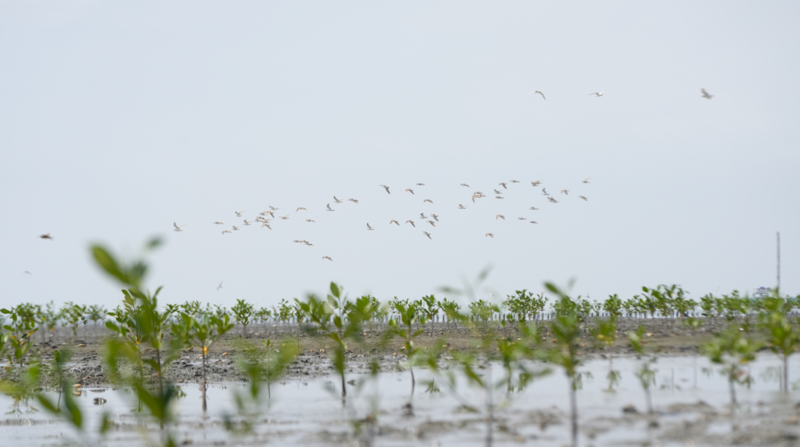
The Crown Estate, Department for Energy Security and Net Zero, Department for Environment, Food and Rural Affairs of the United Kingdom (DEFRA)
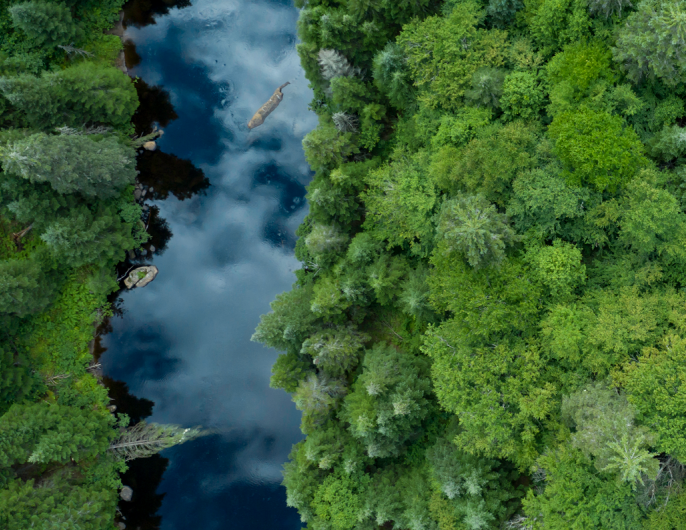
Project overview The AquaForest project, coordinated by Jan De Nul Group, is a pioneering initiative in coastal nature-based solutions and ecological restoration. Running from 2019 to 2025, it rehabilitates 50 hectares of mangrove habitat in the Guayas River Delta near Guayaquil, Ecuador, by repurposing dredged sediments from the nearby access channel to the Port of Guayaquil.[1] The project addresses Ecuador’s alarming mangrove loss – over 50% since 1980 – driven by urbanization, aquaculture and deforestation. In addition to restoring ecosystems, AquaForest strengthens climate resilience by improving flood protection (adaptation) and supporting carbon sequestration (mitigation). The consortium includes local academics (ESPOL), an NGO (Calisur) and private-sector partners, with engagement from the Municipality of Guayaquil, Ecuadorian Navy, Ministry of Environment, crab fishing associations and national NGOs. Approach AquaForest implements a green-grey infrastructure strategy, combining traditional marine engineering with nature-based solutions.[2] Its core components include: Sediment reuse: Transforming dredged material into a regenerative asset by constructing the mangrove-supportive island. Eco-engineering: Designing the island with precise elevation, drainage and hydrodynamic adaptations to mimic natural mangrove conditions. Community engagement: Partnering with local stakeholders – including crab fishers – for the planting of over 12,000 mangrove trees and 21,500 propagules, with a 90% survival rate,[3] building stewardship and local ownership. Research and monitoring: Collaborating with academic and scientific partners to monitor biodiversity, carbon storage and social impact. This co-creation model includes international partners – among them Belgian universities UA and VUB, consultants Mantis, Haedes, and South Pole, Escuela Superior Politecnica del Litora (ESPOL) and Fundación CALISUR – and engages entities such as the Municipality of Guayaquil, Ecuadorian Navy, Ministry of Environment and local fisher associations. Funding comes from the Flanders International Climate Action Programme and the Blue Natural Capital Financing Facility (IUCN). Business and economic value The AquaForest project demonstrates a unique case of coastal nature-based solutions and active ecological restoration that create enduring economic and operational value for infrastructure developers. By reusing dredged sediment, Jan De Nul significantly reduces the costs and environmental impact of dredged material disposal, transforming what would traditionally be a waste product into a regenerative asset. This circular approach has the potential to lower dredging-related expenses but also contribute to the creation of high-value coastal ecosystems and coastal protection.[4]The restored mangroves enhance biodiversity, protect local shorelines from erosion and flooding, and provide critical breeding grounds for crab, fish and other marine life – supporting climate and economic resilience of the nearby communities. Over time, these ecological benefits also translate into economic benefits through boosted fisheries, eco-tourism and natural disaster risk reduction. In areas vulnerable to sea-level rise and extreme weather events, mangroves act as natural buffers, potentially saving millions in future climate adaptation costs.  Therefore, there is a significant potential for replication of the AquaForest approaches in the field of conventional dredging and coastal infrastructure, by addressing the needs of port authorities, coastal management agencies and coastal infrastructure developers, who are already involved in sediment management and actively seeking sustainable, circular alternatives aligned with climate resilience and biodiversity restoration goals. From a climate finance perspective, the project’s focus on mangrove restoration positions it to benefit from emerging blue carbon markets. Given that mangroves can sequester up to four times more carbon per hectare than terrestrial forests, the site could generate tradable carbon credits and access nature-based financing mechanisms. This makes AquaForest not just an environmental restoration effort, but a financially strategic one – blending nature-based solutions with long-term investment planning. While the AquaForest approaches have been demonstrated in Ecuador, Jan De Nul has identified new prospects in tropical and subtropical regions, particularly in Southeast Asia, West Africa and Latin America, where coastal zones, deltas and degraded mangrove areas overlap. These regions hold strong potential for replication, as governments increasingly prioritize nature-based coastal protection and climate-adaptive infrastructure development. By aligning ecological performance with socio-economic development and financial innovation, AquaForest demonstrates that nature-positive infrastructure is not only feasible, but a smart and scalable strategy for developers operating in sensitive coastal regions. References:Aquaforest, from dredged sediments to mangrove forests - Jan de NulAquaForest: A nature-based solution for dredged sediments - International Association of Dredging Companies (IADC)Mangrove grows spectacularly fast on island built from scratch - Jan de NulNature-based Solutions for restoring and developing new mangrove habitats through eco-engineering - EGU General Assembly
Ecuador
AquaForest: Pioneering mangrove restoration and coastal nature-based solutions
Jan De Nul, Escuela Superior Politecnica del Litoral - ESPOL, Fundación CALISUR, International Union for Conservation of Nature (IUCN), Government of Flanders
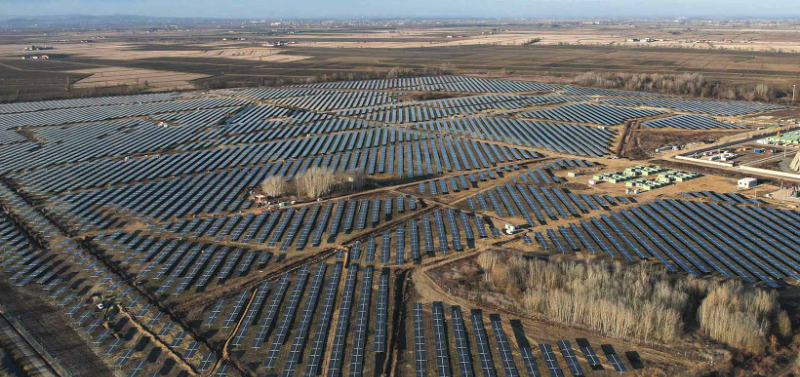
Project overview BirdLife International leads the development of the Avian Sensitivity Tool for Energy Planning (AVISTEP) with the support of the Asian Development Bank (ABD) and DEG Impulse and collaborates in the development of the Integrated Biodiversity Assessment Tool (IBAT) with other members of the IBAT Alliance; UNEP-WCMC, IUCN, and Conservation International. IBAT hosts key global biodiversity datasets; the World Database on Protected Areas (WDPA), the World Database of Key Biodiversity Areas (WDKBA) and the IUCN Red List of Threatened Species. These datasets help identify where renewable energy developments intersect with protected and conserved areas, the most important areas for the persistence of biodiversity (Key Biodiversity Areas - KBAs) and threatened species. AVISTEP provides a detailed spatial assessment of avian sensitivity in relation to different types of energy infrastructure - wind (both on- and offshore), photovoltaic (PV) solar, and overhead power lines (transition and distribution). IBAT[1] and AVISTEP[2] help guide developers, financiers and governments in avoiding ecologically sensitive areas and in minimizing environmental risks. By enabling more responsible and efficient infrastructure development, this approach towards biodiversity-inclusive spatial planning demonstrates how biodiversity protection and renewable energy growth can be mutually reinforcing. Approach This approach adopts a proactive and science-based strategy to renewable energy development, addressing biodiversity risks early in the planning life cycle. Recognizing that the global energy transition will require significant land and sea areas for wind, solar and powerline expansion, the project integrates biodiversity considerations at the spatial planning stage to avoid conflict and ecological harm.[3] Key features of the approach include: Early screening and spatial prioritization: Identifies areas with threatened species, sensitive ecosystems or high avian vulnerability – prioritizing avoidance and early mitigation planning. Embedded in national policy: AVISTEP is now part of national renewable energy strategies in a number of countries, including Vietnam and Uzbekistan, influencing strategic environmental assessments (SEAs), environmental impact assessments (EIAs) and broader infrastructure policy. Embedded in corporate frameworks and standards: IBAT and the datasets within IBAT are now referenced in multiple nature-related frameworks and standards including the Taskforce on Nature Related Financial Disclosures (TNFD), the Global Reporting Initiative (GRI), and the European Sustainability Reporting Standards (ESRS) where IBAT is suggested/recommended to support materiality assessments and site prioritization.This nature-safe planning model directly supports the synergistic achievement of climate, biodiversity and development goals, as outlined in the Global Biodiversity Framework and the Paris Agreement. Business and economic value This approach creates significant value by bridging a critical gap between renewable energy development and biodiversity protection – an area often overlooked due to regulatory, financial and operational constraints. By providing a practical, science-based framework, it enables governments, developers and financiers to identify and avoid ecologically sensitive areas early in the planning process. This upfront clarity reduces the risk of project delays, costly mitigation, and reputational or regulatory setbacks. Directing development towards low-risk areas can result in faster permitting, improved investor confidence and a clearer path to long-term project viability. Governments benefit from transparent, data-driven planning that aligns with national biodiversity and energy goals, while communities gain from more responsible development and greater opportunities for consultation – enhancing trust and social licence to operate. Avoiding high-impact zones from the outset also lowers the long-term costs and complexity of environmental management, making renewable expansion more efficient and sustainable.[4]The tools at the core of this approach are scalable and widely applicable. IBAT is available globally, while AVISTEP, with a development cost of roughly $300,000 per country, has already been successfully developed for Egypt, Kenya, India, Nepal, Laos, Thailand, Uzbekistan and Viet Nam and more countries are added every year. References:Integrated Biodiversity Assessment Tool (IBAT)Avian Sensitivity Tool for Energy Planning (AVISTEP)Avian Sensitivity Tool for Energy Planning (AVISTEP) - Asian Development BankIberdrola's commitment to preserving and enhancing Biodiversity through IBAT - IBAT Alliance
Egypt, Kenya, Nepal, Lao PDR, Thailand, Uzbekistan, Viet Nam
Spatial planning tools to ensure nature-safe nature-positive renewable energy development – AVISTEP and IBAT
BirdLife International, Asian Development Bank (ADB), DEG Impulse, International Union for Conservation of Nature (IUCN), United Nations Environment Programme - World Conservation Monitoring Centre (UNEP-WCMC), Conservation International
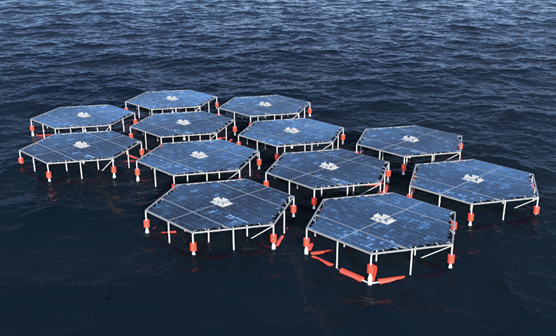
Project overview Located in Piedmont, Northern Italy, the Trino Solar Park [1] is a flagship example of clean energy deployment at a historically significant energy site. Developed by Enel, the project repurposes a 130-hectare site that hosted a thermoelectric power plant, in the same municipality that once was home also to a nuclear power plant. It now houses 160,000 bifacial photovoltaic panels and two lithium-ion battery energy storage systems (BESS), generating approximately 130 GWh of electricity annually – enough to power around 47,000 households and avoid 56,000 tonnes of CO₂ emissions per year.[1]The project became operational in 2024 and represents a multidimensional approach to clean energy: combining advanced solar and storage technologies with community engagement, visual integration and ecological restoration. It reflects Italy’s broader strategy to accelerate renewable energy while ensuring social and environmental alignment.[2]Approach The Trino Solar Park demonstrates how clean energy development can be paired with environmental stewardship and participatory planning. Its technical core includes the installation of 3,096 single-axis solar trackers to optimize exposure and generation efficiency. Two BESS units – 25 MW/100 MWh and 208 MW/835 MWh – enable energy shifting, frequency regulation and enhanced grid flexibility. Community engagement was embedded from the start. A local crowdfunding campaign, “Scelta Rinnovabile,” exceeded its fundraising target by 150%, allowing residents to directly invest in the energy transition.[3] Local community will also benefit from the restoration of key heritage buildings in Borgo Leri-Cavour - once the rural residence of Camillo Benso, Count of Cavour, a leading figure in Italy's 19th-century 'Risorgimento'. The project also includes environmental offset measures co-designed with local authorities: reforestation on substantial private and public lands - of which nine hectares with 9,000 native trees completed, the creation of a wetland, and landscape integration using hedgerows and tree rows to reduce visual impact. This hybrid model of technological innovation and stakeholder co-creation positions Trino as a leading example of how energy infrastructure can deliver on multiple fronts: climate, reliability, equity and ecology. Business and economic value Trino Solar Park contributes measurable value across the energy, environmental and local economic domains. The integration of BESS is a key enabling factor of energy transition; it enhances system reliability by allowing renewable energy to be stored and used during peak demand or grid balancing, reducing dependency on fossil-based backup generation. The project supported job creation during the construction phase, particularly through the use of local contractors and labour. Its innovative crowdfunding model further deepened local participation and trust, illustrating how community-financed energy can foster public ownership and strengthen social licence. Environmental compensation measures – including reforestation and wetland creation – not only restored ecosystem functions but also contributed to local biodiversity and climate adaptation. These co-benefits increase the long-term value of the land and demonstrate how renewable energy deployment can be harmonized with ecological recovery and spatial regeneration. Trino exemplifies a responsible energy transition: one that is not only technology-driven but also place-based, inclusive and environmentally restorative. References: Solar park and storage in Trino Italy - Enel Green PowerEnel Green Power puts into operation Northern Italys largest photovoltaic plant in Trino, leading the energy transition - EnelLinking energy transitions with community initiatives - BBC
Italy
Trino Solar Park and Battery Storage: Driving sustainable power through local integration and community engagement in Northern Italy
Enel
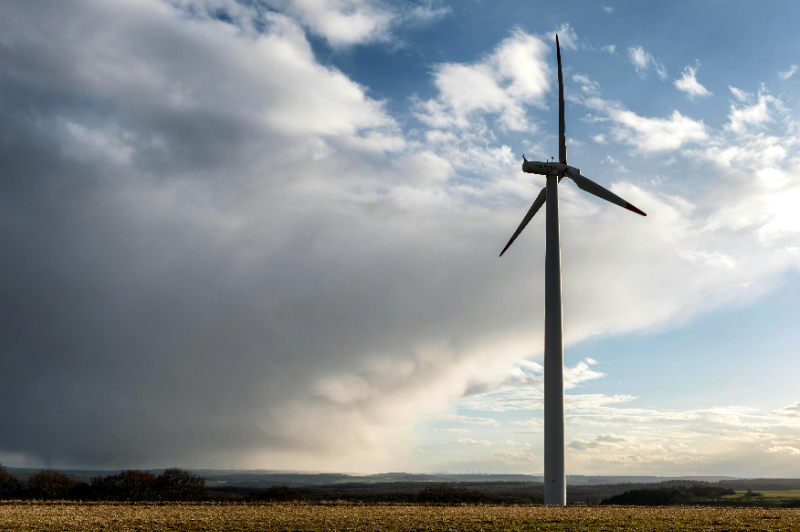
Project overview The Huaneng Shandong Peninsula South No.4 Offshore Wind Power Project, also called Yellow Sea No.1, is a pioneering hybrid wind-solar project located 30 km offshore from Haiyang City, Shandong Province, China. This 300-MW offshore wind facility is equipped with 58 5.2-megawatt wind turbines, generating 821 million KWh of electricity annually.[1] The project features China’s first non-overtopping floating offshore photovoltaic platform, engineered to survive once-in-50-years sea conditions and up to 10-metre waves. This platform reflects a breakthrough in ocean-based solar innovation and supports China’s pursuit of energy diversification.[2]Implementation approach The platform is constructed using a truss-type, steel-plastic composite hexagonal design, with each side exceeding 25 metres in length, covering an area of approximately 1,624 square metres and supporting 434 PV panels. These panels interlock into a “super honeycomb” structure to enhance resistance and operational stability. This design allows for the platform to be deployed up to 30 kilometres away from shore and 30 metres in depth.  The PV platform shares cables, grid infrastructures and maintenance systems with the surrounding wind turbine units. This enables a hybrid wind-solar power generation approach that stabilizes energy output, improves grid safety and reduces operating costs through shared services. Business and economic value The Huaneng hybrid project generates approximately 821 million kWh of electricity per year, replacing 246,300 tonnes of coal and reducing CO₂ emissions by over 640,000 tonnes annually. It represents a new frontier for China’s renewables economy, establishing technical viability and economic value for multi-resource offshore development. The co-location of wind and solar assets optimizes marine spatial use and extends asset productivity, while shared infrastructure reduces capital and operations and maintenance (O&M) expenditures. Successful demonstration of Yellow Sea No.1 opens the door for expanded offshore PV deployment, which could unlock significant new energy potential for China’s coastal provinces. The project also improves regional energy security and grid resilience, particularly during peak consumption periods.[3]The technological breakthroughs of Yellow Sea No.1 have not only resolved core challenges such as wind-wave resistance, corrosion resistance and stability for deep-sea PV platforms but also provided a replicable technical solution for the global offshore PV industry. By adopting a “wind-solar co-development” model, the project synchronously constructs PV platforms within offshore wind farms, achieving multi-resource utilization of wind energy, solar energy and marine space. This three-dimensional development model significantly enhances marine spatial utilization efficiency, optimizes the regional energy mix and accelerates progress towards China’s “Dual Carbon Goals”. References: Yellow Sea No. 1 Project Profile - China Huaneng GroupChina launches 1st wave-resistant floating solar platform in Qingdao - Qingdao West Coast New AreaTechnical analysis of Offshore PV-wind Integration Projects in China - Chinese Renewable Energy Engineering Institute (CREEI) 2024
People's Republic of China
Huaneng Yellow Sea No.1: China's first wave-resistant floating offshore photovoltaic platform
China Huaneng Group
Project overview Germany’s energy transition aims to decarbonize the electricity system while ensuring energy security, economic stability and environmental integrity. The country has set a target of achieving an 80% share of renewables in the electricity mix by 2030. However, limited land availability and complex permitting processes have posed major challenges to deployment. To address this, Germany has implemented a series of ambitious legislative reforms. The Wind Energy Area Requirements Act (WindBG) mandates that 2% of national territory be reserved for onshore wind energy by 2032.[1] Since 2023, wind and solar energy projects have also been classified as being of “overriding public interest,” giving them priority in permitting procedures while balancing ecological sensitivities, population density, or competing land and sea use. Additional legislation passed in July 2024 simplified environmental approval processes, reducing administrative burdens without compromising safeguards.[2] Germany’s WindBG allocates responsibility to each federal state (Länder) to designate land for onshore wind in proportion to national capacity targets. A Federation-Länder Cooperation Committee supports coordination and implementation. The target is to allocate at least 1.4% of national territory to wind energy by 2027, increasing to 2% by 2032.[3]Complementary amendments to the Renewable Energies Act (EEG) in 2023 granted wind and solar projects overriding public interest status, which legally prioritizes them in planning and permitting decisions. This provision also shifts the burden of proof to those seeking to block projects, streamlining legal proceedings and reducing delays. In 2024, additional permitting reforms were introduced to further simplify emissions-related approvals. These include procedural clarity, shortened timelines and digitalization of application processes. Together, these legislative changes aim to accelerate deployment while maintaining environmental oversight. Business and economic value Germany’s reforms have triggered record-setting investment and deployment in renewable energy. In 2023, investment in renewables reached €37.3 billion – the highest on record – leading to 19 GW of new installed capacity. Of this, 15 GW came from solar PV, nearly doubling the amount installed the previous year. Wind energy deployment also surged, with 50% more turbines installed compared to 2022.[4]Permitting volumes have grown substantially. In 2024, over 14 GW of new capacity received onshore wind permits.[5] That same year, the Federal Network Agency (BNetzA) awarded 11 GW of capacity in auctions, with an additional 4 GW awarded in a February 2025 tender. Offshore wind has also gained momentum: in 2024, Germany awarded more capacity for future offshore projects than is currently in operation, reflecting investor confidence in the regulatory environment. Permitting procedures have been accelerated by roughly 30% on average since 2023. By improving clarity, predictability and alignment across levels of government, Germany’s policy reforms have accelerated project delivery while upholding public consultation and environmental due diligence. This integrated approach offers a strong model for how land-use planning and regulatory streamlining can enable responsible, large-scale clean energy deployment. References: Two percent of German land area for onshore wind by 2032 - cabinet approves next batch of energy transition laws - Clean Energy WireGrowth in renewable energy in 2024 - BundesnetzagenturOnshore Wind Energy Act: Lander must designate 1.4% by 2027 and 2% by 2032 - German Federal GovernmentRenewables supplied nearly 60% of Germanys public net electricity generation in 2023 - Fraunhofer ISEGermany approved 14 GW more wind capacity projects last year, report shows - Reuters
Germany
Accelerating renewable energy deployment through permitting and land reform in Germany
Federal Ministry for Economic Affairs and Energy of Germany
Project overview Across Canada, more than 200 remote communities – most of which are Indigenous – depend on diesel fuel for power and heat. These communities collectively consume over 680 million litres of diesel annually. The high costs of fuel transportation, aging infrastructure and environmental risks associated with diesel use have made energy access increasingly unreliable and costly. Many of these communities are not connected to the national electricity grid and cannot be accessed year-round by road or rail. Canada’s 2021 Net-Zero Emissions Accountability Act commits the country to net-zero emissions by 2050. As part of this goal, Canada has invested over $60 billion into clean electricity systems, including targeted funding for Indigenous-led projects. One of the key funding initiatives supporting this transition is the Clean Energy for Rural and Remote Communities (CERRC) programme, launched in 2018 with a $453 million investment to reduce diesel reliance and support energy sovereignty through clean energy deployment and capacity building. Approach CERRC provides funding to community-driven clean energy projects across Canada’s rural, remote and Indigenous regions. The initiative supports the design, construction and integration of renewable energy systems – including solar PV, wind and small-scale hydro power – as well as energy storage and microgrids. It also invests in community capacity-building, skill development and planning. CERRC’s approach emphasizes Indigenous leadership and local ownership, recognizing that equitable and culturally grounded energy transitions depend on community control and long-term benefit-sharing. Approximately 96% of the 229 projects supported to date include Indigenous involvement. Examples of supported projects include: Ikayuut Solar Energy Project (Nunavut):[1] A 1-MW solar array with 1-MWh battery storage, integrated into Naujaat’s microgrid. Led by Kivalliq Alternative Energy and supported with $6.5 million from CERRC, the project is expected to meet up to 30% of community electricity needs and displace 465,000 litres of diesel annually. Ahtaapq Creek Hydropower Project (British Columbia):[2] A 350-kW run-of-the-river hydro power facility integrated into Hesquiaht First Nation’s diesel system. Funded with $4.9 million from CERRC, the project is expected to displace 185,000 litres of diesel annually. Haeckel Hill-Thay T’äw Wind Project (Yukon):[3] A 4-MW wind project led by the Kwanlin Dün First Nation in Whitehorse. Supported with $9.9 million from CERRC, it will provide enough electricity to power 650 homes and displace 1.5 million litres of diesel – making it the largest Indigenous-led wind power project in Northern Canada. Old Crow Solar Project (Yukon):[4] A 940-kW solar power array delivering 24% of community electricity needs in Vuntut Gwitchin First Nation. With $2.45 million in support from CERRC, the project is the first-of-its-kind north of the Arctic Circle in Canada and will reduce diesel use by 180,000 litres annually while generating local revenue. Business and economic value CERRC demonstrates how targeted public investment in Indigenous- and community-led projects can drive responsible clean energy deployment while advancing equity, reconciliation and climate goals. By reducing diesel dependence, communities are improving air quality, lowering energy costs and building more reliable and self-determined energy systems. Clean energy revenues can be reinvested into other local infrastructure and services, contributing to long-term economic development. The programme also enhances skills development, training, and local employment through project construction and operations and supports the growth of Indigenous clean energy enterprises. At a national level, CERRC illustrates how inclusive, distributed renewable energy systems can support Canada’s climate targets while addressing historical energy and infrastructure inequities. The programme contributes to energy sovereignty, public health and sustainable development in regions that have often been underserved by conventional energy markets. References: Minister Vandal announces investments in clean energy projects to help reduce diesel use in Nunavut - Government of CanadaIndigenous Off-diesel Initiative - Government of CanadaNew funding partnership adding wind-energy to the grid in Yukon - Government of CanadaNorthern fly-in community of Old Crow continues to strengthen and diversify - Government of Canada
Canada
Supporting remote and indigenous communities' clean energy transition in Canada
Natural Resources Canada
Project overview Since 2014, Chile’s Ministry of Energy has promoted early and inclusive community engagement through its Dialogue Processes initiative, led by UPDAAI. This voluntary policy encourages energy developers to work collaboratively with local communities from the earliest stages of project planning to foster trust, minimize social conflict and align projects with community expectations and environmental priorities.[1]Rooted in a commitment to human rights, environmental stewardship and community well-being, the initiative seeks to establish respectful, long-term relationships between renewable energy developers and affected territories. While the process is not mandated by law, its adaptive and context-specific approach has made it a widely adopted practice for reducing socio-environmental conflict, especially in culturally and ecologically sensitive regions. Approach The dialogue processes are guided by seven core objectives that shape how energy developers and communities engage. First, they promote alignment with international human rights standards and the Sustainable Development Goals, ensuring that energy projects embed social responsibility throughout their life cycles. Second, they emphasize continuous due diligence in community relations to prevent negative impacts and improve social outcomes. A key focus is strengthening dialogue that reflects local needs and values, using flexible methodologies tailored to each context. The state plays an active role as a neutral facilitator, helping to reduce information gaps and increase community confidence through transparent, accessible technical information. The processes also support long-term development by shifting engagement away from short-term transactions and towards resilient, community-led growth. Central to this is a commitment to associativity – encouraging collaborative models where companies, municipalities and residents jointly manage benefits and impacts. Rather than offering narrow project-specific compensation, the dialogue processes promote broader territorial benefit-sharing that advances shared well-being. Although the framework lacks a legal mandate, its voluntary nature has allowed it to adapt effectively across diverse project types and geographies. Business and economic value Chile’s dialogue processes have shown that early and inclusive engagement can reduce project risk, foster trust and improve social outcomes – ultimately enabling responsible renewable energy deployment. In the case of the Parque Solar Sol de Caone (420 MW, Maule Region), early community concerns related to a nearby informal daycare led the developer, Sphera Energy.[2] Through facilitated dialogue, the project re-routed its access plan and established a co-governed community investment fund. The governance system remains active, even after the project was transferred to a new owner. In the Parque Eólico Negrete (36 MW, Biobío Region), unresolved concerns about noise and turbine proximity prompted both the developer (WPD) and local communities to seek mediation. Acknowledging gaps in its initial approach, the company worked with UPDAAI and residents to co-develop an action plan that reflected community priorities. Though some tensions persisted, the participatory process led to a shared vision workshop and co-creation of benefit initiatives, enabling the project to proceed under improved social conditions. The LT HVDC Kimal-Lo Aguirre transmission line (1,500 km) illustrates how dialogue can inform project design.[3] Early community opposition in La Verbena and El Molle focused on the project’s alignment through residential and culturally significant areas. Through ongoing monitoring and dialogue, UPDAAI facilitated adjustments to the project layout, improving public perception and reducing the risk of future delays. These changes reflect a growing understanding that integrating local input into project design is not only socially responsible, it is also practical and efficient. By embedding inclusive engagement into project planning, the dialogue processes reduce reputational, permitting and operational risks. They also support stronger relationships between developers and communities, improving long-term project viability and opening opportunities for shared value creation. As such, they provide a replicable model for how voluntary, state-facilitated dialogue can enhance energy development in complex social landscapes. References: Creating a Multi-Stakeholder Consensus on Chiles Energy Future - Consensus Building InstituteSol de Caone Solar PV Project Chile - Power TechnologyChiles longest power line could speed up the shift to renewables - Dialogue Earth
Chile
Voluntary social dialogue processes for responsible renewable energy in Chile
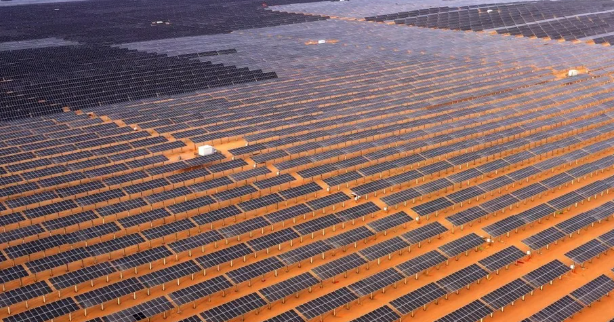
Ministry of Energy of Chile
Project overviewThe Ningxia Tengger Desert Renewable Energy Project, led by Longyuan Power, is China’s first large-scale renewable energy base in a desert ecosystem, serving both climate and ecological goals. Situated in the Tengger Desert, the project aims to generate clean electricity while tackling land degradation through integrated design. With a planned installed capacity of 13 GW and a total investment of approximately USD 12 billion, the project forms part of China's broader “Desert, Gobi, and Wasteland” clean energy strategy under its dual carbon goals. Phase 1 includes a 1 GW solar photovoltaic array. ApproachTo accommodate the arid desert terrain, Phase 1 solar modules are elevated to 3 meters above ground, creating space below for vegetation restoration, agricultural use, and sand control. This “PV+” model blends solar generation with forestry-solar and agrivoltaic approaches to promote land productivity and ecosystem recovery. Sand control techniques include straw checkerboards combined with native grass seed broadcasting. Pilot programs have also tested biological soil crusts and adaptive planting strategies to improve soil stability and biodiversity. Intelligent tracking systems optimize the angle of single-axis solar trackers in real-time using wind speed sensors and solar trajectory calculations, helping safeguard support structures during high-wind events. The project integrates dynamic environmental monitoring, site-wide automation, and grid-friendly power infrastructure to improve renewable energy dispatch rates. Smart controllers and tilt sensors are embedded into the infrastructure, enabling real-time performance adjustments to changing climatic and soil conditions. Business and economic valueOnce fully operational, the 1 GW Phase 1 project will generate approximately 1.8 TWh of electricity annually—enough to power 1.5 million households—while improving system efficiency by 5% through intelligent tracking. This optimization boosts total energy output and strengthens the project’s revenue and return-on-investment outlook across a 25-year operational life. The project also unlocks economic value through ecosystem services. Following vegetation restoration, plant diversity has expanded from 1–2 species to 6–8, with coverage increasing from 0.5% to 20%. More than 1,700 hectares of the 1,900-hectare site have undergone successful sand control. These interventions reduce erosion risk and enhance biodiversity, while offering long-term climate and adaptation co-benefits. In addition to environmental gains, the project generated significant employment during construction and operations. It has also supported rural revitalization through afforestation, agricultural co-use, and land lease income for local communities. By combining smart infrastructure, ecological restoration, and dual land use, the project demonstrates how clean energy deployment in arid and degraded environments can deliver measurable impact across climate, environment, and economy—offering a scalable model for other regions seeking integrated energy and landscape solutions. References:Longyuan Power launches 1-GW solar PV project in Tengger Desert - China Energy NewsChins desert, Gobi and wasteland energy base development strategy - National Energy Administration of ChinaTengger Desert Renewable Base Phase I Overview - Longyuan Power GroupSmart renewable energy infrastructure practices in arid regions - State Grid Corporation of ChinaChinas desert solar projects fight climate change and desertification - CGTNPV+ model powers green transformation in Chinas desert regions - Global Times
People's Republic of China
Ningxia Tengger Desert Renewable Energy Project: Transforming Degraded Landscapes through Smart Renewable Deployment
China Longyuan Power Group Corporation

Acknowledgements

This collection of case studies was made possible through generous contributions, insights and collaboration of numerous individuals and organizations committed to advancing responsible renewable energy deployment. We extend our sincere thanks to all project developers, community representatives, researchers and institutional partners who shared data, experiences and lessons from the ground.