BELREEFS: Large-scale offshore oyster reef restoration in the Belgian North Sea
Project overview
BELREEFS is Belgium’s first large-scale offshore pilot project dedicated to restoring native European flat oyster (Ostrea edulis) reefs in the North Sea. These reefs, once abundant, were nearly wiped out by overfishing, habitat degradation and parasitic diseases (e.g. Bonamia ostreae). Recognized as ecosystem engineers, oysters improve biodiversity, water quality and ecosystem functioning.[1]
Commissioned by the Belgian Federal Public Service for Health, BELREEFS is coordinated by Jan De Nul Group, in collaboration with Mantis, Shells & Valves, and the Royal Belgian Institute of Natural Sciences, and operates under the LIFE Belgium for Biodiversity programme. The project aligns with the Native Oyster Restoration Alliance (NORA) and showcases a co-creation model integrating government, industry and science to drive marine habitat restoration. It is intended as a precursor to broader oyster reef restoration in Belgian waters.
Approach
BELREEFS uses a phased restoration strategy based on scientific and engineering best practices:
- Site selection: High-resolution seabed mapping identifies gravel beds – optimal substrates for oyster settlement and reef formation – based on historical distribution and environmental suitability.
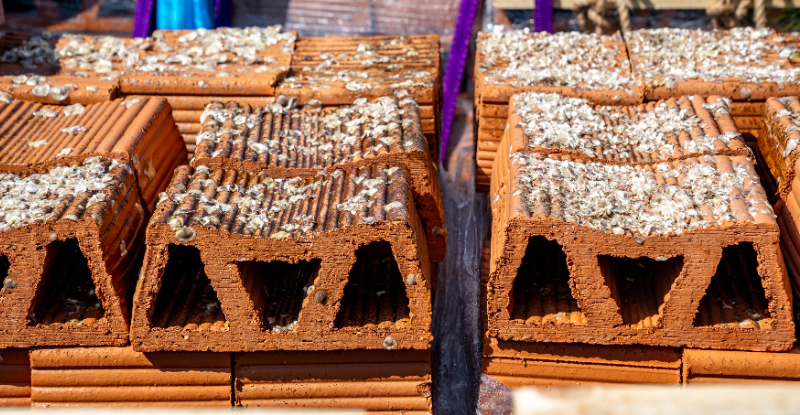
- Remote setting technique: Oyster larvae are pre-settled onto biodegradable hard substrates in lab-controlled environments, creating “spat-on-substrate” units. This improves survival during early development.
- Deployment and monitoring: These seeded substrates are deployed offshore, followed by long-term monitoring using remote sensing, data modelling and real-time biodiversity tracking to assess reef establishment, ecological performance and scalability potential.
This interdisciplinary, technology-driven methodology improves cost-efficiency and reduces reliance on manual surveys, while generating high-quality data to guide replication.[2]
Business and economic value
The BELREEFS project illustrates the growing alignment between active ecological restoration and long-term economic resilience for marine infrastructure and offshore renewable energy sectors. Oyster reefs offer ecosystem services that generate long-term value for both public and private stakeholders, from water filtration, biodiversity enhancement, improved resilience to co-existence. For example, one oyster filters up to 200 litres of water per day, reducing eutrophication and enhancing water quality. Restored reefs provide habitat for fish, invertebrates and other marine species, supporting fisheries and ecotourism. Oyster reefs also offer natural shoreline protection, reducing future expenses associated with marine infrastructure maintenance and climate adaptation.
BELREEFS’s interdisciplinary collaboration and multistakeholder approaches, combining industry, academia and public sector expertise, maximize cost-efficiency in innovation and monitoring. The project leverages spat-on-substrate production systems, specialized reef deployment tools and advanced monitoring and sensing technologies. These tools and methods are scalable and transferable to similar temperate marine environments worldwide, enabling broader application in biodiversity restoration, offshore energy projects and sustainable aquaculture.
From a regulatory perspective, BELREEFS is a forward-looking investment. It aligns with the EU Nature Restoration Law, Belgium’s new legal mandates for nature-inclusive offshore energy development, and increasing demands from investors and certification bodies for biodiversity-positive projects. By exceeding these emerging standards, Jan De Nul enhances its strategic positioning as a preferred partner for marine renewable energy and offshore infrastructure development, potentially reducing permitting delays and legal risk exposure. The project advances nature-inclusive design and biodiversity restoration that can be economically viable, regulation-compliant and ecologically impactful.
References:
- BELREEFS: First Offshore Pilot Project for large-scale Oyster Reef Restoration in the Belgian part of the North Sea - Belgium for Biodiversity
- Large-scale oyster reed restoration in the North Sea - Jan de Nul
- Green light for oyster bank restoration projects Belreefs - Jan de Nul
- Belgium BELREEFS - Native Restoration Alliance (NORA)