Rotmainquelle Community Wind Farm: Community co-ownership powering local energy transition
Project overview
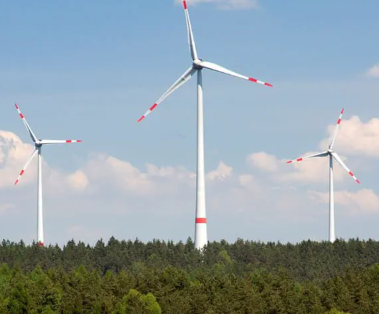
Located in the Upper Franconian district of Bayreuth, Bavaria, the Rotmainquelle Community Wind Farm is a 15-MW citizen-owned renewable energy project developed by Ørsted Onshore Germany (formerly OSTWIND). Commissioned between December 2015 and March 2016, the project features five Enercon E115 wind turbines and produces enough clean electricity to power the equivalent of around 12,000 German households annually, avoiding approximately 26,000 tonnes of CO₂ emissions each year.[1]
What sets Rotmainquelle apart is its financing model: approximately 200 local citizens and two regional energy cooperatives invested a combined $5.75 million through subordinated loans. This structure ensured that financial returns from the wind farm flowed directly back into the community.
Approach
From the beginning, Ørsted Onshore Germany designed Rotmainquelle to prioritize local participation. The company offered qualified subordinated loans with a minimum investment threshold of just $1,150, enabling participation even from modest-income households. Investment sizes ranged from $1,110 to $55,500 and contributed directly to project construction.
The investment offered a base return of 3.75% per year, with performance-linked bonuses pushing returns up to 6%, depending on annual energy output. Investors now receive repayments over a 10-year period beginning 2025, providing long-term, predictable income to local households.
To keep benefits within the region, Ørsted prioritized outreach to Bavarian residents and cooperatives. For example, Wilhelm-Raiffeisen Energie eG Creußen – based near the project site – invested over $1.3 million (€1.2 million). These community investors weren’t passive stakeholders; they were actively engaged early in the development phase, which helped Ørsted gain community support, streamline permitting and avoid the delays often associated with wind power development in Germany.[2]
Rotmainquelle is part of a broader wind cluster of five regional projects developed by Ørsted in Upper Franconia. Each project showcases a different model of local involvement – from energy cooperatives to municipally owned wind farms. Two nearby wind farms in Pegnitz, for instance, were co-developed and managed with the local city government.
Business and economic value
For participating citizens, the wind farm provides a stable return on investment, with annual payments reinforcing public support for renewable energy. This income distribution helps broaden the economic base of the energy transition, turning residents into direct financial beneficiaries and reducing the developer’s reliance on commercial debt, thereby reducing the project’s cost of capital.
The project’s success has reinforced support for renewables in the region and laid the foundation for replication in other municipalities. By testing and validating a community-financed ownership model, Ørsted now has a scalable template for future citizen-led renewables – not just in Bavaria, but across markets where social acceptance and land access remain barriers. The surrounding municipalities have begun leveraging the model to create new public utilities, strengthen civic participation in energy decisions and foster economic development around clean energy assets. Local stakeholders are no longer just hosts to infrastructure – they are co-developers and long-term beneficiaries.
Ultimately, co-ownership is a compelling model, particularly for smaller-scale projects, where it can be a win-win for communities, local authorities, the developer and energy transition. Exploring a variety of ownership and financing structures, tailored to local context, can minimize the risk of opposition and permitting delays[3] – common issues in Germany that can lead to project cancellations and sunk costs of up to $7.5 million.[4]
References:
- Onshore-Windpark Rotmainquelle | Ørsted
- Large-scale wind and solar developers concerned about social factors affecting deployment | Energy Markets and Policy Berkley Lab
- Renewable energy projects are facing increased delays, cancellations, and big losses - EUCI
- Large-scale wind and solar developers concerned about social factors affecting deployment | Energy Markets and Policy Berkley Lab