Supporting remote and indigenous communities' clean energy transition in Canada
Project overview
Across Canada, more than 200 remote communities – most of which are Indigenous – depend on diesel fuel for power and heat. These communities collectively consume over 680 million litres of diesel annually. The high costs of fuel transportation, aging infrastructure and environmental risks associated with diesel use have made energy access increasingly unreliable and costly. Many of these communities are not connected to the national electricity grid and cannot be accessed year-round by road or rail.
Canada’s 2021 Net-Zero Emissions Accountability Act commits the country to net-zero emissions by 2050. As part of this goal, Canada has invested over $60 billion into clean electricity systems, including targeted funding for Indigenous-led projects. One of the key funding initiatives supporting this transition is the Clean Energy for Rural and Remote Communities (CERRC) programme, launched in 2018 with a $453 million investment to reduce diesel reliance and support energy sovereignty through clean energy deployment and capacity building.
Approach
CERRC provides funding to community-driven clean energy projects across Canada’s rural, remote and Indigenous regions. The initiative supports the design, construction and integration of renewable energy systems – including solar PV, wind and small-scale hydro power – as well as energy storage and microgrids. It also invests in community capacity-building, skill development and planning.
CERRC’s approach emphasizes Indigenous leadership and local ownership, recognizing that equitable and culturally grounded energy transitions depend on community control and long-term benefit-sharing. Approximately 96% of the 229 projects supported to date include Indigenous involvement.
Examples of supported projects include:
- Ikayuut Solar Energy Project (Nunavut):[1] A 1-MW solar array with 1-MWh battery storage, integrated into Naujaat’s microgrid. Led by Kivalliq Alternative Energy and supported with $6.5 million from CERRC, the project is expected to meet up to 30% of community electricity needs and displace 465,000 litres of diesel annually.
- Ahtaapq Creek Hydropower Project (British Columbia):[2] A 350-kW run-of-the-river hydro power facility integrated into Hesquiaht First Nation’s diesel system. Funded with $4.9 million from CERRC, the project is expected to displace 185,000 litres of diesel annually.
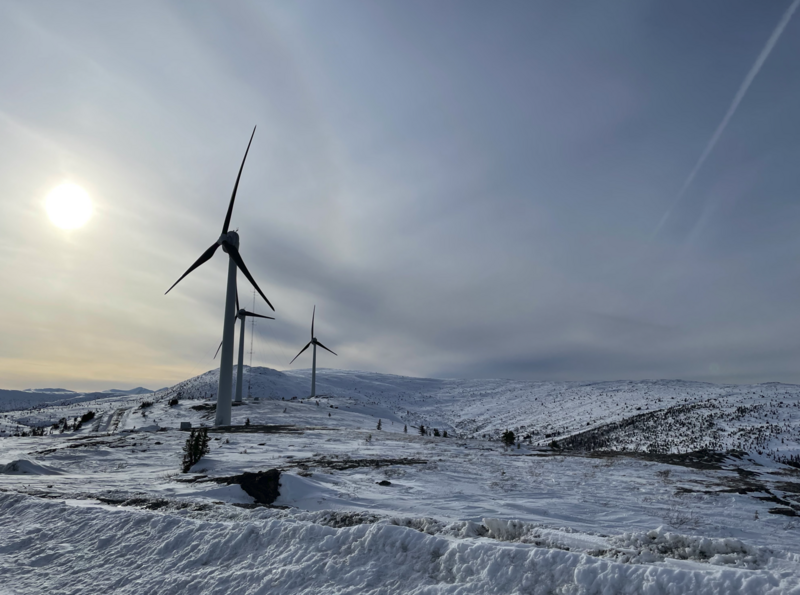
- Haeckel Hill-Thay T’äw Wind Project (Yukon):[3] A 4-MW wind project led by the Kwanlin Dün First Nation in Whitehorse. Supported with $9.9 million from CERRC, it will provide enough electricity to power 650 homes and displace 1.5 million litres of diesel – making it the largest Indigenous-led wind power project in Northern Canada.
- Old Crow Solar Project (Yukon):[4] A 940-kW solar power array delivering 24% of community electricity needs in Vuntut Gwitchin First Nation. With $2.45 million in support from CERRC, the project is the first-of-its-kind north of the Arctic Circle in Canada and will reduce diesel use by 180,000 litres annually while generating local revenue.
Business and economic value
CERRC demonstrates how targeted public investment in Indigenous- and community-led projects can drive responsible clean energy deployment while advancing equity, reconciliation and climate goals. By reducing diesel dependence, communities are improving air quality, lowering energy costs and building more reliable and self-determined energy systems.
Clean energy revenues can be reinvested into other local infrastructure and services, contributing to long-term economic development. The programme also enhances skills development, training, and local employment through project construction and operations and supports the growth of Indigenous clean energy enterprises.
At a national level, CERRC illustrates how inclusive, distributed renewable energy systems can support Canada’s climate targets while addressing historical energy and infrastructure inequities. The programme contributes to energy sovereignty, public health and sustainable development in regions that have often been underserved by conventional energy markets.
References:
- Minister Vandal announces investments in clean energy projects to help reduce diesel use in Nunavut - Government of Canada
- Indigenous Off-diesel Initiative - Government of Canada
- New funding partnership adding wind-energy to the grid in Yukon - Government of Canada
- Northern fly-in community of Old Crow continues to strengthen and diversify - Government of Canada