Innovation Playbook for Future Power Systems

In collaboration with Accenture

A practical resource for decision-makers as power systems evolve under increasing demand.
Scroll to explore innovative solutions and read the report for global insights. 

Explore the solutions

Discover 30+ new case studies added to our growing library of 130+ real-world examples, showcasing how 110 innovative solutions are delivering value across power systems today.  

Microgrid clusters consist of multiple interconnected microgrids that can share energy, coordinate operations and optimize distributed resources across a wider area. Unlike stand-alone microgrids, clusters use supervisory controls, synchronization mechanisms and shared storage scheduling to balance local renewable generation and maintain stable voltage and frequency conditions across several nodes. This enables collective use of solar, wind and storage assets, helping reduce variability and strengthening local operating conditions.  By linking distributed energy resources across neighboring sites or islands, microgrid clusters improve resilience, reduce operating costs and support higher renewable-energy penetration, particularly in remote or infrastructure-constrained regions. Modern clusters increasingly rely on grid-forming and grid-following inverters, adaptive protection settings and redundant communication channels to maintain safe operation, support coordinated islanding and reconnection and enable controlled power exchange over interconnection cables. These systems are increasingly deployed to replace diesel-based generation, enhance energy security and provide more reliable, climate-resilient electricity for communities and critical loads. Through coordinated controls, shared storage capacity and intelligent dispatch, microgrid clusters support both local autonomy and multi-node optimization, enabling expanded electrification without requiring extensive transmission expansion. Main outcomes of the solution Sustainability: Replaces diesel-based generation with renewable energy and storage, lowering local emissions and reducing reliance on imported fossil fuels. Reliability & Flexibility: Enhances continuity of supply through energy sharing across interconnected microgrids, improving operational stability during fluctuations in local renewable output or equipment outages. Socioeconomic Impact: Expands access to affordable and reliable electricity for remote communities, enabling more consistent delivery of essential services and supporting local economic activity. Key deployment and scaling factorsIntegrate diverse renewable resources (solar, wind, tidal, small hydro) with appropriately sized storage to support both stand-alone operation and energy exchange within the cluster. Deploy robust communication and control infrastructure to coordinate dispatch, maintain synchronization, and ensure reliable voltage and frequency management across interconnected microgrids. Ensure reliable interconnection pathways – including submarine or underground cables – with appropriate protection schemes for safe islanding, reconnection and fault management. Develop operational strategies and protection settings tailored to multi-microgrid environments, including load-sharing controls, contingency procedures and resilience planning. Engage local communities and institutions to align design with service-reliability needs and ensure long-term operational and economic viability. Case StudiesChina Southern Power Grid (2024), China Located south of the Pearl River estuary, the islands of Guishan, Dong’ao and Dawanshan relied for decades on diesel generators, exposing their electricity supply to fuel-delivery risks, high generation costs and weather-related disruptions. As part of the National Smart Grid Project, China Southern Power Grid deployed distributed renewable-energy systems on each island and established demonstration microgrids designed to assess the technical suitability of clean, autonomous supply for remote communities. On Dawanshan Island, the microgrid comprises an 850 kW wind turbine, 200 kWp of solar PV, a 2,000 kWh battery energy-storage system, a 1,000 kW power-conditioning system, and two 500 kW diesel generators for backup supply. Similar configurations integrating solar, wind and battery storage were installed on neighboring islands. Each island operates an independent microgrid sized to local demand patterns, which vary significantly with seasonal tourism activity. The three island microgrids were subsequently interconnected via submarine cables, forming a coordinated microgrid cluster that can share electricity, balance variable renewable output and optimize storage utilization across sites. This configuration improves reliability for all islands by enabling support during periods of low renewable generation on any single island and by smoothing weather-related supply fluctuations across the cluster. Reported power-supply reliability now exceeds 99.9%, and diesel-based generation has been largely displaced, reducing costs and emissions while improving service quality for residents and local businesses. The project demonstrates how renewable-based microgrids, when linked through controlled interconnections and supported by advanced dispatch, can deliver resilient, lower-carbon electrification for remote island systems previously dependent on expensive and unreliable diesel supply.[1,2] State Grid Jiangsu Electric Power Co., Ltd. Nantong Power Supply Branch (2025), ChinaThe Jiangsu Nantong Microgrid Cluster Ecological Demonstration Project, commissioned in March 2025, demonstrates a digitally coordinated microgrid cluster model for enterprise customers. State Grid Nantong established Jiangsu Province’s first municipal-level microgrid management platform covering the integrated energy and carbon management ecosystem, enabling multiple customer-side microgrids across the city to be monitored, assessed and coordinated as a cluster.Building on this platform, Nantong Power Supply Branch developed a customer-side management tool that supports coordinated control of enterprise energy resources, including photovoltaic and storage facilities. The platform uses big data to diagnose customer electricity cost, load and energy consumption patterns, and is pre-configured with strategies such as price-following logic, demand response, renewable energy optimization and grid interaction.The platform has integrated 83 enterprises, including 410.69 MW of photovoltaic, storage and charging resources, forming an initial citywide microgrid cluster ecosystem. Reported outcomes include a 97% local renewable energy consumption rate, 425,000 tonnes of annual carbon reduction and average enterprise electricity cost savings of approximately 6.71%. The aggregated resources also provide grid flexibility, with 288.44 MW of maximum upward regulation capacity and 96.62 MW of maximum downward regulation capacity, becoming important regulation resources for the main power grid. [3] References: Information provided to World Economic Forum I China Southern Power Grid (November 2025) Handbook on Microgrids for Power Quality and Connectivity I Asian Development Bank (July 2020)Information provided to World Economic Forum I State Grid Corporation (April 2026) 
Microgrid clusters
China Southern Power Grid, State Grid Corporation of China
Smart Grid-as-a-Service (SGaaS) provides utilities and governments with a subscription-based pathway to deploy a broad suite of digital grid capabilities without major upfront investments. It typically includes cloud-hosted distribution management systems, advanced metering and edge device integration, real-time grid analytics, outage detection and restoration tools, distributed energy resource coordination, cybersecurity monitoring, and automated voltage and load management. These services give operators standardized access to operational data, continuous visibility of network conditions and on-demand digital modules – such as forecasting, asset health monitoring or demand response optimization – that can be activated as system needs evolve. The model replaces traditional, hardware-heavy modernization cycles with continuously updated service-based capabilities. Past grid upgrade approaches consisted in utilities purchasing and deploying physical assets that quickly became outdated. SGaaS relies on cloud infrastructure, shared data platforms, and modular software releases that eliminate long procurement timelines and reduce technology obsolescence. This allows utilities, especially those in capital-constrained or rapidly growing markets, to scale digital functions immediately, deploy advanced automation without large capital programs, and integrate renewables more efficiently.[1,2]Main outcomes of the solution Reliability & Flexibility: Enhances real-time situational awareness through continuous monitoring, automated control, and advanced forecasting modules. These capabilities improve voltage and frequency management, support accurate scheduling, and enable seamless integration of distributed energy resources, adapting effectively to renewable variability. System Resilience: Cloud-hosted supervisory functions, embedded cybersecurity monitoring, and modular restoration tools strengthen the grid’s ability to withstand and recover from extreme events. Secure data platforms ensure integrity and auditability, while automated outage detection accelerates response and reduces disruption during physical or cyber incidents. Affordability: Reduces upfront investment requirements and optimizes asset use. Continuous software updates extend the useful life of grid equipment, lower operational costs, and reduce dependency on large grid reinforcement programs, contributing to more cost-effective system operation. Key deployment and scaling factors Cloud-based distribution-management and analytics platforms that support real-time monitoring, scalable environments and efficient deployment. Modular subscriptions to activate forecasting, DER coordination, demand response or other digital modules as system needs evolve, reducing dependency on hardware-led upgrade cycles. Cybersecurity-by-design service contracts, with clear shared-responsibility models for protecting distributed assets and operational data. Performance-based metrics (e.g., outage minutes, voltage quality, DER hosting capacity) to ensure accountability and track operational improvements. Scalable edge connectivity and sensor deployment—such as smart meters, line sensors and field devices—to feed data consistently into SGaaS platforms. Interoperability frameworks based on open standards and communication protocols to reduce vendor lock-in and preserve long-term flexibility. Case Study Schneider Electric (2021)​, Global Schneider Electric’s Smart Grid-as-a-Service offering provides subscription-based access to supervisory control, outage management and advanced distribution-management capabilities. Delivered through its EcoStruxure Grid Operation architecture and associated service plans, including EcoCare for Digital Grid, the model enables small and medium-sized utilities to scale digital functions without large capital programs. Utilities deploy cloud-ready modules for situational awareness, grid optimization, cybersecurity support and operational analytics through a service framework rather than bespoke infrastructure investments. In practice, the SGaaS model helps utilities transition from hardware-heavy modernization cycles to outcome-focused service bundles. By combining data from smart meters and field devices with digital network models and integrated outage-management tooling, SGaaS improves system monitoring and speeds restoration during severe weather, strengthening resilience while containing costs.[3,4,5]References: Electricity Grids and Secure Energy Transitions I IEA (revised November 2023) Digital Demand-Driven Electricity Networks Initiative I IEA EcoStruxure™ Grid Operation | Schneider Electric Smart grid solutions | Schneider Electric Grids of the Future | Schneider Electric 
Smart grid-as-a-service (SGaaS)
Schneider Electric
Risk-sharing guarantee facilities structured as first-loss windows provide an alternative financing approach to traditional utility capital budgeting, asset-backed lending or project-by-project guarantees. Distribution level flexibility programs have historically struggled to scale because assets are small, heterogeneous, and operationally uncertain, characteristics that conventional lenders often price as high risk, limiting deployment. First-loss portfolio guarantees address this challenge by shifting a defined share of early losses away from private investors and allowing diversified portfolios of distributed flexible assets to be financed under a single risk framework. By aggregating assets with different performance profiles, these facilities reduce overall portfolio risk and enable financing structures that are more compatible with digital, service-based grid solutions than legacy funding approaches. The International Energy Agency’s (IEA) World Energy Investment 2025 report highlights that investment in distribution networks and flexibility solutions has not kept pace with rising system needs as electrification accelerates.[1] Guarantee facilities help address this gap by improving bankability, lowering the weighted average cost of capital and increasing the leverage of private capital. By reducing investor exposure to early losses, these structures allow utilities, DSOs, TSOs, and aggregators to deploy flexibility and grid support programs at a scale that has been difficult to achieve through conventional mechanisms. Main outcomes of the solution Reliability & Flexibility: Faster deployment of aggregated flexible assets such as demand response, distributed storage and digital grid services, supporting peak management, congestion relief, and system balancing as renewable penetration increases. Affordability: Lower system costs through reduced financing costs for distributed flexibility programs, deferred grid reinforcement and more efficient use of existing distribution assets. Business Value: Creation of repeatable, bankable portfolio models that attract private capital, support multi-year scaling of flexibility programs and enable service-based grid solutions to participate on a commercial basis. Key deployment and scaling factors Define standardized performance and settlement rules so investors can assess and price portfolio risk consistently across diverse flexibility and distribution assets. Embed digital monitoring and automated control processes to reduce performance uncertainty and support dispatch confidence for DSOs and aggregators. Prioritize portfolios aligned with clearly defined system constraints, such as congestion relief or peak reduction, to ensure measurable grid value and regulatory support. Adopt multi-year, repeatable guarantee windows to provide pipeline visibility and enable financiers to develop scalable underwriting approaches. Ensure regulatory frameworks allow utilities and aggregators to participate directly, with flexibility outcomes eligible for cost recovery and predictable revenue treatment. Case Study InvestEU Programme, European Union (2025)​, Europe The European Union’s InvestEU Programme deploys a €26.2 billion (approximately USD 30.7 billion) EU budget guarantee to de-risk investment across priority areas, including sustainable infrastructure and energy systems. Through portfolio-based guarantees that can function as first-loss instruments, InvestEU supports financing structures that absorb an initial share of losses across pools of projects rather than individual assets. Under InvestEU, portfolio guarantees are implemented by partners such as the European Investment Fund, which structures first-loss risk-sharing facilities and deploys them through financial intermediaries rather than at the level of individual assets. This approach improves bankability for smaller, heterogeneous investments that have historically struggled to secure commercial financing on a standalone basis. Within the Sustainable Infrastructure Window, InvestEU guarantees can be applied to aggregated investment programs that include distribution-level grid assets and flexibility-related investments. By covering a defined portion of early losses at the portfolio level, these guarantees enable DSOs and other eligible entities to bundle projects into investable portfolios with clearer risk allocation, lower capital costs and streamlined due diligence. Member States can channel InvestEU guarantees through national implementing partners, supporting multi-year investment pipelines rather than isolated pilots and facilitating the scaling of flexibility and grid-support solutions aligned with EU energy and climate objectives.[2,3,4]References: World Energy Investment 2025 - 10th Edition I IEA (2025) InvestEU Programme I European Union InvestEU: How does the Fund work? I European Union InvestEU Guarantee products I European Investment Fund 
Risk-sharing guarantee facilities for flexibility and distribution portfolios
European Union
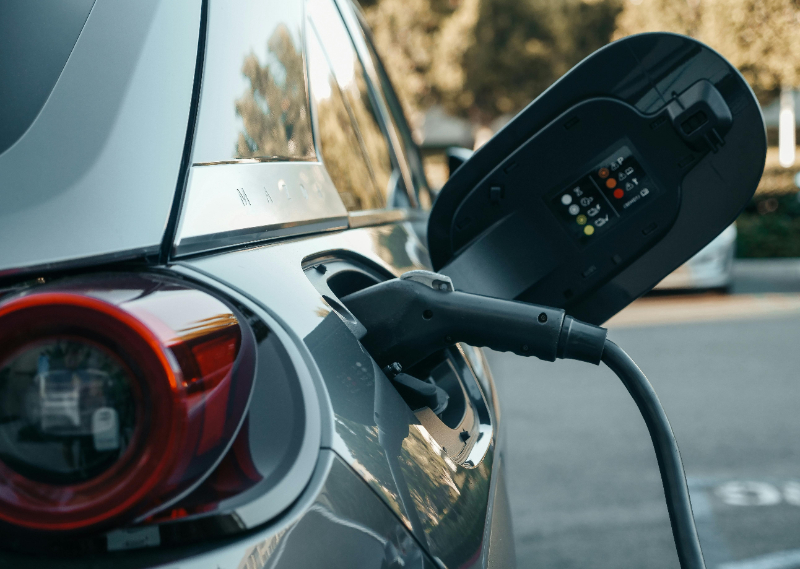
Smart electric vehicle (EV) charging platforms use software to schedule when EVs charge based on factors such as grid conditions, electricity prices and the availability of renewable energy. The goal of these systems is to reduce charging costs for drivers, shift charging to periods when electricity is cheaper or cleaner and help balance overall electricity demand on the grid. By adjusting charging times to align with low-cost or low-carbon periods, smart charging platforms can support the integration of variable renewable generation and ease pressure on the grid during peak hours. Smart charging not only saves money for participating EV drivers but also creates a cost-avoidance opportunity for the grid. Utilities can pass these savings on to all ratepayers/customers, including non-EV drivers. These platforms typically link connected vehicles or home charging equipment with optimization algorithms that determine suitable charging windows, using information from utilities, grid operators and tariff structures. In most implementations, charging control is triggered at plug-in and adjusts charging start times rather than continuously modulating power, relying on vehicle connectivity or smart chargers rather than direct grid control. Smart charging is being tested and deployed through pilot programs and broader rollouts where drivers can benefit from lower energy costs and reduced emissions associated with charging. Main outcomes of the solution Affordability: Reduces charging costs for EV drivers by scheduling charging during periods when electricity prices are lower, subject to tariff design and user participation. Reliability & Flexibility: Improves alignment of EV charging demand with grid conditions, helping to balance load and reduce strain during peak periods. Business Value: Provides utilities, automakers and service providers with operational levers to manage EV charging demand through software-based scheduling, reducing exposure to peak demand costs, improving load visibility and enabling customer-facing services that support retention and demand management. Key deployment and scaling factors Enable connected vehicle or smart charger integration to allow automated scheduling of charging at plug-in. Provide access to grid and tariff signals, including price information, demand conditions and renewable availability. Deploy optimisation software platforms that coordinate charging schedules while respecting user preferences and constraints. Design customer incentive mechanisms that reward participation through lower-cost or lower-carbon charging periods. Case Study Jaguar Land Rover and ev.energy (2025), United KingdomIn July 2025, Jaguar Land Rover (JLR), with support from its corporate venture arm InMotion Ventures, launched a pilot program with the smart charging software provider ev.energy in the United Kingdom. The pilot involved 10 Jaguar I-PACE electric vehicles using ev.energy’s platform to schedule charging based on electricity prices, grid conditions and renewable generation availability. The pilot focused on testing vehicle integration, user experience and the feasibility of automated smart charging within JLR’s ecosystem.  Separately, ev.energy reported that its managed charging service in the UK delivered average savings of £166 per participating driver and 489 tonnes of avoided carbon emissions over a 12-month period, by shifting charging to off-peak and high-renewable periods across its broader user base. These results provide contextual evidence of the potential consumer and system benefits of smart charging at scale.  Following the pilot phase, JLR and ev.energy indicated plans to expand smart charging functionality to additional drivers in the United Kingdom, the United States and the European Union.[1,2] References: JLR and ev.energy plan to reduce charging costs and carbon for clients I JLR (July 2025) Turning EV Grid Risk into a $30B Opportunity | ev.energy (2025) 
Smart EV charging platform
ev.energy, Jaguar Land Rover
Advanced nuclear technologies offer large-scale, low-carbon and highly reliable electricity, and heat suited to megacities where demand is dense, continuous and rapidly increasing. Next-generation nuclear designs deliver compact and high-output power plants that can be sited close to urban load centres. The World Bank projects that by 2050 more than two-thirds of the global population will live in cities, with most growth concentrated in Sub-Saharan Africa and South Asia. Urban populations in these regions are expected to double within the next two decades, putting significant pressure on infrastructure, energy security and essential services.[1] Megacities – typically defined as an urban area with more than 10 million inhabitants – require sources that can deliver high volumes of clean, reliable energy within limited land areas and close to demand centres. Nuclear generation provides firm, low-carbon baseload power where demand is concentrated, reducing dependence on long-distance transmission that can lead to, on average, 5-8% losses and increased exposure to grid disruptions.[2,3] Modern reactors also support multiple urban-service needs. They can co-produce district heat, high-temperature heat for industrial applications, and the production of synthetic fuels such as hydrogen. In water-stressed regions, nuclear-powered desalination can convert seawater or brackish water into potable water at scale, supporting resilient urban water systems. When paired with thermal storage or distributed resources, nuclear energy can provide flexible support to balance renewable variability without the land and material requirements associated with large battery installations. Emerging deployment models – including Small Modular Reactors (SMRs) integrated with distributed energy systems – demonstrate how nuclear can complement storage, distributed generation and demand-side flexibility to support resilient and adaptive urban power systems. Together, these capabilities position nuclear as a key enabler of sustainable growth, system resilience and long-term reliability in megacities. Main outcomes of the solution Sustainability: Delivers high volumes of low-carbon baseload power on a small land footprint, enabling co-production of hydrogen, desalinated water and district heat, while reducing fossil fuel use across multiple urban sectors. Reliability & Flexibility: Delivers reliable, high-capacity output near major demand centers and provides flexible operation when paired with thermal storage or hybrid nuclear–renewable systems. This combination supports peak demand and smooth integration of variable renewables. System Resilience: Strengthens energy security for megacities by maintaining continuous supply during peak demand, climate-related disturbances or variable resources’ shortfalls; reduces vulnerability to long-distance transmission and reduces cascading grid failures. Key deployment and scaling factors Assess urban load growth and density to determine demand for close-to-load, low-carbon, and high-reliability generation. Deploy advanced nuclear systems capable of supplying electricity, heat, desalinated water or hydrogen, improving the efficiency of urban infrastructure. Pair reactors with thermal storage or hybrid nuclear–renewable systems to manage variable renewable output and provide peak support. Locate firm generation near metropolitan areas to limit ecological impact, reduce transmission losses and improve system stability. Expand modular and advanced reactor options that allow incremental capacity additions aligned with long-term urban development. Standardized, modular builds can shorten schedules, reduce risk, and align closely with staged infrastructure expansion. Case study TerraPower (2023), United States TerraPower is developing the Natrium advanced reactor complex in Wyoming, which integrates a 345 MWe sodium-cooled fast reactor with a molten-salt thermal storage system designed to increase output to 500 MWe for more than five hours. This hybrid configuration provides reliable baseload power together with flexible, dispatchable capacity – a combination well-suited to the needs of large metropolitan grids that must address peak demand and variable renewable generation. Construction of the site began in 2024. Nuclear-island construction is expected to start in 2026, with commercial operation targeted for 2030. The project demonstrates how advanced nuclear designs can deliver high energy density, long-duration flexibility and stable low-carbon power to support growing urban loads. By storing thermal energy and dispatching it on demand, Natrium illustrates a model of nuclear-enabled flexibility that can reduce reliance on fossil peaking resources and enhance system resilience.[4,5] Solution and insights developed with contributions from the World Nuclear Association and Foster and Partners. References: Urban Development I World Bank Group What Is the Typical Percentage of Energy Loss during Electricity Transmission and Distribution in a Major Grid? I Sustainability Directory (November 2025) Electric power transmission and distribution losses (% of output) I World Bank Group Terra Power Company Website Information provided to the World Economic Forum I World Nuclear Association (November 2025)
Nuclear to power megacities
TerraPower, World Nuclear Association, Foster and Partners
Time-based Energy Attribute Certificates (T-EACs), also known as Granular Certificates (GCs), are market instruments that certify the environmental attributes of clean electricity generation on an hourly basis, and can be used to verify the hourly matching of electricity consumption with clean energy generation. By linking energy use to actual clean generation in the same hour, T-EACs provide a more accurate and credible representation of when electricity use is truly carbon free. Unlike conventional energy attribute certificates, which do not reflect the precise time of clean energy generation, T-EACs make system conditions visible on an hour-by-hour basis. This transparency strengthens compliance with emerging 24/7 carbon-free energy (CFE) standards, improves the integrity of decarbonization claims, and supports regulators and markets in assessing real progress toward clean-energy targets. By exposing gaps between clean supply and demand, T-EACs create incentives for load shifting, flexible consumption, and targeted clean-energy investment during under-supplied hours. As a result, they help align procurement, system operation, and investment signals with real grid conditions - supporting system-wide decarbonization while strengthening transparency and accountability across energy markets. Main outcomes of the solution Sustainability: Improves the environmental integrity of decarbonization by aligning electricity consumption with actual clean energy generation on an hourly basis, supporting credible progress toward 24/7 carbon-free energy targets. Business Value: Enables organizations to optimize clean-energy procurement and operations by identifying hours and locations with cleaner electricity, supporting carbon-aware strategies and reducing misalignment between sustainability commitments and operational reality. Institutional Efficiency & Transparency: Provides time-resolved visibility into when and where electricity is clean, strengthening reporting quality, improving accountability and enabling regulators and market actors to assess system impacts beyond annual averages. Key deployment and scaling factors High-quality hourly metering and data pipelines that reliably capture electricity generation and consumption at an hourly resolution across assets, sites and regions. Harmonized certificate definitions and verification standards to ensure that time-based certificates are comparable, auditable, and trusted across markets and jurisdictions. Integration with digital forecasting and energy-management tools so users can act on hourly signals by shifting load, adjusting procurement, or optimizing operations in advance. Formal recognition of time-based certificates in regulatory and reporting frameworks, enabling their use in compliance schemes, corporate disclosures, and hourly matching. Sustained demand from large electricity consumers (e.g. data centres and industrial users) to create market liquidity, support, price discovery and incentivize new clean generation during under-supplied hours. Case Study Google, Flexidao and Electricity Maps (2021), GlobalSince 2021, Google has piloted and progressively scaled time-based Energy Attribute Certificates (T-EACs) to track and match clean electricity consumption on an hourly basis across its data-center operations. In collaboration with Flexidao and Electricity Maps, the approach links Google's electricity use to the actual timing and location of clean power generation, moving beyond annual certificate matching toward more granular, time-aligned accounting. Google works globally with Flexidao to automate the delivery of hourly data from clean energy projects under contract across the world, and match that data to EACs provided by registries, turning EACs into T-EACs. They then match the T-EACs to their hourly electricity demand and use hourly grid data from Electricity Maps to calculate their hourly matching percentage. In 2025, Flexidao converted a portfolio of Google's energy certificates into hourly format for over 100 sites, representing 10.5 TWh of energy across 7 countries. Since the first pilot in 2021, registries across the world are quickly upgrading their systems to both issue and enable trading of T-EACs. The Registry Acceleration Fund, led by LevelTen and supported by the Granular Certificate Trading Alliance, recently announced funding for registries that "collectively issue or track more than 4,000 TWh of certificates across over 70 countries for more than 40,000 account holders." These infrastructure investments will lay the groundwork for T-EAC issuance and trading at a global scale. In recent years, government regulatory frameworks and accounting standards have increasingly recognized the significance of hourly electricity accounting for effective clean energy policy design. Examples include clean hydrogen regulations in Europe and the US, clean electricity accounting within Europe's Carbon Border Adjustment Mechanism (CBAM), and proposed updates to the Greenhouse Gas Protocol Scope 2 Guidance to require hourly emissions accounting. T-EACs are an essential tool for enabling credible hourly clean energy claims within these and other emerging policy frameworks. [1,2,3]References: Accelerating a carbon-free future with hourly energy tracking I Google Cloud (November 2023) The role of Granular Certificates in improving clean energy credibility and impact I Google (December 2025)Hourly Energy Accounting at Scale I Flexidao (September 2025)
Time-based energy attribute certificates (T-EACs)
Flexidao, Google, Electricity Maps
Modular solar–thermal hybrid systems capture solar energy and store it as heat in insulated high-temperature thermal media such as molten salts or ceramic materials, then convert this stored heat into electricity on demand through heat engines. Thermal storage decouples energy collection from delivery, enabling dispatchable renewable output that can support evening peaks or periods of reduced solar generation.  Research by National Laboratory of the Rockies (NLR) demonstrates that high-temperature materials can retain heat with low losses over extended durations, providing a pathway for long-duration renewable supply in distributed settings. relatively rapid deployment for microgrids, industrial sites and grid-constrained digital infrastructure, offering an alternative form of renewable dispatchability where lithium-based batteries or fossil-fuel peaker backup would otherwise be used.[1,2]Main outcomes of the solution Sustainability: Reduces reliance on electrochemical batteries by storing energy in thermal media, lowering exposure to critical-mineral supply risks and supporting greater use of solar resources without fossil-fuel backup. Reliability & Flexibility: Provides controllable renewable output and supports load during evening peaks or cloudy periods, while heat engines deliver stable, on-demand generation suitable for microgrids and industrial applications. System Resilience: Enhances resilience for remote or grid-constrained sites through thermally stable storage media and modular container units that offer redundancy, withstand repeated charge-discharge cycles and maintain performance across variable operating conditions. Key deployment and scaling factors Identify locations with strong direct normal irradiance (DNI) where stored heat can reliably support evening peaks and deliver firm renewable output. Integrate the units into microgrid control systems so their output is coordinated with rooftop solar, thermal storage levels and any backup generators. Establish permitting processes that address thermal-storage safety, fire-protection rules and the electrical interconnection requirements for containerized systems. Create commercial models that deliver firm, low-carbon electricity to industrial sites and data centers, helping them avoid grid bottlenecks and long connection queues. Validate heat-engine performance and thermal-storage durability in real operating conditions to confirm stable, long-duration power output. Standardize the design and manufacturing of container units to speed up installation, simplify engineering work and enable consistent deployment across multiple sites. Work with distribution system operators (DSOs) and microgrid operators to manage local network constraints and ensure deployments support regional flexibility needs Case Study Exowatt (2024), USA Exowatt is developing the P3, a modular solar–thermal hybrid system that uses an optical array to concentrate sunlight, stores the captured heat in a long-duration thermal battery and generates electricity on demand through a compact heat engine. Each 40-foot container is designed to operate as a standalone power module capable of extended-duration renewable generation. The system is engineered to avoid lithium and rare-earth materials, using thermally stable media and mechanical components intended to simplify maintenance and reduce supply-chain exposure. Exowatt targets applications where consistent, local, low-carbon power is required—such as microgrids, industrial loads and data-centre campuses operating under grid constraints. Commercial deployments are expected to begin in 2025/2026, with early projects focused on demonstrating operational performance, integration with microgrid controls and the scalability of modular thermal storage. The P3 illustrates an emerging approach to dispatchable clean-energy supply using solar-thermal storage outside of conventional concentrated solar power configurations.[3] References: Energy Storage Thermal Performance I National Laboratory of the Rockies  NREL Heats Up Thermal Energy Storage with New Solution I National Laboratory of the Rockies (February 2021) Modular, dispatchable energy systems I Exowatt 
Modular solar-thermal hybrid systems
Exowatt
Solar–hydro hybrid systems combine photovoltaic (PV) generation with hydropower to deliver more stable and flexible renewable electricity. Floating PV arrays installed on hydropower reservoirs use existing surface area and benefit from water-based cooling, which can improve panel performance and avoid land-use impacts while potentially reducing water evaporation in suitable climates. Solar PV provides efficient daytime output, while hydropower offers controllable generation that compensates for rapid changes in sunlight, supports evening peaks and maintains supply during cloudy or seasonal variations. By leveraging the complementary operating profiles of both technologies, hybrid systems can increase renewable utilization, reduce reliance on thermal backup and enhance the operational flexibility of existing hydropower assets. Digital control platforms further optimize the interaction between PV output, hydropower regulation and grid requirements to smooth variability, coordinate ramping and support system reliability in regions with high shares of solar generation. The International Renewable Energy Agency (IRENA) notes that hybridizing hydropower with solar PV improves system operation across multiple time scales, reduces curtailment and increases transmission utilization.[1] Additional benefits are possible when hydropower is paired with battery energy storage to expand operating range and enhance grid flexibility. Main outcomes of the solution Sustainability: Enables additional solar generation without requiring new land and can reduce water evaporation on reservoirs in favorable climates; complementary operation lowers reliance on fossil-based backup and supports broader decarbonization efforts. Reliability & Flexibility: Improves balancing capability by using hydropower to stabilize variable solar output across daily and seasonal cycles, enabling more predictable renewable dispatch.  System Resilience: Leverages hydropower’s fast-response capability to manage solar fluctuations and maintain stability during weather-related variability or demand spikes, while making better use of existing grid and hydropower assets. Key deployment and scaling factors Assess site suitability for solar–hydro hybridisation by analysing local solar resources, hydropower operating profiles, hydrological constraints and demand patterns. Deploy unified control platforms to coordinate real-time interaction between PV output, hydropower regulation and grid requirements. Define clear operating strategies for joint dispatch so that both resources contribute optimally across different times of day and seasons. Establish supportive regulatory and commercial models that recognise hybrid-system benefits such as higher renewable utilisation and reduced curtailment. Adapt grid-connection and protection settings to meet technical requirements including voltage, frequency, ramp-rate and disturbance performance. Conduct environmental and reservoir-engineering assessments for floating PV, including mooring design, reservoir ecology and water-use impacts. Coordinate with hydropower operators to align hybrid operation with flood-control, irrigation and water-management obligations. Case Study The Electricity Generating Authority of Thailand (EGAT) and Siemens (2021), Thailand Commissioned in 2021, the Sirindhorn Dam project in Thailand is one of the world’s largest hydro–floating solar hybrid installations. The Electricity Generating Authority of Thailand (EGAT) integrated a 45 MW floating solar PV array with the existing 36 MW hydropower plant, enabling coordinated output from both resources. The floating PV panels cover part of the reservoir surface, allowing power generation without new land requirements. Siemens provided digital control and energy-management software, which forecasts solar and hydropower production, manages joint power dispatch and coordinates the combined output based on weather conditions, reservoir management needs, and grid requirements. According to EGAT, the project configuration enhances clean-energy production, supports national decarbonization goals, and serves as a model for maximizing the value of existing hydropower infrastructure through hybridization. The project is expected to reduce CO₂ emissions by around 47,000 tons/year. The project demonstrates how digital control systems can improve renewable utilization and deliver stable output from variable solar resources.[2,3]References:The changing role of hydropower I IRENA (2023)  The World’s Largest Hydro-Floating Solar Hybrid I EGAT (July 2021) EGAT deploys Siemens’ software solutions for the world's largest Hydro-Floating Solar Hybrid Project I Siemens (January 2022) 
Solar-hydro hybrid systems
Electricity Generating Authority of Thailand (EGAT), Siemens
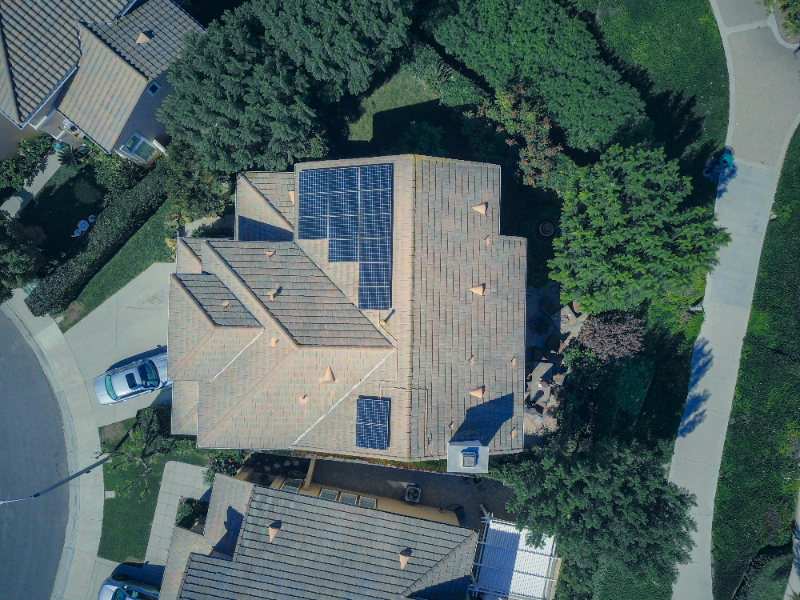
Residential renewable energy systems integrate rooftop solar photovoltaic (PV) generation with household batteries, EV chargers and heat pumps, coordinated through a smart energy-management platform. These systems enable households to optimize self-consumption, manage flexible loads and, where permitted, participate in demand-response and virtual power plant (VPP) schemes.  According to the World Economic Forum, digitally connected prosumer technologies are becoming an important element of distributed energy systems, helping smooth local demand profiles and support the wider grid.[1] As adoption grows, coordinated residential systems can reduce peak loads and contribute to a more resilient distribution network. Main outcomes of the solution Affordability: Reduces household electricity costs by increasing self-consumption of rooftop solar and lowering reliance on peak-price imports; overall savings depend on local tariff structures, export rules and system utilisation. Reliability & Flexibility: Provides short-duration backup capability and enables coordinated control of household loads such as EV charging and heat pumps. Aggregated fleets can deliver local balancing and flexibility services where regulatory frameworks allow. System Resilience: Enhances resilience at distribution level by decentralising flexible capacity across many households, helping mitigate congestion, manage variability and maintain stability during periods of high demand or fluctuating renewable output. Key deployment and scaling factors Install smart meters, communication interfaces and safe interconnection hardware to enable export capability and grid-service participation. Deploy comprehensive household energy-management platforms that coordinate solar generation, storage, EV charging and heat-pump operation. Strengthen regulatory frameworks allowing aggregated residential batteries to access flexibility markets, demand-response programmes and balancing services. Ensure robust installer certification and safety standards covering battery installation, wiring, backup switching and fire protection. Development of scalable commercial models—ownership, leasing and energy-as-a-service—that lower upfront costs and accelerate adoption. Provide clear cybersecurity and data-governance guidelines for connected residential DER systems and digital energy platforms. Incorporate interoperability standards to ensure devices can be aggregated reliably. Align deployments with DSO capacity assessments to avoid local network congestion. Case Study Enpal (2017), Germany Enpal provides integrated residential clean-energy systems combining rooftop solar, battery storage, EV chargers and heat pumps, offered through an innovative, flexible financing model that lowers upfront investment for households. The company operates Enpal. One, an AI-enabled energy-management platform that coordinates generation and consumption across its customer base. The platform aggregates tens of thousands of decentralized assets and, where allowed by regulation, enables participation in flexibility services. The system improves household self-consumption and supports local network efficiency by managing EV charging, heat-pump operation and battery dispatch in response to price signals or grid needs. Enpal’s deployments illustrate how integrated solar-plus-storage offerings, combined with digital coordination, can scale rapidly and contribute to distributed flexibility in a high-renewables market such as Germany.[2]References: Technology Convergence Report 2025 I World Economic Forum (June 2025)  Energy Solution Package I Enpal 
Residential renewable energy systems
Enpal
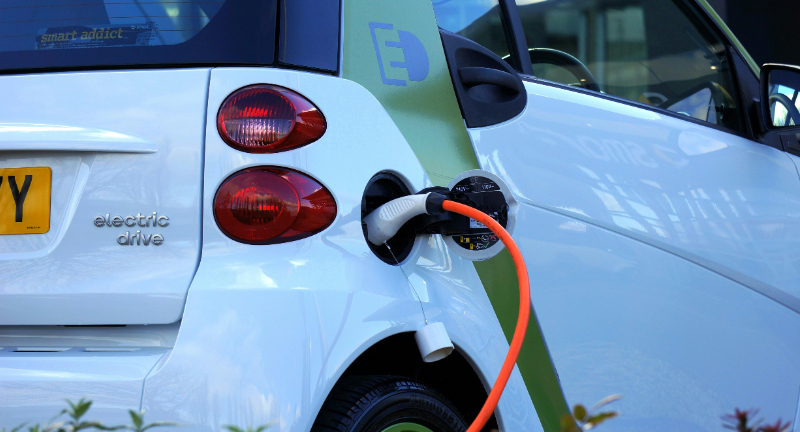
Small-scale residential battery energy storage systems (BESS) complement rooftop solar photovoltaic (PV) systems by storing surplus daytime generation and supplying electricity during evening peaks or outages. Most units use compact lithium iron phosphate (LiFePO₄) chemistry due to its stability and suitability for household settings. Residential BESS increases solar self-consumption, reduces exposure to peak-price imports and, when aggregated through virtual power plant (VPP) platforms, can provide distributed flexibility services. According to the International Energy Agency (IEA), small-scale distributed battery storage plays an increasing role in accelerating electrification and reducing demand peaks by shifting household consumption to locally stored solar energy.[1] Modular system designs allow homeowners to expand storage capacity over time, supporting both individual resilience and broader grid-stability objectives in high-solar markets. Main outcomes of the solution Affordability: Reduces electricity costs by increasing solar self-consumption and lowering peak-price imports, while enabling surplus export in jurisdictions that allow it. Economic performance depends strongly on local tariff structures, export rules and system utilization. Reliability & Flexibility: Provides backup power during outages and allows flexible load shifting across the day. Through aggregation platforms or virtual power plants, residential BESS can offer frequency response, demand reduction and local balancing services that strengthen overall grid flexibility. System Resilience: Enhances resilience at the distribution level by spreading flexible capacity across many households, helping mitigate congestion and variability in areas with high rooftop-solar penetration. Key deployment and scaling factors Evaluate household energy profiles, rooftop PV output and local tariff schemes to size residential batteries appropriately. Apply standardized interconnection and smart-metering protocols to enable safe import/export operations and grid-service participation. Adhere to national safety requirements for LiFePO₄ installations, including fire-protection, ventilation and certified installer practices. Introduce intuitive energy-management software and mobile interfaces that help households optimize battery usage and monitor system performance. Strengthen local service networks by maintaining regional warehouses, certified installers and reliable maintenance channels to improve deployment speed. Link residential BESS to virtual power plants and demand-response schemes so aggregated systems can provide grid-support services and create new value streams. Work with distribution system operators (DSOs) to plan deployments in areas with high solar uptake and ensure alignment with local network capacity. Case Study Menred ESS (2023), GermanyMenred ESS has deployed modular residential LiFePO₄ solar-plus-storage systems across Germany, using household-scale inverters and stackable battery modules to support flexible sizing. Typical installations start with a 6 kW inverter and battery units that can be expanded from small capacities to larger multi-module configurations. In parallel operation, some systems can reach up to approximately 98 kWh of storage, enabling households with significant rooftop PV or electric-vehicle charging needs to tailor capacity to their usage profiles. The systems are supplied jointly by Menred GmbH (Germany) and Menred ESS Co. (China), supported by regional warehousing and certified installer networks. Integrated IoT-enabled energy-management software provides real-time monitoring, automated charge–discharge scheduling and safety diagnostics. In regions where export or aggregation is permitted, these systems can participate in distributed-flexibility schemes such as virtual power plants. The German deployments illustrate how modular residential storage can increase solar self-consumption and provide additional flexibility within distribution networks with high rooftop PV penetration.[2]References: Unlocking the Potential of Distributed Energy Resources I IEA (202) 12.29kWh Energy Storage Battery System I Menred ESS (November 2025) 
Small-scale residential battery energy storage systems (BESS) for solar power management
Menred Group
Combining smart electric-vehicle (EV) charging with microgrids – integrating rooftop solar, on-site battery storage and intelligent load control – offers a scalable strategy for buildings, campuses and mixed-use developments to manage rising electricity demand while decarbonizing. As EV adoption accelerates, unmanaged charging risks overloading building grid connections and triggering costly upgrades. Smart charging systems apply dynamic load management, adjusting charging rates in real-time based on building load, feeder constraints, renewable output and tariff signals. This helps avoid overloads, improve phase balancing and shift demand to lower-cost periods. Microgrids enhance these capabilities by supplying and storing local renewable energy and shaving peak demand through coordinated dispatch of PV, storage and flexible loads. During upstream grid disturbances, microgrids with islanding capability can maintain EV-charging operations for priority vehicles or services, improving operational resilience. Together, smart charging and microgrids increase self-consumption of on-site solar, reduce coincident peaks, protect transformer and feeder capacity and enable more predictable, cost-effective charging behavior as electrification expands. Main outcomes of the solution Affordability: Reduces operational costs by shifting EV charging into lower-tariff periods and decreasing peak-demand charges. Microgrids with on-site solar and storage further reduce electricity expenses and may defer grid-connection upgrades. Reliability & Flexibility: Improves load stability by coordinating EV charging with building demand, renewable output and storage capacity. This supports consistent charging availability and reduces the likelihood of overloads on internal or upstream grid infrastructure. Business value: Creates structured investment opportunities through measurable cost reductions, avoided infrastructure upgrades and the potential for standardization across building portfolios. Reliable EV-charging services support utilization and long-term asset performance. Key deployment and scaling factors Smart charging systems capable of scheduling and modulating charging in response to building load and grid signals. On-site renewable generation and battery-energy storage sized to expected EV demand and facility load. Integrated controls that coordinate charging, storage dispatch and building energy management. Clear economic modelling of demand-charge mitigation, self-consumption benefits and potential export revenue. Regulatory frameworks that allow flexibility services, time-of-use optimization and microgrid interconnection. Case Study Scale Microgrids (2025), USA Scale Microgrids is constructing a renewable energy microgrid to support a zero-emission electric bus fleet at the Santa Clara Valley Transportation Authority (VTA)’s Cerone Bus Depot in San Jose, California. The project integrates on-site solar generation, battery energy storage and smart EV charging infrastructure to support fleet operations while managing local electricity demand.  The system under construction includes approximately 500 kW of solar PV canopies, around 4 MWh of battery storage and up to 3 MW of fleet-charging capacity. Bus charging is planned primarily overnight, aligning energy use with lower electricity tariffs and available on-site generation to ensure vehicle availability for morning service.  The microgrid is designed to enhance operational resilience by supporting charging and essential depot functions during periods of grid stress or outages, with the option to connect temporary backup generation if required. The facility will remain grid-connected, with Pacific Gas & Electric upgrading local utility infrastructure and adding 3 MW of capacity to support growing electricity demand. VTA has indicated that the infrastructure is expected to underpin the deployment of 35 battery-electric buses planned for 2026 and support its longer-term transition toward a 100% zero-emission bus fleet, in line with California state requirements.[1]References: Electrifying Public Transit: Scale Microgrids Building Renewable Energy Microgrid for Santa Clara Valley Transit Authority I Microgrid Knowledge (October 2025)
Smart charging and microgrids combination

Scale Microgrids
Utilities are increasingly working with large technology companies, data center developers and investment partners to co-develop data center infrastructure that supports both digital services and energy transition objectives. In this model, utilities leverage generation assets, grid access and diversified energy portfolios to supply reliable, lower-carbon power to large computing facilities, while aligning grid and asset planning with long-term digital infrastructure demand. Data centers require large and continuous power supply with high reliability requirements, and partnerships with utilities can enable coordinated planning of capacity, location and energy sourcing at scale. This coordination can reduce uncertainty around grid connections and generation adequacy, particularly in regions facing rapid growth in electricity demand from digital infrastructure. At the same time, data center operators may provide advanced digital services, such as analytics, cloud computing and AI-based tools, that utilities can use to enhance operational data management and system insight. In some configurations, these capabilities support improved monitoring, forecasting and operational decision support, rather than direct control of grid assets. By combining energy supply with digital infrastructure collaboration, utilities can strengthen their role in supporting electrification and digital growth, while developing capabilities that extend beyond traditional power delivery. This model is emerging in regions where utilities have existing generation assets, grid infrastructure and land that can be paired with large-scale data center demand. Main outcomes of the solution Affordability: Supports more efficient long-term capital and asset planning by aligning large, predictable data center demand with utility generation and infrastructure investments, helping manage financial risk associated with major capacity additions. Reliability & Flexibility: Enables utilities to supply data centers with high levels of reliability by drawing on diversified energy portfolios, including renewables, storage and dispatchable generation, while coordinating capacity planning with grid constraints. Business Value: Strengthens utilities’ strategic positioning by combining energy infrastructure with digital infrastructure partnerships, improving access to advanced data services, operational insight and new collaboration models linked to large, stable electricity customers. Key deployment and scaling factors Select sites at or near existing utility assets with available land, grid access and generation capacity. Ensure diversified energy portfolios, including renewables, dispatchable generation and storage, to meet high reliability requirements. Establish partnership agreements with hyperscale operators that define long-term capacity commitments and development timelines. Integrate high-capacity connectivity through utility-owned fibre networks or affiliated network providers where available. Align regulatory approvals and investment frameworks to support large, capital-intensive cross-sector projects. Case Study PPC Group (2025), GreeceIn 2025, PPC, a PowerTech Group in Southeastern Europe and Greece’s largest utility, announced a strategic investment plan that includes the development of a 300 MW mega data center at the Agios Dimitrios power plant site in Western Macedonia. The project forms part of a broader €5.75 billion (c. USD 6.75 billion) investment initiative aimed at transforming former lignite mining areas into a green energy and technology hub for Greece and Southeastern Europe. This initiative complements a series of strategic initiatives aimed at shaping Greece’s digital future, bolstering technology and connectivity, such as PPC’s ongoing project with EDGNEX Data Centers by DAMAC that aims to develop a scalable 12.5 MW data center in Spata, East Attica. PPC has stated it is ready to commence construction once agreements with major hyperscalers data center operators are in place, with a target of operational readiness by 2027. The site benefits from existing industrial land, strong high-voltage interconnections and water availability for cooling, reflecting the technical advantages of repurposing former lignite power plant locations for large-scale data center development. The facility is planned to draw on a diversified local energy mix, including renewables, dispatchable natural gas generation, pumped storage and battery systems, with the intention of supplying the data center through a behind-the-meter configuration that limits additional load on the national grid. In addition, PPC’s fibre subsidiary, PPC FiberGrid, is expected to provide ultra-high-speed connectivity given its FTTH rollout in Greece, positioning the development as a combined energy and digital infrastructure hub. Subject to demand from hyperscaler partners, PPC has indicated that the site could be expanded in later phases to up to 1,000 MW of data center capacity.[1] References: PPC Group: €5.75 bn investments in green energy and technology transform Western Macedonia I PPC (April 2025) 
Utilities as data centre partners
PPC Group
Smart grid platforms are integrated, software-defined control layers that connect field sensors, substations, distributed energy resources (DERs) and operators via secure, interoperable communications. They replace siloed, analogue operations and periodic manual inspections with real-time visibility, automation and predictive analytics, enabling faster response, greater reliability and more efficient asset utilization. By combining IOT-enabled sensors with centralized control and intelligent analytics, smart grid platforms support predictive maintenance, fault prevention and improved hosting capacity for renewables and flexible loads. Their edge–cloud architectures allow rapid local decision-making while leveraging central analytics for system-level optimization. These capabilities reduce outage minutes, improve asset health and support a more adaptable, data-driven electricity system. Main outcomes of the solution Reliability & Flexibility: Improves real-time system performance by rapidly detecting and resolving faults, automating control actions and supporting the balancing of variable renewable generation. System Resilience: Strengthens grid robustness through predictive maintenance and edge analytics that prevent equipment failures and support faster recovery after disturbances. Institutional Efficiency & Transparency: Provides shared visibility of network performance and energy flows for operators, consumers and regulators, improving coordination, accountability and data-driven decision making. Key deployment and scaling factors Integration of IoT-enabled sensors and interoperable communication protocols for real-time data exchange. Edge–cloud computing architecture to combine fast local control with central analytics. Compliance with cybersecurity, data governance and interoperability standards. Skilled workforce for data analytics, system integration and grid automation. Supportive regulatory frameworks enabling digitalization, secure data sharing and coordination across TSO/DSO environments. Interoperability with legacy systems to ensure smooth transition during staged digital upgrades. Case StudiesISA Energia Brazil and Hitachi Energy (2023), Brazil ISA Energia Brazil partnered with Hitachi Energy to deliver what is described as Brazil’s first ‘Digital 4.0’ substation in Jaguariúna, São Paulo, replacing legacy analogue infrastructure with a digital architecture based on IEC 61850 (global standard for data models and high-speed, interoperable communication in digital substations) and fibre-optic communications. The platform integrates protection, control and monitoring systems through a unified digital layer that supports remote diagnostics, automated fault detection and faster commissioning of new bays. IoT-enabled sensors and digital interfaces allow operators to supervise equipment conditions continuously, improving asset utilization and simplifying maintenance planning. The digital process-bus architecture reduces copper cabling, supports real-time, high-accuracy data exchange and simplifies the physical layout, contributing to a safer and more efficient operating environment. Early operational experience indicates improved fault-response times, more streamlined O&M processes and a scalable model for future digital substations in Brazil’s transmission network. The project demonstrates how digital platforms can modernize grid infrastructure, enhance reliability and support the integration of variable renewable generation.[1,2]Schneider Electric (2025), Global Schneider Electric developed the One Digital Grid Platform to unify grid operations, asset planning & management, advanced analytics, and hybrid-cloud capabilities into a single digital ecosystem for utilities. The platform builds on Schneider Electric’s expertise in developing and deploying EcoStruxure ADMS (used by more than 125 utilities serving more than 220 million customers worldwide) and the cloud-based DERMS co-developed with Microsoft and PG&E (Platform opened for integration with other systems using standards-based APIs and models). The system provides real-time situational awareness, predictive analytics and automated decision support across planning, operations and DER integration. Utilities use the platform to anticipate demand shifts, improve resilience during extreme weather and streamline DER interconnection through advanced grid-flexibility tools. AI-based forecasting enhances load and generation visibility, while the Grid AI Assistant supports operator decision-making in increasingly complex grid conditions. Grid Data Hub is where the historical siloes are broken. It provides a common meta-model for the utility to uniformly represent its entire data set in a single place, ideal for a variety of analytics and reporting use cases, but also for independent 3rd party vendors to develop new applications using the platform as a vessel for jumpstarting the innovation. According to Schneider Electric, field results indicate significant performance improvements: outages reduced by up to 40%, DER interconnection timelines shortened by 25%, and application deployment accelerated by up to 60%. With modular cloud/on-premise deployment options and native interoperability with EcoStruxure ADMS, ArcFM and DERMS, the One Digital Grid Platform offers a scalable & flexible digital architecture that strengthens reliability, enhances grid flexibility and improves long-term system planning and resilience.[3]Alectra Utilities Corporation (2024–ongoing), CanadaAlectra Utilities, an electricity distribution utility in Ontario, Canada, is implementing a network intelligence platform to integrate fragmented grid data and improve access to planning and operational information. The platform consolidates network, asset and operational data into a standardized network model aligned with the IEC Common Information Model (CIM), supported by automated data-quality controls. An AI-enabled interface allows users to query governed data using natural language, generate maps and reports, and identify data-quality exceptions without requiring bespoke data extracts. Initial deployment began in June 2026, with a staged rollout planned across Alectra’s Ontario service territories. Alectra targets a 30–50% reduction in manual data handling and an approximately 30% improvement in productivity as deployment scales.[4,5]UNOPS Southeast Asia Energy Transition Partnership (ETP), Indonesia’s State-owned Electricity Company (PT PLN), ELC Electroconsult and deBarr (2021), IndonesiaIn Indonesia, PT PLN, supported by the Southeast Asia Energy Transition Partnership (ETP), managed by UNOPS, is modernizing the Java-Madura-Bali (JAMALI) power-system control architecture. ETP, together with technical partners ELC Electroconsult and deBarr, developed the engineering design and supported procurement, system integration and workforce training. The project consolidates five regional control centres into a Main SCADA/EMS Control Centre and a Disaster Recovery Control Centre, integrating real-time monitoring, renewable-energy forecasting, automatic dispatch and advanced grid-analysis capabilities. The disaster-recovery facility is designed to assume system responsibility if the main centre becomes unavailable, strengthening operational continuity. JAMALI covers around 70% of Indonesia's generation capacity and serves approximately 160 million people. The submitted project reports that the upgraded control centres are designed to enable PLN to integrate 18.78 GW of renewable-energy capacity by 2034, while 60 PLN staff have been trained on the new SCADA/EMS system.[6,7]References: ISA ENERGIA BRASIL and Hitachi Energy: A Partnership to Modernize the Power Grid I Hitachi Energy Information provided to World Economic Forum I Hitachi Energy (November 2025)Information provided to World Economic Forum I Schneider Electric (November 2025)Information provided to World Economic Forum by Alectra Utilities Corporation (June 2026) OEB Regulatory Filing, Appendix B14 - Grid Modernization | Alectra UtilitiesPowering Up for a Sustainable Future: ETP’s Support to Upgrade Indonesia’s Largest Energy Generator – Southeast Asia Energy Transition Partnership Information provided to World Economic Forum by UNOPS (September 2026)
Smart grid platforms
Grupo ISA, Hitachi Energy, Schneider Electric, Alectra Utilities, United Nations Office for Project Services (UNOPS)
Storage as a Transmission Alternative (SATA) refers to the deployment of grid-scale battery storage systems that provide specific services that would otherwise require new or upgraded transmission infrastructure. When environmental, permitting or siting constraints delay or prevent transmission expansion, strategically placed batteries can supply local capacity, relieve congestion, support peak-load management and strengthen stability at constrained network nodes. These services are validated through standard power-system studies – including alternating current (AC) load-flow, N-1 / N-k contingency and thermal-rating analyses – to confirm that storage can reliably resolve the specific grid constraints addressed by the planned reinforcement.  Modern SATA deployments use inverter-based controls capable of fast active and reactive power response, voltage support and the provision of grid-forming or grid-following services. Real-time telemetry, grid-modelling tools and advanced dispatch algorithms ensure that batteries act on the timescales required for contingency support and thermal-overload mitigation. Unlike traditional transmission assets, SATA solutions can be deployed rapidly, configured modularly and operated flexibly to address local constraints, while recognizing that they do not substitute for long-distance bulk transfer capacity. As non-wires alternatives become more sophisticated, they increasingly offer utilities a viable option for maintaining system adequacy, integrating renewables and optimizing capital expenditure in regulatory environments where storage may not yet be formally recognized as a transmission asset. Main outcomes of the solution Reliability & Flexibility: Provides transmission-level services – such as local capacity, congestion relief, voltage support and peak-load management – at the specific points where the grid is constrained. Batteries can respond within milliseconds through power-electronics interfaces, offering fast flexibility when traditional lines cannot be built or expanded. Affordability: Can avoid or defer selected transmission upgrades by relieving bottlenecks with targeted storage deployments. Reduces congestion-related expenditures and improves the utilization of existing grid assets, supporting more efficient capital allocation. System Resilience: Strengthens resilience during outages, contingencies and extreme-weather events by placing flexible capacity directly at vulnerable nodes. Storage can maintain service, support emergency operations and stabilize the grid when conventional infrastructure is stressed. Key Deployment & Scaling Factors Identify grid corridors where new transmission lines cannot be built or expanded due to permitting, environmental or urban-density constraints. Use load-flow, congestion and hosting-capacity analysis to determine optimal battery locations and confirm that storage can reliably deliver the required transmission functions. Integrate SATA assets into existing operational processes — including contingency analysis, congestion management and real-time dispatch — so batteries operate as part of the transmission system. Establish mechanisms that allow storage to be procured, compensated and included in the rate base for providing transmission-equivalent services, even if it is not yet formally defined as a transmission asset. Combine utility-owned storage with contracted third-party assets (via RFPs or service agreements) to speed deployment and ensure reliable performance in regulated utility environments. Ensure accurate telemetry, model integration and data quality, as transmission-related services require precise real-time visibility and reliable control signals Case Study Portland General Electric (PGE) and Eolian (2022), USAIn Portland, Oregon, additional energy supplies from renewable resource-rich regions in the eastern part of the state were constrained by a lack of transmission capacity crossing the volcanic Cascade Mountains. In 2009, local utility PGE proposed a new set of 500 kV lines called Cascade Crossing but ultimately abandoned the project in 2013 due to environmental and permitting constraints. Meanwhile, load growth and datacenter deployment was accelerating in the ‘Silicon Forest’ of northwest Portland, adjacent to the landing point of multiple transpacific fiberoptic cables and a massive Intel microchip fabrication facility. To address growing bottlenecks and enable the delivery of additional energy to the urban core, Eolian partnered with Portland General Electric (PGE) to construct large-scale battery storage as a transmission alternative, providing rapidly-deployed capacity and congestion relief without building new lines. The solution was envisioned by PGE in their IRP process and then procured through a 2022 RFP. Contracts were executed in mid-2003 and construction began almost immediately, and the solution now operates through a mix of utility-owned and contracted storage facilities. Eolian began the development and permitting of the projects in 2017, anticipating the growing mismatch between load growth, transmission utilization and regions of viable clean energy development. The projects were intentionally located at critical flowgate substations inside the load pocket that allowed for charging with low-cost energy using spare transmission capacity during off-peak hours and then direct delivery into the region’s primary bulk transmission network during hours of maximum congestion and peak demand hours.  According to PGE, 475 MW of battery energy storage has been energized – representing 1.9 GWh of installed capacity – to enhance grid reliability, manage peak load and reduce congestion across critical network nodes. Strategically-sited assets deliver the functional equivalent of planned transmission upgrades within Oregon’s regulated-utility framework, where SATA is not yet formally defined in regulation. This project demonstrates how grid-scale storage can serve as a rapid, non-wires alternative in dense urban environments or locations where traditional transmission expansion is constrained.[1,2]References:Portland General energizes 1.9 GWh of lithium batteries in major storage expansion I Utility Dive (August 2025) PGE Energizes 475 MW of Battery Energy Storage to Boost Grid Reliability and Keep Costs Low for Oregonians I PR Newswire (August 2025) 
Storage as transmission alternative (SATA)

PGE, Eolian
Thermal batteries store surplus and low-cost ​clean​ electricity as high-temperature heat and deliver it back as industrial process heat or electricity on demand​ or around-the-clock​. Using insulated ​carbon​ blocks, ceramic materials or metal-based media heated to several hundred or thousand​s of​ degrees Celsius, these systems convert variable power into a stable, dispatchable energy resource. Thermal energy storage can retain heat for hours to days and, in some configurations, significantly longer periods, providing long-duration flexibility for industrial ​users, data centers, ​and power systems.[1]As renewable penetration increases, grid operators face rising curtailment and volatility, while industrial heat users struggle to decarbonize processes that rely on high temperatures​ or require 24/7 operation​.. Thermal batteries address both challenges: they absorb electricity during low-price or oversupply periods, shift demand away from congested hours and deliver clean heat or, where configured, electricity. Modular, factory-built designs can reduce installation effort and avoid the need for new transmission infrastructure, enabling deployment at industrial facilities and other large energy users.[2,3]Main outcomes of the solution Sustainability: Thermal batteries support industrial decarbonization by replacing fossil-fuel heat and electricity with high-temperature energy stored from renewable sources; they also increase utilization of clean power by absorbing surplus renewable electricity that would otherwise be curtailed. Reliability & Flexibility: Thermal batteries improve system stability by charging during low-demand periods and delivering controllable heat or electricity when needed, reducing pressure on congested grids, ensuring a steady supply of high-temperature energy for industrial users​, and enabling better utilization of existing grid infrastructure—lowering energy costs for all ratepayers​. Business Value: Thermal batteries reduce ​​manufacturing ​​operating costs by enabling ​​factories, data centers, and other ​​companies to rely on low-priced renewable electricity instead of volatile fossil-fuel inputs; modular construction and predictable operating profiles support long-term cost savings. Key deployment and scaling factorsIntegrate thermal storage with renewable or low-cost electricity supply to ensure charging occurs during low-value grid periods and discharging meets process heat or electricity needs. Ensure compatibility with industrial temperature requirements, including retrofits for steam, hot air or direct high-temperature applications depending on the storage medium and heat-delivery method. Use modular, factory-built units that can be transported, installed and scaled rapidly across multiple sites without extensive civil works or transmission upgrades. Implement controls and forecasting tools to optimize charge–discharge cycles, minimize operating costs and maximize the use of surplus renewable electricity. Coordinate with utility and grid operators to reduce congestion, access demand-shifting incentives, ensure accurate transmission cost allocation, and access or pass through wholesale market costs. Assess durability and cycling performance of high-temperature materials to ensure long-term reliability in industrial applications. Case Study Antora Energy (2023), USA Antora Energy manufactures modular thermal batteries that convert low-cost electricity into 24/7 high-temperature heat and electricity. The systems use solid carbon-based thermal blocks heated to very high temperatures and can discharge energy either as industrial heat or through thermophotovoltaic (TPV) generators for electricity production. Antora’s first full-scale installation, deployed in 2023 in Fresno, California, has surpassed 10,000 operating hours, demonstrating reliable long-duration storage and continuous heat delivery.  By charging during low-value, high-generation periods and discharging around-the-clock, this technology helps industrial users ensure 24/7 reliability, avoid peak grid congestion and lower operating costs. According to company reports, Antora now produces gigawatt-hours of thermal-storage capacity annually at its San Jose factory, one of the first dedicated thermal-battery manufacturing facilities. The company is installing its first large commercial project - a multi-day, multi-gigawatt-hour installation - at a major industrial site in the U.S. Midwest.[4,5]References:Thermal Energy Storage I IEA Industrial Thermal Batteries I Energy Innovation Policy & Technology (July 2023) Catalysing the Global Opportunity for Electrothermal Energy Storage I Systemiq (February 2024) Clean Energy 101: Thermal Batteries I Rocky Mountain Institute (February 2025) Information provided to World Economic Forum I Antora Energy (November 2025)
Thermal batteries for industrial heat and power

Antora Energy
Topology optimization software identifies optimal grid reconfiguration actions, such as opening or closing circuit breakers to redirect power flows, relieve congestion and unlock unused transmission capacity. By rapidly evaluating large numbers of feasible switching combinations, these tools propose configurations that improve transfer capability without requiring new transmission lines or physical upgrades. In practice, topology optimization functions as a decision-support layer that guides operators toward congestion relief actions using the existing network. Modern topology optimization platforms integrate near-real-time data, power-flow models and contingency analysis to detect congestion patterns and identify cost-effective switching options. By continuously assessing system conditions, they help operators relieve bottlenecks, reduce costly redispatch and increase the flexibility of existing networks while respecting system protection and security criteria. These capabilities are particularly valuable in renewable-rich systems, where variable generation and shifting flow patterns create dynamic congestion that conventional tools cannot resolve effectively. They are also valuable to help mitigate congestion and increase system resilience during extreme events with high demand and multiple outages. As major power systems face rising demand, slow transmission build-out and increasing congestion costs, topology optimization offers a digital-first approach to improve grid performance, increase utilization of existing assets and reduce operational expenditure. Main outcomes of the solution Affordability: Reduces system costs by lowering congestion-related redispatch, improving use of existing infrastructure and deferring selected transmission upgrades. Reliability & Flexibility: Improves grid stability by optimizing power-flow distribution, mitigating overloads and supporting management of variable generation and changing demand patterns. Institutional Efficiency & Transparency: Supports data-driven operations through automated analysis, providing clear switching recommendations and reducing manual engineering workload. Key Deployment and Scaling Factors Maintain accurate network models and state to simulate power flows and assess switching actions with sufficient precision. Integrate seamlessly with EMS so recommendations can be validated, approved and executed safely in live operations. Define operational and protection rules specifying which breakers may be switched, under what conditions and with what verification steps. Ensure secure, interoperable software architectures that meet utility cybersecurity requirements and integrate with existing systems. Enable regulatory and operational frameworks that allow algorithm-supported congestion relief as part of standard grid-management practice. Case StudyNewGrid and Midcontinent Independent System Operator (MISO) (2024), USATopology optimization has been applied within the MISO transmission footprint to support congestion management using existing network infrastructure. The approach uses analytical tools to identify feasible network reconfiguration actions, such as switching operations, that can redirect power flows and mitigate congestion while complying with security and protection constraints. These activities leveraged MISO’s formal economic reconfiguration request framework, which provides a standardized process for submission, screening, evaluation and implementation of topology-based congestion mitigation actions. The framework is designed to ensure consistent operational assessment and coordination across transmission operators and market participants. During 2023-2024, reconfigurations implemented under this framework were associated with regional congestion cost reductions exceeding USD 100 million across the MISO system. In one example, during a three-week planned outage of a 345 kV transmission line between Iowa and Minnesota, an implemented reconfiguration reduced regional congestion costs by approximately USD 3.5 million over the outage period, based on ex-post evaluation using state estimator data. The same reconfiguration was associated with substantially lower wind curtailment (reduced by 86%) during the outage window, improving utilization of available renewable generation.[1]  References:Topology Optimization Case Studies I NewGrid (January 2026)
Topology optimization for grid congestion management

NewGrid, Midcontinent Independent System Operator (MISO)
Waste-heat recovery solutions harness thermal energy that would otherwise be discarded by industrial sites, data centers or other large energy users. This captured heat is transferred into district-heating networks via heat exchangers, heat pumps and insulated pipelines, where it can serve residential and commercial buildings. By turning low- and medium-temperature waste heat into a usable resource, these systems reduce primary-energy demand and reliance on combustion-based boilers. Data centers are particularly suitable for this approach: liquid-cooling technologies can provide a relatively stable stream of recoverable heat that can be upgraded to district-heating temperatures. Waste-heat utilization supports urban decarbonization by replacing fossil-based heat generation and improving overall energy efficiency in dense population centers. According to the International Renewable Energy Agency (IRENA), waste-heat recovery from data centers remains a largely untapped resource that can reduce system-wide heating costs and emissions when connected to modern district-heating networks. IRENA also notes that pairing data-center waste heat with heat pumps raises output temperatures to district-heating standards, enabling scalable, low-carbon heat supply.[1]Main outcomes of the solution Sustainability: Replacing fossil-fuel heat generation with recovered thermal energy can significantly reduce CO₂ emissions, lower primary-energy demand and support climate-neutral district-heating strategies. Affordability: Recovered waste heat lowers heating costs for district-heating operators and consumers by reducing fuel purchases and mitigating exposure to volatile gas markets; large and stable heat sources such as data centers support predictable, long-term operating costs. System Resilience: Diversifying heat supply with stable waste-heat sources strengthens resilience during peak-load conditions and cold seasons; heat-pump integration enables flexible operation and maintains temperature-stable output even when outdoor conditions fluctuate. Key deployment and scaling factors Identify waste-heat sources (e.g., data centers, industrial sites) and evaluate thermal capacity, temperature profiles and proximity to district-heating networks. Standardize interconnection solutions – heat exchangers, heat pumps and insulated pipelines – where feasible to reduce engineering complexity and enable replication. Establish commercial and regulatory frameworks for long-term heat-offtake agreements, transparent pricing models and incentives for low-carbon heat supply. Implement robust monitoring and safety systems to maintain stable outlet temperatures, water quality and reliable year-round operation. Coordinate with municipalities and district-heating operators to align projects with urban-decarbonization strategies and the expansion of low-temperature networks. Ensure accurate thermal-load data and heat-profile validation, supporting the sizing of pumps, exchangers and distribution infrastructure. Plan for temperature-control and redundancy requirements, especially in climates with large seasonal swings. Case Study Microsoft, Fortum and AFRY (2025), Finland Fortum is developing a major data-center waste-heat recovery project by integrating Microsoft’s new hyperscale data centers in Espoo and Kirkkonummi into the regional district-heating network. Waste heat from Microsoft’s servers will be captured through liquid-cooling systems, upgraded via large-scale heat pumps and fed into the district-heating grid operated by Fortum Power and Heat Oy. Once fully operational, the recovered heat is expected to provide up to 350 MW of thermal capacity and supply around 40% of the district-heating demand across Espoo, Kauniainen and Kirkkonummi. The system is being developed with AFRY providing engineering, procurement and construction-management (EPCM) services. Initial heat delivery is planned for 2025/2026 with phased expansion in subsequent heating seasons. According to Fortum and Microsoft, the project is among the world’s largest data-center heat-recovery initiatives and forms a key component of regional plans to decarbonize district heating. The project demonstrates how hyperscale data-center clusters can act as stable, long-term heat sources and accelerate the transition to carbon-neutral urban heating in northern climates.[2,3,4]References: Waste heat recovery from data centres I IRENA Fortum and Microsoft's datacentre project spearheads energy efficiency I Fortum (March 2022) Capturing data centre waste heat for Fortum’s district heating in Finland I AFRY  Building the future: How datacenters are innovating with sustainability I Microsoft (October 2025) 
Waste heat recovery for district heating

Microsoft, AFRY, Fortum
Virtual Renewable Energy Sharing (VRES) is a model that allows consumers to access renewable energy produced at remote sites, such as solar farms or wind parks without installing equipment on their own premises. It operates through a digital platform that links users to shared renewable assets, measures generation and consumption through advanced metering, and allocates a defined virtual share of clean energy to each participant. Credits or bill reductions are calculated through secure settlement systems, which may include smart contracts or digital ledger technologies where appropriate. VRES aggregates distributed energy resources and provides real-time visibility into usage patterns and environmental benefits. The model reduces many limitations associated with traditional ownership-based approaches. Whereas rooftop solar or similar systems require upfront investment, suitable property conditions and long-term commitments, VRES lowers physical and financial and allows flexible participation levels. Consumers do not need to own assets or manage maintenance, enabling broader access – including for renters, apartment residents and users unable to install on-site systems. Pooling generation across multiple renewable sites can also improve alignment between production and consumption, enhance grid flexibility and support higher renewable utilization. Automated, transparent accounting frameworks help maintain traceability, while utilities and prosumers can offer new subscription- or usage-based clean-energy services.[1,2]Main outcomes of the solution Affordability: Reduces system and consumer costs by improving utilisation of renewable assets, lowering dependence on peak generation and enabling access to clean energy without upfront investment, thereby supporting a more cost-effective transition. Reliability & Flexibility: Aggregates diverse renewable resources and integrates real-time data to improve forecasting accuracy, smooth variability and enhance system flexibility through coordinated participation of prosumers and distributed assets. Sustainability: Accelerates decarbonization by expanding access to clean energy, increasing the utilization of renewable generation, and displacing fossil-based electricity consumption, thereby supporting a more resource-efficient and low-carbon power system. Key deployment and scaling factors Regulatory and policy alignment to establish stable rules for virtual allocation, participant eligibility and credit settlement. Advanced metering and data infrastructure to provide accurate, real-time measurement of generation and consumption. Interoperable platform architecture that integrates utility systems, grid operators, distributed energy resources and compliance tools. Renewable resource aggregation to build flexible, diversified portfolios that can reliably serve participant demand at scale. Automated digital settlement systems for billing, credit calculation and financial transfers as participation grows. Robust cybersecurity and data-privacy safeguards to protect user data and maintain trust in digital energy platforms. Case Study Enel (2025)​, Italy In 2025, Enel launched ebitts, a digital platform developed in collaboration with Conio that uses the blockchain-based infrastructure to tokenize utility-scale renewable plants and certify the allocation of fractional production shares to customers. Through the platform, users can acquire a “Token Box,” representing a defined share of electricity generated by particular solar and wind installations in Italy, including a photovoltaic plant near Tarquinia and a wind farm in Baselice. Customers choose subscription duration of 10, 15, or 20 years.  Once active, each Token Box entitles the user to a proportion of actual renewable output. This production is tracked digitally and netted against the user’s electricity consumption, generating bill credits, with surplus production convertible into further bill reductions based on wholesale market valuation. A Token Box may be associated with multiple PODs, enabling allocation of benefits across multiple supply points. Users can monitor generation, consumption alignment and bill impacts through a dedicated mobile application.[3,4]References: Using Digitalisation in EMDEs to Enable Demand Response in Buildings I IEA (July 2023) Virtual Power Plants and Distributed Energy Resource Management Systems I NREL (July 2025) Ebitts: The Renewable Energy Revolution Within Everyone's Reach I Enel (April 2025) Information provided to World Economic Forum I Enel (November 2025)
Virtual renewable energy sharing
Enel
Virtual Power Plants (VPPs) are cloud-based energy management systems that aggregate many small and diverse distributed energy resources (DERs) – such as rooftop solar, batteries, combined heat and power (CHP) units, electric vehicles and flexible loads – and operate them collectively as if they were a single power plant. Through aggregation and coordinated control, these otherwise dispersed assets can provide grid services, participate in energy and ancillary markets and deliver demand-response capabilities that individual resources cannot access on their own.  By pooling assets and optimizing their dispatch, a VPP can respond to real-time grid conditions, support the integration of variable renewable generation and contribute to system balancing. Aggregated operation enables frequency regulation, peak-period capacity provision and improved supply–demand alignment, while allowing owners of individual DERs to receive compensation for services traditionally delivered by centralized generation. Main outcomes of the solution Sustainability: Supports higher renewable penetration by coordinating distributed solar, storage and flexible loads into a responsive aggregated asset that can absorb, store or export energy as system conditions require. Reliability & Flexibility: Improves system stability by enabling aggregated DERs to provide balancing, frequency regulation and peak-shaving services through real-time coordination. Business Value: Enables smaller DER owners to access energy and ancillary-service markets that typically require scale, lowering participation barriers and creating additional revenue streams for asset owners, aggregators and utilities. Key deployment and scaling factors Establish DER registration frameworks that allow residential, commercial and industrial resources to enroll in VPP programs. Deploy secure communication and control infrastructure linking aggregated DERs to a central dispatch platform. Enable market-access mechanisms that allow VPPs to participate in energy, ancillary and, where applicable, capacity markets. Design incentive structures such as rebates, dynamic tariffs or revenue-sharing arrangements to encourage participation. Ensure regulatory recognition of aggregated resources as eligible providers of grid services. Case StudyNext Kraftwerke and Peleman Industries (2023), Germany Peleman Industries first explored installing a BESS alongside a wind turbine to store surplus generation and increase operational flexibility, but on-site use alone did not generate sufficient revenue to justify the investment. To secure a more reliable income stream, Peleman Industries joined the Next Pool VPP, which aggregates distributed batteries to qualify for the Frequency Containment Reserve (FCR) market. Through digital aggregation, Next Kraftwerke links multiple units into a single flexible resource capable of responding within seconds to frequency deviations. The VPP sends automated control signals that direct charging and discharging in real time, enabling precise grid-stabilisation services. Aggregation also helps small storage units meet strict FCR performance and minimum-capacity requirements. By managing forecasting, real-time monitoring, market bidding and technical compliance, Next Kraftwerke enables battery owners to access ancillary-service revenues while contributing to system stability. [1] References: Buffering the Energy Crisis with Windpower and Storage I Next Kraftwerke 
Virtual power plants (VPPs)
Next Kraftwerke, Peleman Industries
Renewable energy permitting and grid-connection acceleration legislation refers to legal and regulatory reforms designed to shorten development timelines for solar, wind and other renewable generation by addressing procedural bottlenecks rather than changing market pricing or support levels. These reforms focus on two core areas: accelerating project permitting and improving access to grid connection.  Permitting-related measures typically include statutory decision deadlines, simplified or standardized environmental assessments, expanded eligibility of land or priority development zones and clearer allocation of responsibilities across authorities.  Grid-connection acceleration measures address delays arising from connection queues, unclear technical requirements and misalignment between network planning and generation pipelines, often through standardized processes, connection timelines and enhanced coordination between developers and network operators By reducing administrative uncertainty and improving institutional throughput, these legislative frameworks improve delivery speed and planning certainty while supporting higher volumes of renewable deployment without relying on ad-hoc exemptions or emergency interventions. Main outcomes of the solution Sustainability: Accelerates deployment of renewable generation by removing permitting and connection bottlenecks, supporting higher renewable penetration and emissions reduction targets. Business Value: Improves project bankability and investment confidence through clearer timelines, reduced development risk and more predictable delivery pathways. Institutional Efficiency & Transparency: Strengthens regulatory clarity and administrative capacity by standardizing procedures, reducing discretionary delays and improving coordination across authorities and network operators. Key deployment and scaling factors Establish statutory permitting timelines and streamlined approval procedures for renewable projects. Implement grid-connection reforms that prioritize delivery-ready projects and remove speculative queue entries. Align land-use planning, environmental assessment and network development processes to avoid sequential delays. Provide clear regulatory guidance and standardized technical requirements for developers and network operators. Case StudiesGerman Federal Ministry for Economic Affairs and Energy, Bundesnetzagentur (BNetzA) (2024), Germany  Between 2024 and 2025, Germany enacted a coordinated package of legislative reforms, including Solarpaket I, amendments to the Renewable Energy Act (EEG) and updates to the Wind Energy Area Demand Act (WindBG), to accelerate renewable energy deployment by addressing permitting and planning bottlenecks.  The reforms introduced simplified and faster permitting procedures for solar and wind projects, expanded eligible land areas, clarified environmental assessment requirements and improved coordination between federal, state and local authorities. Additional measures supported rooftop PV deployment, community energy participation and more efficient tendering processes.  Together, these changes aim to reduce development timelines, improve planning certainty and enable renewable energy expansion at a pace aligned with Germany’s 2030 climate and capacity targets.[1,2]National Energy System Operator (NESO) (2025-ongoing), United KingdomThe United Kingdom is implementing a multi-year reform of electricity network connection arrangements to address long queues and misalignment between connection rights and deliverable projects. Led by the National Energy System Operator (NESO) and approved by the regulator, Ofgem, the reform responds to a connections pipeline that had grown to several times the capacity required to meet 2030 and 2050 system needs. The reform replaces the historic first-come, first-served approach with a readiness- and need-based framework. Projects are required to meet defined milestones — including planning progress, land rights and delivery readiness — in order to retain or secure a connection position. Non-viable or stalled projects are removed or deprioritized, allowing network capacity to be reassigned to assets aligned with national decarbonization and security-of-supply objectives. A central feature of the reform is the reordering and publication of a new connections delivery pipeline, supported by an Existing Agreements register and updated delivery timelines. This increases transparency for developers and investors while enabling network companies to plan reinforcements based on projects that are likely to proceed. Implementation is being phased across 2025–2026, with operational processes continuing to evolve. The reform aims to shorten effective connection timelines, improve investment certainty and ensure that network access supports the timely delivery of generation, storage and demand-side assets required for the UK’s Clean Power 2030 ambition.[3]EasyPermits (2023-ongoing), EuropeEasyPermits is a cloud-based, open-source digital permitting platform developed to improve the speed, transparency and consistency of renewable-energy permitting processes within existing regulatory frameworks. The tool was initiated in 2023 by WindEurope, with Accenture as transformation partner and AWS providing cloud infrastructure. The platform is designed to support local and regional permitting authorities by digitizing and standardizing administrative workflows rather than changing underlying permitting rules. Technically, EasyPermits provides: structured digital application templates aligned with local permitting requirements standardized, milestone-based workflows for document review and approvals role-based dashboards for permitting agents and project developers version control, audit trails and document traceability optional community-visibility features to support transparency and early engagement Denmark served as the first pilot country, where the solution was configured to national and municipal permitting requirements and tested using real project data across two municipalities. The pilot focused on improving completeness of applications, reducing iterative information requests and increasing administrative throughput under rising application volumes. EasyPermits illustrates how digital permitting infrastructure can complement legislative acceleration measures by increasing institutional capacity, predictability and transparency at the implementation level, particularly in decentralized permitting systems where administrative constraints rather than policy ambition limit renewable energy deployment.[5] References: The Bundestag and Bundesrat adopt the solar package I Federal Ministry of Economy and Energy of Germany New regulation of the promotion of special photovoltaic systems adopted I Deutscher Bundestag Connections Reform I NESO Connections reform timeline I NESO EasyPermits I WindEurope 
Renewable energy permitting and grid-connection acceleration legislation
Accenture, Federal Ministry for Economic Affairs and Energy of Germany, National Energy System Operator (NESO), WindEurope, Amazon Web Services

Submit your Solutions

The Innovation Playbook is a living resource which will evolve and expand over time. Public and private stakeholders are invited to submit innovative solutions for consideration for inclusion in future editions of the Playbook. 

Selected solutions will benefit from greater visibility, demonstrate impact and scalability on a trusted global platform, and help shape dialogue on the future of power systems. 

Please follow the link to submit a solution. If you would prefer to work offline before submitting, you can download a Word version of the survey here.  

Future of Power Systems

A World Economic Forum Initiative