Our insights and tools

Leverage our growing library of world-leading practices to accelerate local progress and help drive global impact.
Access our insights

Browse the latest solutions from our toolbox

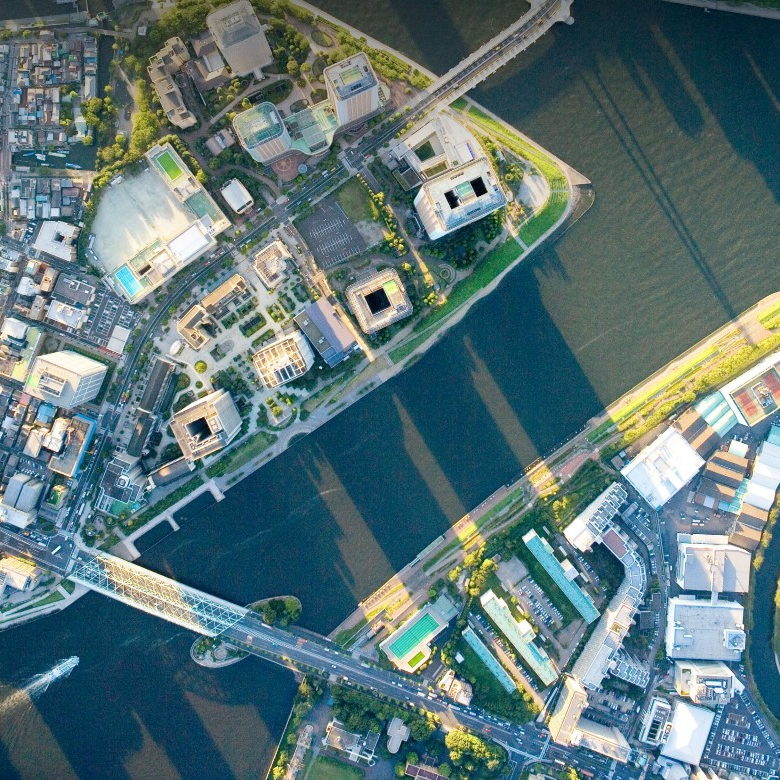
Resilient Economies: Strategies for Sinking Cities and Flood Risks, written by the World Economic Forum in collaboration with Deloitte, explores how cities, from Tokyo to Jakarta, are responding through integrated policies, nature-based infrastructure and systems-level governance. The report outlines practical pathways for governments and businesses to transition from reactive crisis management to proactive resilience-building – valuing land and water as strategic assets, strengthening governance and leadership, investing in resilient infrastructure and empowering communities.
Government, Engineering & Construction, Nature & Natural capital
Resilient Economies: Strategies for Sinking Cities and Flood Risks

As urban populations surge towards 70% of humanity by 2050, innovation districts have emerged as critical catalysts for reimagining how cities generate prosperity, foster collaboration and create opportunity. Yet how do we ensure these districts deliver not just economic returns, but meaningful benefits for the communities they serve?This paper presents a toolkit that distils best practice and tangible lessons from 10 inspiring innovation districts drawn from every continent. The toolkit is organized around three components – collaborative governance, human-centric placemaking and efficient digital infrastructure – which embody the World Economic Forum’s eight guiding principles for responsible innovation and translate them into practical steps.
Government, Engineering & Construction, Technology
Innovation Ecosystems: A Toolkit of Principles and Best Practice

Prepared by the Centre for Urban Transformation in partnership with the City of Madrid and the Alliance for Clean Air, this case study offers key insights for city policy-makers and stakeholders on how the City of Madrid successfully redefined its Low Emissions Zone policy, thereby advancing cleaner air and a healthier urban environment.
Transportation, Government, Nature & Natural capital
Madrid 360 Low-Emissions Zone: Resilience and Reinvention in City Policy

The rapid development and adoption of technology – driven by the potential for transformation, media amplification and venture capital investment – has contributed to economic growth and reshaped how people live and work. However, not all advancements have delivered the societal impact initially envisioned. This report outlines a framework for responsible innovation to guide decision-makers in navigating emerging technologies, ensuring that investments support solutions with meaningful, sustainable impact.
Technology, IT and Communications (ICT)
Shaping Tomorrow: Responsible Innovation for a Brighter Future

This model policy can encourage adaptive reusein cities to reduce the carbon footprint of their builtenvironments, provide benefits to communities andboost local economies. The objective is to providepractical support to cities and stakeholders to achievesustainability goals. It can offer city stakeholders abaseline for implementing a city policy, or ordinancethat facilitates the retention and conversion of existing,underutilized, and/or historically significant built assetsthrough adaptive reuse.
Government, Technology
Adaptive Reuse of Assets Model Policy

Electric vehicles (EV) will play a pivotal role in the transport sector’s transition to zero emissions. While global sales are surging, in many cities the development of publicly-available charging infrastructure is not progressing quickly enough to meet this growing demand. This paper offers a strategic policy roadmap that city governments can use to scale investment in EV charging infrastructure.
Government, Mobility
Scaling Investment in EV Charging: A Policy Roadmap for Cities

This policy document can be used by procurers and purchasers in public bodies to guide their approach to innovation-friendly procurement. The aim is to unlock the potential of procurement to bring about innovation and a whole range of potential economic, social and environmental impacts. It lays out a set of principles along with practical examples that can direct the user.These guidelines were developed by the Taskforce on Innovation Procurement led by the World Economic Forum’s G20 Global Smart Cities Alliance in collaboration with the Connected Places Catapult.
Government, Technology
Innovation-Friendly Procurement Model Policy
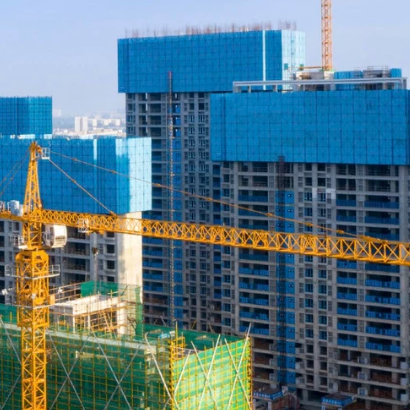
As cities grow in population and importance, urban construction will continue to gather pace. It is estimated that global floor area is expected to double by 2060, the equivalent of adding New York City every month for the next 40 years. This white paper highlights case studies and nine innovative solutions that provide models for cities seeking to meet sustainable development goals.
Engineering & Construction, Nature & Natural capital
Reducing Embodied Carbon in Cities: Nine Solutions for Greener Buildings and Communities
The urban affordability crisis is widespread and multifaceted, highlighting systemic injustice and deepening inequities for the 56% of the global population that calls cities home today. 
Reshaping affordability: interventions for inclusive and livable cities
This guide explains how to prepare a whole life carbon assessment (WLCA) in alignment with the model policy created by the Taskforce on Sustainability and Smart Cities. It is framed to be used by practitioners who must comply with the policy.The guide explains what goes into submitting and complying with a WLCA. To stay impartial, the guide does not go into any one specific WLCA framework, but highlights what is needed to create a successful assessment.
Practitioners’ Guide to Whole Life Carbon Assessments
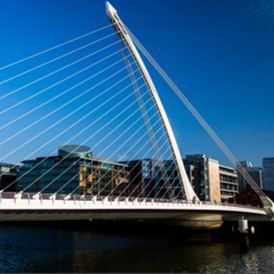
Dublin City Council established a “Telecoms Unit” in April 2022 to centralize and consolidate functions relevant to telecommunications and digital infrastructure into a dedicated unit within the City Council. The unit is a one-stop-shop for all telecoms related activities, providing a single point of contact for citizens, industry and other public bodies to engage with. It is responsible for developing and executing Dublin City Council’s telecoms strategy and supporting the rollout of digital infrastructure. 
Ireland | Government, Technology, IT and Communications (ICT)
Dublin Telecoms Unit Case Study
Although the concept of “smart cities” has existed for nearly two decades, many cities that aspire to be smart still lack the basic governance and policies needed to ensure that technology is adopted in a responsible and ethical way. This is even the case for members of the G20 Global Smart Cities Alliance that are seen as pioneers of the process. 
Government, Technology
Governing Smart Cities: Use Cases for Urban Transformation

Digital twin cities bring together the physical and digital worlds, enabling data-driven city management, intelligent services and interactive systems. They have the potential to transform cities into more intelligent entities, leading to high-quality urban development and sustainable growth. This report provides a guide for city leaders considering the development of digital twin cities and insights for entrepreneurs and investors looking to shape the next generation of applications.
Technology
Digital Twin Cities: Key Insights and Recommendations

This publication highlights some of the significant efforts currently taking place in Saudi Arabia to support the digital transformation of industry, with a particular focus on industrial SMEs. Smaller businesses face multiple challenges in adopting and benefiting from the digital revolution. These include resource, technical know-how and technological readiness constraints. Given their importance in the economy, it is crucial to ensure they are not left behind. This publication features 3 case studies from Saudi Arabia featuring private-public cooperation in supporting industrial SMEs in ensuring a more resilient economy. 
Saudi Arabia | Technology
Modernizing Small & Medium-Sized Enterprises in Saudi Arabia
Centre for the Fourth Industrial Revolution Saudi Arabia
This paper explains how the G20 Global Smart Cities Alliance is developing Regional Alliances around the world; how it supports the partners and the Centre for the Fourth Industrial Revolution Network to build regional networks that support cities; and how through a new playbook, it intends to scale this model further, creating new networks that can promote initiatives for emerging technologies.
Government, Technology
Building Regional Alliances for Urban Transformation
This Playbook can be used as a guide to the necessary steps for establishing a Regional Alliance in a country or region.The purpose of this Playbook is to share information on success points and tasks to be performed for Regional Alliance establishment based on the experience of existing regional networks in the G20 Global Smart Cities Alliance, notably the Japan City Community.
Government, Technology
Regional Alliance Playbook
This is the first report by the World Economic Forum on the state of technology governance in cities. The report tracks the efforts of the G20 Global Smart Cities Alliance, which seeks to advance the responsible and ethical use of smart city technologies. The Alliance and its partners represent more than 200,000 cities and local governments, leading companies, start-ups, research institutions and civil society communities. The World Economic Forum acts as its secretariat.
Government, Technology
Governing Smart Cities: Policy Benchmarks for Ethical and Responsible Smart City Development

Amsterdam's ambitious Clean Air Action Plan has enabled the city to lead the way on delivering cleaner air whilst growing the adoption of electric vehicles. The Plan sets out actions for the city to meet WHO's air quality guidelines by 2030. The Plan also includes policies and actions to incentivise the use of electric vehicles, for example through increased public charging and subsidies, as well as increasingly strict Low Emission Zones.
Mobility
Amsterdam Clean Air Action Plan

Shaping Tomorrow: Responsible Innovation for a Brighter Future introduces an eight-principle framework that provides guidance for innovators on developing products, services and business models that are a net positive for society. Drawing on insights from leaders and real-world case studies, the report offers actionable strategies for embedding responsibility into every stage of innovation.

Technology
Shaping Tomorrow: Responsible Innovation for a Brighter Future
This comprehensive white paper, produced in collaboration with Accenture, addresses the critical challenges and opportunities presented to both businesses and consumers by the increased demand for urban deliveries. It outlines strategies and recommendations for enhancing sustainability, efficiency and innovation in urban deliveries, with the aim of reducing emissions, alleviating congestion and improving safety in cities.
Transforming Urban Logistics: Sustainable and Efficient Last-Mile Delivery in Cities