As economies and businesses continue to transform, we need to ensure our current and future workforce are adequately and appropriately skilled. Hence, skill has become a common currency to articulate and activate continual upskilling and reskilling efforts. Skills-based career pathways and skills-based hiring practices will be common norms where public private partnership will jointly build a more equitable and resilient economy.
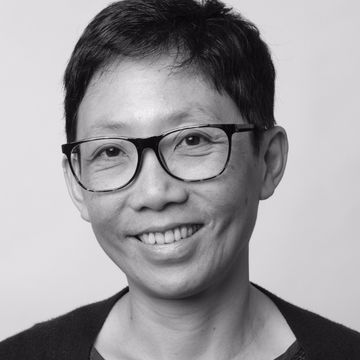
Gog Soon-Joo
Chief Skills Officer, SkillsFuture SG
Developing effective strategies and incentives to increase skills in order to advance technology-based transformation, ensure employment and meet labor market needs has a great importance. He also mentioned Turkiye has a tremendous opportunity to be a global leader among emerging economies by developing and using skills with its young and dynamic population, while mentioning with the right skills strategy and education along with a focus on the ecosystem that constantly requalifies employees and creates jobs for young people, Minister Varank emphasizes skills based development is crucial to ensure long-term prosperity for Turkiye.
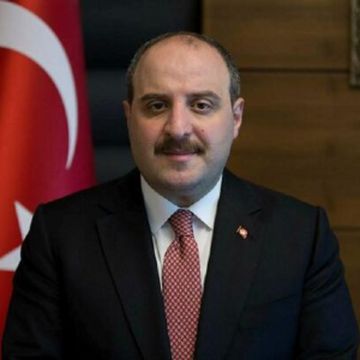
Mustafa Varank
Minister of Industry and Technology, Turkiye
We must work together to leverage isolated efforts, connect people and opportunities, and broaden expected outcomes. The labor market is undergoing profound changes triggered by the Covid-19 Pandemic, such as accelerated digitization and the enhancement of a sustainability agenda. Brazil requires a strategy for upskilling, reskilling, and re-deployment of its workforce to guarantee this transition will be inclusive and to build a post-pandemic world economy with opportunities for all. The Accelerator is part of that strategy.
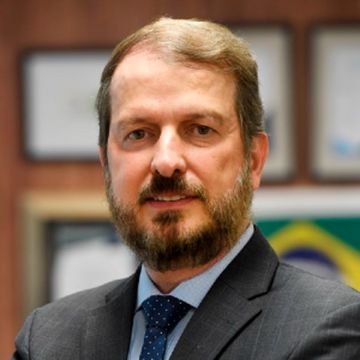
Rafael Lucchesi Ramacciotti
General Director, SENAI (National Service of Industrial Training),
Brazil
The National Framework for Future Skills was established and communicated across Oman to raise awareness and to highlight the accomplishments achieved. The Framework aim is to upskill +12,000 Omanis during 2022-2026 via online training, boot camps, and project-based requirements. Additionally, the Framework will launch a platform for students to navigate the current and future skills and job requirements through activating the concept of Public Private Partnership (PPP).
H.E. Dr Said Mohammed Ahmed Al-Saqri
Minister of Economy of Oman
Bahrain’s human capital is its most valuable resource, the backbone for the country’s economic strategy and a key factor in attracting investments into the Kingdom. WEF’s ‘Closing Skills Gap Accelerator’ presents an ideal forum for us to collaborate globally, on a public and private level, to reshape education and training and “future proof” our human capital. With the dynamic requirements brought forward by the fourth industrial revolution and accelerated by the Covid-19 pandemic, investing in skills and lifelong learning is no longer optional. Bahrain benefits from a tech-savvy workforce that has powered the development of new economic sectors, such as cloud computing and fintech, which have transformed Bahrain from being a service-based economy providing to the region, into a service-based economy providing to the world.
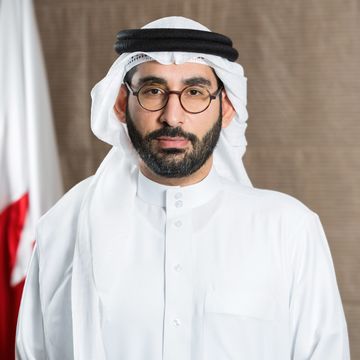
H.E. Mr Aymen bin Tawfeeq Al Moayed
Minister of Youth and Sports Affair, Bahrain