Case studies 

How partners are driving systemic change through the Reskilling Revolution

To accelerate the Reskilling Revolution, three complementary case‑study series  turn strategy into on‑the‑ground outcomes. Together, the New Economy Skills, Innovative Skills Funding Models, and Global Skills Taxonomy Adoption case studies show how to build work‑relevant capabilities, scale sustainable financing, and align stakeholders around a shared skills framework.

New Economy Skills 


Real‑world examples of governments, employers and educators aligning skill-building with market demand and credentialing five critical skill families using skills-first practices and shared standards:

- Human‑Centric

- AI, Data & Digital

- Maker

- Energy and Sustainability (Coming - 2026)

- Business and Entrepreneurship (Coming - 2027)

Innovative Skills Funding Models


Members of the World Economic Forum Future Skills Alliance identified global initiatives that adopt collaborative and innovative approaches to funding skills development, upskilling and reskilling in a wide range of contexts. 

These innovative public–private approaches explore continuous learning affordability by fairly sharing costs across individuals, employers and governments through sustainable financing models.


Global Skills Taxonomy Adoption 

The Global Skills Taxonomy Adoption Toolkit equips leaders across sectors—businesses, governments, and education providers—with actionable steps, evidence-based insights, and real-world case studies to adopt a common skills language and embed skills-first approaches into talent management strategies. 

Actionable guidance and cases showing how organizations map roles and learning to a common skills taxonomy and apply it across hiring, development and workforce planning.


Featured Case Studies

ContextThe Evolving Landscape of the Skilled TradesThe skilled trades are experiencing a profound evolution. As the global economy increasingly values hands-on expertise and localized infrastructure, trade occupations have solidified their position as premier pathways to economic mobility and business ownership. However, long-term success in the modern trade sector requires more than technical mastery. When an expert technician transitions into managing a team or launching an independent business, they face an entirely new set of demands.Historically, traditional trade education has focused strictly on technical competence. Yet, for early-career professionals and aspiring business owners, small gaps in operational functions—such as financing, project scheduling, pricing discipline, customer service, and client communication—can mean the difference between a career that stabilizes or one that stalls. To build a resilient enterprise, business owners require specialized training in job costing, cash flow management, reliable lead generation, and scalable leadership practices.Technology as a Catalyst for GrowthSimultaneously, technological advancements are reshaping trade workflows just as rapidly as any other economic sector. Emerging tools, including agentic and generative AI, are fundamentally changing how modern tradespeople plan tasks, generate project estimates, automate customer communication, and optimize field logistics. Modern trade professionals who adopt these tools gain significant advantages in operational speed, quality control, and customer trust—building robust, future-proof careers in an era of rapid economic shift.Facing the Macroeconomic Labor GapThis need for comprehensive business and technical training arrives at a critical moment of labor-market pressure. . The U.S. Department of Education estimates that by 2030, the United States could face up to 2.1 million unfilled skilled-trades positions, potentially resulting in $1 trillion in annual economic losses. The current talent pipeline is struggling to keep pace: while nearly 600,000 major skilled-trades jobs were posted last year, only about 150,000 workers entered the field through traditional apprenticeships, according to JLL and Fortune . Furthermore, Consumer Affairs data shows that for every five retiring workers in construction and manufacturing, only two replacements enter the workforce. This widening imbalance places immense pressure on our collective ability to build and maintain vital national infrastructure. It is precisely this challenge that catalyzed The Home Depot to establish the Path to Pro Program.ApproachNew Learning CollaborationThe Home Depot and Georgia Tech are excited to announce a new strategic collaboration which will expand the Path to Pro Program’s industry-leading entry-level technical trade training on PathtoPro.com via Georgia Tech’s proprietary learning platform. This new collaboration will offer durable skill and specialized business and entrepreneurship training to students, while also making Georgia Tech's content available to Path to Pro Program users.This collaboration will help address the national skilled labor shortage by not only training workers, but also developing the next generation of trade business leaders. Key objectives include:1. Business and Professional Skills: Augmenting technical training to accelerate early-career performance and professional communication.2. Financial Literacy: Building the foundational skills required for eventual property investment, project quoting, and business ownership.3. Entrepreneurship Readiness: Assisting trade professionals in transitioning from employee to small business owner with sustainable financial and operational practices.4.Technology Enablement: Integrating emerging tools—especially AI—into technical workflows to accelerate learning, optimize jobsite execution, and improve customer experience.Anticipated OutcomesThis collaborative content integration invites learners into an enriched educational ecosystem. Armed with Georgia Tech’s content on durable skills and business acumen, entry-level trades professionals will enter the workforce with a well-rounded set of skills designed to promote career progression, while experienced trades professionals will enter new business ventures better prepared to manage cash flow, navigate operations, and build ownership confidence, making these ventures more likely to succeed. Concurrently, Pros will leverage AI-enabled tools and modern workflows to increase efficiency, reduce rework, and scale their businesses. Taken holistically, this approach promotes the full career arc of a trade professional, enabling career and economic mobility and enhancing our nation’s workforce at this critical time.At scale, this collaboration will reach thousands of Path to Pro Program learners, embedding Georgia Tech-designed business, entrepreneurship, and technology modules into a proven, national skilled-trades pipeline. By uniting with Georgia Tech, the program builds upon its substantial momentum, equipping the next generation of trades professionals to not only secure high-demand jobs but to become resilient, lifetime learners ready to build lasting, sustainable careers and enterprises. 
USA
Georgia Tech and Home Depot - Path to Pro
Georgia Institute of Technology (Georgia Tech)
Context Anglo American’s Kumba Iron Ore operates in South Africa’s Northern Cape Province, a region characterised by persistently high unemployment and limited pathways into stable, sustainable employment. At the same time, both the mining operations and the broader regional economy depend on a reliable pipeline of trade and artisanal skills. These include formal artisan disciplines such as Electrician, Fitter, Millwright and Boilermaker, as well as portable skills such as welding, plumbing, carpentry, bricklaying, tiling, and plastering. Kumba also offers formal development programmes in plant and mining skills to further strengthen local capability and improve mine sustainability. When these critical skills are in short supply, the impact is felt across the community and industry. Individuals seeking employment remain excluded from economic opportunity, while employers and contractors struggle to source job‑ready talent locally and are often required to bring in skills from outside the region. Over time, this weakens the local economy and contributes to an insufficient talent pipeline that is unable to meet current and future demand. Approach Kumba has responded by bringing skills development closer to the communities that need it most and by prioritising training that leads to meaningful economic opportunity. Through its training centres in Kathu and Kuruman for Sishen, and in Postmasburg for Kolomela, as well as training centres based on-mine at both Sishen and Kolomela, the company provides community members with access to accredited, hands‑on learning in practical skills that are valuable both within and beyond the mining sector. The emphasis is on portable-, engineering and operational skills that benefit society across various contexts, including construction, maintenance, local services, contracting, and self‑employment. These off-mine centres specialise in core practical trades such as welding, plumbing, and carpentry, and Kumba’s broader regional planning also incorporates construction and repair skills such as bricklaying. In addition to community‑based craft training, the company invests in a stronger long‑term skills pipeline through structured formal artisan development. This approach creates a progression pathway that supports immediate job‑readiness by equipping individuals with foundational trade competencies, while also building deeper technical capabilities needed to develop future artisans who can fulfil critical roles over time. Furthermore, mine‑based skills programmes in processing and mining operations ensure that Kumba’s labour pipeline is developed and sourced locally. This strengthens long‑term sustainability for both the surrounding communities and the mining operations themselves. Results Kumba trained more than 2,200 people between 2023 and 2024 across a wide range of skills, from formal artisan programmes such as Electrician and Millwright to portable skills such as plumbing, welding, and bricklaying, as well as mining and processing operational skills. This investment has created meaningful employment pathways for individuals previously excluded from the labour market, while strengthening the local supply of critical trade and craft skills to meet growing demand. In 2024, Kumba expanded its commitment to inclusive development by launching formal learnership programmes specifically for locally based, unemployed persons with disabilities. These programmes provide accredited qualifications in areas such as farming, end‑user computing, and community development. The continued growth in training reach, the diversification of skills offered, and the sustained investment in developing future artisans, mining and plant operators, and skilled tradespersons demonstrate a deliberate strategy to build both short‑term employability and long‑term technical capacity. This ensures that local communities benefit from improved economic opportunities while the regional economy gains a reliable and sustainable talent pipeline.
South Africa
Anglo American – Building local maker skills pipelines for regional growth
Anglo American
Context Nearly one in four young people aged 15-24 in Türkiye are not currently in education, employment or training, reflecting a fundamental mismatch between vocational education and labour market needs. Traditional technical and vocational education and training (TVET) remain largely classroom-based, leaving graduates with theoretical knowledge but lacking hands-on experience in the specialised systems and technologies that employers require. At the same time, sectors such as healthcare infrastructure, industrial automation and technical services face significant skills shortages. A key constraint is the limited availability of qualified workplace trainers able to supervise and assess learners in live operational environments. Rönesans has recognized that technical ability alone is not enough to upskill the workforce as structured mechanisms are essential for these individuals to become effective master trainers. Approach Through a partnership between Rönesans Holding, UNICEF's "From Learning to Earning for Youth" programme and Türkiye's Ministry of National Education, Gaziantep City Hospital, a 1,875-bed advanced healthcare facility, has become a working training laboratory. The partnership embeds 120 health vocational high school students directly into operational hospital infrastructure for four days per week, rotating through high-demand technical occupations including industrial automation technologies, plumbing and energy systems, and industrial maintenance and repair. The programme operates through three integrated innovations: Master trainer pedagogy: Rönesans employees receive formal pedagogical training from the Ministry of National Education to become certified master trainers. This directly addresses one of the main challenges of scaling apprenticeships as many companies have technical experts, but not necessarily the skills to teach their craft. These master trainers supervise students on live tasks, transmitting technical expertise alongside professional behaviours, safety protocols and real-time problem-solving. Students learn by observing, assisting and progressively taking ownership of tasks under expert guidance. Safe, inclusive workplace learning standards: UNICEF provides technical guidance to establish standardised safety, inclusivity and learning quality benchmarks within operational facilities, ensuring workplace-based training meets educational standards while accommodating live hospital operations. Multi-stakeholder co-delivery architecture: The Ministry oversees curriculum alignment; UNICEF contributes pedagogical frameworks and inclusion expertise; Rönesans provides operational infrastructure and master trainer capacity; and the European Bank for Reconstruction and Development (EBRD) supports model scalability. Unlike traditional corporate social responsibility or standalone training centres, this model positions private sector operational facilities as active learning assets embedded within core business functions, turning hospitals and industrial operations into apprenticeship platforms without disrupting productivity and service delivery. Results The programme directly serves 120 students annually gaining verified competencies in specialised technical trades. By training Rönesans employees as pedagogically equipped master trainers, this approach creates institutional capacity that extends beyond individual student cohorts, establishing repeatable mechanisms for integrating future learners into operational settings.  Rönesans has successfully demonstrated that apprenticeships can be value-creating investments for companies as employers gain stronger, better-aligned talent pipelines and internal training capability, while students gain practical experience in operational settings that better prepare them for employment. Rönesans is expanding the framework across its diverse business lines (construction, energy, healthcare and industrial operations), creating a replicable blueprint for other large-scale employers. Updates to TVET curricula, improved workplace learning standards and expanded teacher capacity will benefit a much larger number of vocational students across Türkiye, making quality, relevant and future-proof the regional skills system. Students report high satisfaction learning directly from working professionals in technology-rich environments, while employers gain talent pipelines aligned to operational needs. 
Türkiye
Rönesans, UNICEF and the Ministry of National Education – Scaling workplace-based vocational training through master trainers
Rönesans Holding
Context OECD Programme for International Student Assessment – Vocational Education and Training Assessment is the OECD’s first international largescale assessment focused on vocational education and training. Inspired by PISA, it was created to address a persistent evidence gap: many countries lack globally comparable data on how well VET students apply their occupation specific skills (e.g., trade and vocational, hands-on technical abilities) to real workplace challenges. Without this kind of comparable measurement, it is difficult to benchmark outcomes across different VET models, understand learner characteristics, and identify which programme and labour market features drive stronger results further limiting policy action to improve the relevance, quality, equity, and effectiveness of skills systems. Approach PISAVET is designed as a recurring international assessment (every 3–5 years from 2030 onward subject to a successful development phase) and is being built in stages to ensure credibility and comparability across countries and programmes. Phased international build-out · Development phase (2023–2027): 14 participating countries co-develop instruments and methods. Seven countries (Australia, Brazil, Colombia, Germany, Greece, Portugal, and the United Arab Emirates) are first to implement instruments for measuring occupational skills. · Pilot phase (2027–2030): at least 10–15 countries implement the full set of instruments. · Largescale phase (2030–2034): expansion to more countries worldwide. PISAVET assesses applied occupational competence using methods that go beyond traditional knowledge tests, building on international experience such as ASCOT (Germany), WorldSkills International, and ETS. The assessment combines three task types: 1. Knowledge-based items Scenario-based questions (PISA-style) to test occupation-specific knowledge and the ability to reach correct solutions. 2. Interactive digital simulations Workplace tasks that replicate professional environments to observe problem-solving and decision-making in dynamic contexts. 3. Demonstration tasks Live or recorded practical performances evaluated by expert judges, supported by digital tools to improve consistency and comparability. This approach enables measurement of multiple dimensions, including outcomes, thought/decision-making approaches, performance-based skills, and elements of contribution to team performance via simulation tasks. In addition to occupational tasks, PISAVET captures broader employability skills (e.g., literacy, problem-solving, collaboration) and contextual factors such as student background, institutional features, and labour-market links so countries can interpret results and track patterns over time. Results The programme has established strong international collaboration and employer engagement to co-design credible, innovative assessment methods. A key lesson emerging from the work so far is the value of combining knowledge items, digital simulations demonstration tasks to capture both occupation-specific and transversal skills in authentic ways. From 2030 onwards, the program aims to generate internationally comparable evidence on applied VET outcomes and produce actionable policy insights to strengthen VET system performance. Success is defined by the reliability and validity of instruments, comparability across countries and programmes, the ability to link performance with contextual indicators, and the practical uptake of findings by policymakers, educators, and employers. 
North America, South America, Asia Pacific, Europe
OECD – Building trusted signals of applied vocational competence through PISA-VET
OECD
Context The North American labor market is currently facing a structural scarcity of skilled trades talent. For major industrial players, such as key suppliers of critical energy infrastructure and power generation components, this shortage is compounded by a "pipeline paradox." When high-profile organizations post specialized roles on public job boards, HR departments are often swarmed by hundreds of underqualified applicants.  This creates a significant bottleneck where qualified talent is buried under volume. As a result, many highly skilled tradespeople remain unemployed or underpaid despite a clear demand for their expertise, eventually leading them to stop applying for roles altogether when they fail to get a response. Furthermore, internal HR departments are often tasked with a broad scope of recruitment, covering everything from administrative staff to specialized engineers. In a complex market, we act as a specialized extension of internal talent acquisition teams, providing the deep technical vetting required to identify high-precision tradespeople. ApproachThe Specialized Solution: The "Core" Model Randstad’s Skilled Trades and Industrial Management (STIM) department addresses this by utilizing a specialized "Core" model. Rather than acting as generalists, our recruiters focus on a narrow subset of trades, such as Machinists and Computer Numerical Control Programmers. By specializing, we transition from reactive job board recruitment to a highly targeted, proactive search. We do not wait for the right candidates to apply; we actively map the market, identifying where top-tier talent currently works and understanding the precise motivations that would encourage them to move. For example, the demand for critical energy infrastructure means that aerospace machinists can often transition their existing CNC skills into the energy sector to achieve higher wages and better long-term job security. A recent partnership with an infrastructure manufacturing facility serves as a benchmark for this approach. The client faced a significant backlog in their machining department, which limited efficiencies connected to the production lifecycle of highly regulated power generation components. By leveraging our network in the aerospace sector, we successfully identified and placed several highly skilled CNC Machinists and Programmers. And by championing a skills-based hiring approach and facilitating cross-sector mobility, we recognized that their technical precision transferred perfectly into the energy sector. These candidates transitioned into their new roles immediately without the need for retraining. ResultOperational success: The client successfully cleared their machining backlog through, ensuring the project moved on schedule to the next production stage. Candidate impact: All placements secured higher compensation and stable, long-term careers in a critical infrastructure sector. Strategic growth: Based on the success of these initial placements, the partnership is now expanding across the client's broader regional operations. By building high-speed bridges between industrial sectors, Randstad ensures the most skilled talent is deployed on the world's most critical infrastructure projects. 
Global
Randstad: Bridging the Skilled Trades Gap
Randstad
Context When Homeboy Electronics Recycling moved into its new Los Angeles County, California facility, the milestone marked more than organizational expansion. It represented a growing ecosystem of opportunity for individuals historically excluded from the workforce, refurbishing the technology that powers daily life. As devices reach the end of their service life, recovery, refurbishment, and reuse can turn them from environmental and economic loss into materials reclaimed and put back into productive use.  At the same time, many individuals face persistent barriers to workforce participation, particularly people who are formerly incarcerated or formerly gang involved. Addressing these challenges together requires models that connect workforce development with, circular technology systems. Homeboy Electronics Recycling operates at this intersection, providing paid employment and hands on, skills-based training for individuals historically excluded from the labor market. Since 2017, HP Inc. has partnered closely with Homeboy Electronics Recycling to help advance this mission, supporting both workforce development and sustainable technology innovation.   Approach Homeboy Electronics Recycling provides paid employment and practical, skills-based training for people who are formerly gang involved or formerly incarcerated and who often face systemic barriers to economic mobility. The training model equips participants building practical skills in device refurbishment and electronics recycling that improves material recoverability. These trade and craft skills are increasingly essential as industries transition toward circular economy models, including repair, reuse, and remanufacturing pathways.   HP’s partnership strengthens this training by introducing technology that improves operational efficiency and builds digital literacy, skills required across modern, technology enabled job roles. Participants gain hands-on experience with HP supported workflows and equipment, including systems used in PC refurbishment, reinforcing both technical proficiency and familiarity with employer relevant technologies. Beyond technology, HP collaborates with Homeboy on sustainability planning, closed loop recycling initiatives, and coordinated visibility efforts.  Results* By pairing meaningful employment with market-relevant training, Homeboy helps build pathways to stability, long-term employability and economic inclusion for communities often overlooked by traditional workforce development initiatives. As of April 2026, HP and Homeboy Electronics Recycling had supported the employment and reskilling of over 380 individuals. The organization’s impact also extends beyond individual participants, strengthening families, reducing recidivism and stimulating local economic activity.The partnership also supports measurable circular economy outcomes. As of April 2026, HP and Homeboy Electronics Recycling had disassembled nearly 4 million kilograms of end-of-service printers and electronics for recycling. The partnership had also sent nearly 39,000 kilograms of ink cartridges to HP’s Planet Partners programme to be remade into new cartridges. The collaboration illustrates how employer-led partnerships can advance trade and craft skills while supporting innovation, sustainability and inclusive economic growth.*Footnote: Data provided by Homeboy Electronics
USA
HP and Homeboy Electronics Recycling: Building Future of Work Skills Through Circular Innovation
HP
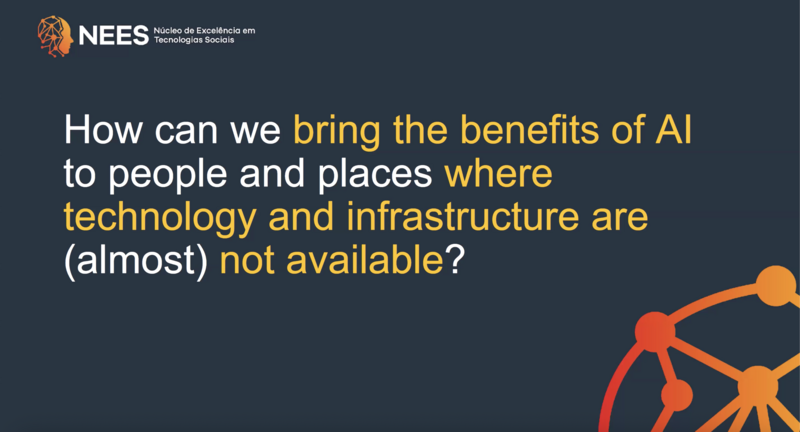
This case study examines AI Education Unplugged, an approach developed and advanced by Dr. Seiji Isotani, Faculty Director of the AI and Learning Analytics Program at the University of Pennsylvania Graduate School of Education and President of the International Artificial Intelligence in Education Society. The case study is originally based on an interview with Dr. Isotani conducted by the author, and is further informed by his presentation materials and the published research associated with the project.The central question is straightforward but globally urgent: how can the benefits of AI in education reach people and places where technology and infrastructure are absent, unstable, or severely limited? Rather than assuming one-device-per-student classrooms, reliable broadband, or advanced digital skills, AI Education Unplugged starts from the infrastructure that already exists in underserved settings. Its design logic emphasizes available infrastructure, intermittent connectivity, shared resources, and proxy use through teachers or other intermediaries.The case is grounded in the Brazilian context, particularly in the National Policy on Learning Recovery following the pandemic. In this setting, Dr. Isotani and collaborators applied the AIED Unplugged approach to support student writing development at scale. Instead of relying on fully digital classroom systems, students completed writing tasks on paper, teachers or school staff captured those responses through mobile devices, uploads occurred whenever internet access was available, and AI-supported analysis returned diagnostic feedback and teacher-facing dashboards. This substantially reduced delays compared with older review systems and better aligned educational support with real classroom conditions.The case highlights a broader policy argument: mainstream AI in education can become a new source of educational inequality if it assumes infrastructure that many communities do not have. AI Education Unplugged offers an alternative path by redesigning educational AI for low-resource environments. The case also draws on cited published research shown in Dr. Isotani’s slides, including work on educational inequality, mobile-phone access, delayed internet convergence, writing-support systems in Brazil, and teacher-mediated AI use in underserved settings.This case study is presented as an original analytical synthesis, not a reproduction of Dr. Isotani’s slides or publications. All data, claims, and conceptual frameworks should be attributed to the underlying published sources and to the interview where relevant, in order to preserve academic integrity.
Brazil | Education, Civil society, Technology
AI Education Unplugged: How AI Can Support Learning in Underdeveloped Regions with Limited Infrastructure
Context: Through its work with global customers and partners, Amazon Web Services (AWS) identified a critical gap: while digital platforms effectively teach technical skills, they rarely build the human-centric interpersonal and strategic competencies that make technology teams effective. This gap left learners underprepared for customer engagement and forced employers to rely on costly, time-intensive shadowing programmes.In response, AWS has developed an AI-powered simulation platform that scales business-technical conversations in realistic, low-risk settings – one that measures performance and captures how learners think through problems and communicate solutions. Approach: AWS developed SimuLearn, an online learning experience that pairs generative AI-powered simulations with hands-on training. SimuLearn helps individuals learn how to translate business problems into technical solutions through simulated dialogues between customers and technical professionals. Through realistic scenarios powered by generative AI, learners engage with virtual customers to gather requirements, iteratively develop architecture proposals, receive constructive feedback, build solutions in the AWS Console and validate implementations – developing their communication, problem-solving, decision-making and solution design skills. There are five specialized AI agents working together at the core of SimuLearn:– A business stakeholder agent simulating non-technical perspectives– A technical customer agent presenting challenging scenarios– An evaluation agent assessing solution accuracy– An AWS assistant providing real-time guidance– A skills assessment agent scoring learners on communication skills, problem-solving skills, customer focus, decision-making skills, technical knowledge and strategic thinking skills.This multi-agent system creates a safe, scalable environment for developing both technical and human-centric skills. With over 200 training scenarios, learners gather requirements, develop architecture proposals and receive immediate feedback across various roles and industries.Results: SimuLearn helps learners surface their reasoning, experiment safely and refine the judgement and critical thinking skills that will distinguish top performers in an AI-augmented workplace. The tool enables:– Scalable, risk-free environments for practicing customer interactions– Immediate feedback on technical solutions and soft skills– Accelerated development of capabilities typically requiring years of experience– Engaging learning through gamification and realistic scenarios– Seamless integration of technical training and humancentric skill development
Global | IT and Communications (ICT)
Bridging Technical and Human-Centric Skills: AWS SimuLearn's AI-Powered Learning Innovation
AWS
Context: In 2012, the Principals Academy Trust partnered with the University of Cape Town’s Graduate School of Business, with funding support from Capitec Foundation, to professionalize school leadership at scale. Recognizing principals as the key levers for change, particularly in a context of high poverty and crime, the goal was to move to durable, systems-based, people-centred leadership, grounded in new-economy skills like systems thinking, creative reasoning and personal mastery. Over time the initiative evolved into a multi-year leadership journey that builds school cultures where academic outcomes and human outcomes rise together.Approach:  The co-designed programme is a flexible executive course that builds technical and people-focused skills, with the selected participants receiving a full bursary. The curriculum includes critical new economy skills including systems thinking and personal mastery (self-awareness, resilience, empathy) that is applied directly to each school. Learning continues beyond the classroom: principals receive at least three years of one-to-one coaching from veteran former principals and targeted teacher/classroom support to anchor systemic change. A principal peer network strengthens collaboration across schools and districts. In 2023 the programme expanded to include deputy principals and two high-potential teachers per school, creating a shared language and leadership bench so gains endure when principals are promoted. Results: The programme has significantly shifted leadership behaviours and school outcomes, reaching 273 school executives across 11 cohorts since launch. Participating schools recorded gains in independently assessed systemic tests and school-leaving results. In the first secondary-school cohort, Bachelor-pass rates rose by 16.4 percentage points, versus 5.8 points provincially, despite starting from a far lower base (19.7% in participating schools vs. 36.5% provincial). By the end of the period, the cohort surpassed the national pass rate by 2.5 percentage points. In primary schools, the first two cohorts improved by 20.23% on average on the Principals Academy Trust Performance Index, which aggregates results from externally administered, internationally benchmarked assessments. In 2023, 11 programme-alumni schools ranked in the provincial top 10 for performance, and four others won Most-Improved Subject awards. Beyond the numbers, systems and culture are sticking as alumni are regularly promoted to circuit manager roles, extending the model’s reach as they eventually coach other principals.
South Africa | Education
University of Cape Town: empowering principals to transform schools through human-centric leadership
University of Cape Town
Context: The Mexico-based Tecnológico de Monterrey redesigned undergraduate education through the educational model Tec21, a national reform that moves beyond lectures to challenge-based learning. The goal is to comprehensively prepare students for the workforce and to be agents of transformation in their regions, equipping them not only with academic knowledge but also with the critical humancentric skills needed to solve real problems in society and the economy. More than 50% of the curriculum now centres on real-world challenges co-created with industry, government and community partners. The model combines hands-on development with competency-based assessment and portable digital credentials so students can demonstrate what they can do, not only what they know.Approach: The University embeds a competency-based system, including human-centric skills, throughout the curriculum. Institutional rubrics place sub-competencies on four levels and are applied to performance tasks such as challenge deliverables, simulations, pitches and lab work. Peer and self-assessment capture teamwork and reflective practice. Digital portfolios and learning analytics compile evidence of both outcomes and decision-making processes, enabling comparable, fair feedback across cohorts and informing continuous improvement. Students work in multidisciplinary blocks (5, 10 or 15 weeks, depending on the competences that are being developed) where teams tackle authentic problems, e.g. redesigning a sustainability strategy or creating a social innovation for a non-governmental organization (NGO). Faculty teams and over 3,000 external partners jointly design challenges to ensure relevance and diversity of perspectives. Alongside disciplinary knowledge, learners practice transversal human-centric skills such as self-awareness and selfmanagement, social intelligence, reasoning for complexity, digital transformation, innovative and entrepreneurial mindset, ethical and civic engagement, and communication, all of which are strengthened through meaningful international experiences. Technology is integrated as an instrument that increases learning gain, creating flexibility and amplifying collaboration and self-management in the development of competencies through digital learning experiences such as immersive simulations, access to complex scenarios in virtual worlds and the use of AI to address different disciplines. Verifiable digital badges are created and integrated with student records and a competency transcript. Credentials are globally verifiable and shareable on professional platforms, giving employers transparent evidence of how competencies were developed and applied in authentic contexts.Results: Graduates leave with portfolios and credentials that showcase human-centric strengths alongside technical work, improving mobility and early-career readiness. Students graduate with skills in using innovative technologies such as AI and extended reality, but also with competencies enriched by experiences based on these technologies; for example, with the use of adaptive technologies and methodologies, research shows more than 15 points in learning gains in more than 1,500 students. Partners report graduates integrate more smoothly into organizational contexts, bringing strong communication, teamwork, resilience and ethical reasoning. The combination of challenge artefacts, rubric levels and digital badges offers a clearer hiring signal than grades alone and shortens onboarding to productive contribution. Institutional indicators show employability within three months, rising from 81% to 89%, with retention and graduation efficiency at historic highs. By making purposeful learning a structural component of its learning ecosystem, and by connecting development, assessment and credentialling into one life cycle, higher education is turned into a scalable engine for adaptability, innovation and shared value creation. 
Mexico | Education
Tec21 at Tecnológico de Monterrey: Learning by Doing—Together
Context: Udemy built AI Role Play to give people a safe, low-stakes way to practice human-centric skills, including communication, conflict resolution, inclusive leadership, ethical decision-making and critical thinking. This approach addresses the limitations of live role-plays, which are costly to deliver, challenging to scale and often carry psychological risks. The AI-driven simulations adapt to each response and provide real-time, actionable feedback, letting professionals rehearse high-impact workplace conversations without reputational risk. Available in five languages (and expanding to four more) Udemy’s AI Role Play reaches 81 million learners and 17,000 organizations across 225 countries and territories, making human-centric skill training practical, repeatable and measurable.Approach:  AI Role Play blends instructor expertise with adaptive AI to deliver private, psychologically safe simulations in which learners practice behaviours such as active listening, de-escalation, constructive feedback, negotiation and decision-making. Instructors and organizations design scenarios that mirror authentic organizational challenges such as resolving team conflict, running an inclusive design critique or handling a performance conversation, while the AI dynamically responds to the learner’s choices and language. Learners receive personalized feedback and guidance on what to try next, enabling rapid iteration without social penalty. To strengthen fairness and relevance, Role Play also provides standardized feedback that tracks engagement, progression and completion, with organizations and learners able to align scenarios to their values and competencies. Results: AI Role Play has established a repeatable, risk-free practice loop for human-centric skills. Most AI Role Plays designed so far are designed to sharpen high-impact skills related to leadership, management and strategic thinking. Learners report higher confidence navigating difficult conversations; teams use analytics to target coaching where it matters; and organizations gain a scalable alternative to resource-intensive live simulations. Profiles of learner progress are enriched with performance evidence from realistic tasks, while private practice, immediate feedback and the ability to repeat attempts promote a culture of continuous learning. 
Global | IT and Communications (ICT)
Udemy: Creating Safe Spaces for Human-Centric Role Plays in the Age of AI
Udemy
Context: PwC has built a global framework to accredit learning and skills across its 340,000 people, recognizing human-centric capabilities to make progress visible, portable and understood across teams and markets. The portfolio includes badges such as Inclusive Mindset, which develops awareness of bias, intersectionality and microinequities while fostering curiosity and empathy. Issued via Credly, these digital credentials serve as verified, shareable records. The PwC Professional framework defines expected behaviours and anchors development to how work is delivered as well as what gets done – placing human-centric skills on par with technical expertise and business outcomes.Approach: Credentialling sits within a wider upskilling model. Starting with PwC’s “New world. New skills.” programme, PwC’s skills journey supports continuous learning at scale and places an emphasis not only on the technical skills required of the workforce but also the human skills that are foundational to how PwC delivers outcomes, lives its values and demonstrates its purpose. The PwC Professional behaviours define the standard that leaders and managers use to evaluate performance, coach and develop others, provide in-the-moment feedback, and support staffing decisions. Some business units across the PwC network reinforce what’s learned through badging via practice-based experiences, such as empathy-building interventions, so that learning translates into observable behaviour. Together, these mechanisms create consistent expectations, evidencebased reporting and repeatable recognition paths for humancentric skills. PwC badges are learning curricula across a range of strategically important topics, with transparent criteria that require learning, application and assessment. For humancentric badges like Inclusive Mindset, participants complete curated learning, reflect on their role in creating inclusive environments and demonstrate practical steps to shift everyday interactions. Some member firms have even made the Inclusive Mindset curricula a requirement for new joiners. Each individual’s learning is reviewed before a verifiable credential is issued, enabling individuals to share validated achievement internally and externally.Results: Individuals gain recognition for behaviours to not only acquire technical knowledge, but to benefit their client work. Badges signal strengths in communication, collaboration and inclusion – 90.9% of badge earners agreed that it improved their ability to practice more inclusive behaviours in daily interactions – supporting confidence and mobility across service lines and geographies. Managers use verified evidence of skills rather than course completions as one factor in staffing decisions, and teams benefit from clearer expectations about how to work together. At the firm level, aggregated badge data provides a view of capability supply that informs investment, while a common language for human-centric performance strengthens culture and delivery quality. In this case, PwC embeds human-centric capability in the same evidence-based way it treats technical skills, to recognize the value of both essential skill types. The result is a practical credentialling model that supports trust, inclusion and consistent outcomes in complex, real-world settings.
Global
PwC: Badging Human-Centric Fluency
PwC
Context: Based in Bogotá, Colombia, the University of Los Andes is introducing undergraduate digital credentials to make specific competencies with high professional value visible, verifiable and portable before degree completion. Soon, this will also include competencies in interdisciplinary areas related to critical global challenges, such as global environmental change and public management, and in human-centric skills such as leadership. The initiative recognizes that employers increasingly prioritize evidence of competency in real contexts over traditional transcripts. Approach:  Each credential is built around a formative pathway of at least 10 academic credits, combining courses, internships and experiential learning. Completion alone does not confer a credential: students must pass an authentic performance evaluation that provides concrete evidence of applied competence in real or simulated work. Credentials are student-initiated yet centrally verified for integrity; once requirements are met, the Registration Office issues a blockchain-secured digital badge to ensure authenticity, portability and employer-friendly validation. Digital badges and micro-credentials are recognized within formal programmes, not merely as co-curricular add-ons. The model is designed for scale: three undergraduate credentials were approved in September 2024 from the School of Faculty of Arts and Humanities, with additional offerings in development across the university’s 11 schools that will be underpinned by critical human-centric skills including active listening, communication, emotional intelligence and collaboration. To keep offerings aligned with emerging labour-market needs, the institution uses an AI-powered trend analysis tool to identify high-demand topics in both academic and professional fields and inform the design of new pathways courses and programmes. Results: Though early in implementation, the approach modernizes academic options or minors into competency based, credentialled pathways. The initiative aims to improve employability and entrepreneurship preparation to current students and future graduates by certifying competencies prior to graduation and offering meaningful recognition for students who exit early. The assessment’s first design, grounded in authentic performance evaluation, assures employers that credentials represent proven capability, while blockchain-verified badges streamline verification and reduce administrative burdens. It builds on the model of micro-credentials offered through the continuing education portfolio, which certify employability-valued competencies through digital badges, based on verified evidence that learners have acquired these skills.
Colombia | Education
University of Los Andes, Colombia: prove competence in practice
Universidad de los Andes
Context: Check Point is rethinking how cybersecurity experts learn by letting them practice in realistic, high-pressure environments. Through its education arm, the company uses cyber ranges, virtual spaces that simulate real attacks, to help analysts sharpen their decision-making under pressure. In 2025, Check Point hosted its first Global Cyber Range Challenge, a virtual event that brought together participants from 11 countries and 12 universities. Using the company’s Cyber Park simulation platform, teams investigated full-scale cyber incidents from start to finish. This demonstrates how hands-on, immersive training helps build stronger, more confident cyber experts by tracking how analysts think under pressure, not just the outcomes they produce. Beyond events, Check Point publishes training programmes and a consolidated course catalogue to systematize advanced critical skill development for teams and enterprises. Over the past four years, the programme has trained an average of 8,500 learners annually, reaching more than 34,000 professionals globally. Approach: The Cyber Range is designed to show how people think through a problem, not just whether they find the right answer. Participants start by exploring a network, then move step by step through analysis using standard cybersecurity tools. They finish by writing a report that explains their decisions and trade-offs. Throughout the exercise, the system records what they do, what information they check, and how they test their ideas. This allows coaches to assess reasoning, teamwork and communication to supplement technical results. To keep evaluation consistent, teams use a shared framework to map what they observe to agreed-upon skills and threat types. This creates a common language for feedback and helps compare performance fairly across groups. Results: Learners build a repeatable problem-solving habit: plan, investigate, explain and improve. Instructors can see how decisions are made, not just whether the right answer was found, and can focus coaching where it matters most, such as forming good hypotheses, handling evidence, working with others and communicating clearly. This approach helps analysts become confident faster and promotes consistent practice across teams.For organizations, the model creates an automatic way to measure readiness. Data from exercises including range results, scoring rubrics and observation notes form a skills portfolio leaders can be used to guide staffing, mentoring and investment decisions. Linking assessment directly to training shortens the time between identifying a skills gap and building capability. The result is a steady, future-ready pipeline of cyber and digital talent which is ready for the front line.The impact of the Cyber Range programme extends from individual learning to organizational readiness. Over four years, participants have shown:– Up to 40% faster incident response times after repeated simulations– Higher accuracy in root-cause analysis and containment– Improved team coordination and communication clarityLearners describe the range as “the closest thing to a real cyber crisis.” More than 75% of participants continue with additional modules or team challenges, promoting a culture of continuous professional growth.For organizations, Check Point provides a skills readiness dashboard that integrates behavioural data, technical outcomes and learning analytics. This gives Chief Information Security Officers (CISOs) and security leaders a real-time view of their team’s preparedness, allowing them to:– Identify and close capability gaps faster– Align training programmes with real-world threats– Optimize investment in human capital and cyber resilience
USA, Israel | IT and Communications (ICT)
Check Point: Tracking Thinking, Not Just Results in Cyber Ranges
Check Point Software Technologies
Context: A U.S.-based Fortune 50 telecom set out to build a living, skills-first view of its workforce to uncover hidden capabilities and accelerate mobility. Faced with static, self-reported employee profiles (less than 10% complete) the company couldn’t see adjacent strengths, especially in AI, data and digital skills. Leaders launched an initiative to replace incomplete snapshots with real-time, evidence-based insights drawn from multiple data sources. Guided by the principle of “See the whole human,” the approach balanced technical competencies with human capabilities, giving employees agency to validate their skills and creating a richer, more dynamic picture of workforce potential. Approach: Censia, an AI-powered talent intelligence company, enabled the Fortune 50 telecom to unlock the full potential of its workforce by implementing Censia Employee Intelligence, a solution that enhances employee profiles with AI-inferred and validated, context-aware skills derived from employee data, work histories and global labour-market insights. Furthermore, the product assesses skills from employees’ experiences including job history, projects and achievements, and then validates them against internal and market benchmarks. Employees review and confirm every inferred skill for accuracy and relevance. The initiative began with a six-week pilot involving 4,700 employees, where participants reviewed and confirmed every AI-enriched skill for accuracy and relevance. This validation created trust and ensured fairness across demographics, job families, and levels. Profiles became dynamic records which evolved as employees took on new roles, projects or training, minimizing the problem of non-current skills data. Integration with the company’s existing HR system enabled employees to explore, through the HR platform’s talent management features, how their skills connected to potential career pathways within the organization. AI-driven enrichment ensured speed, accuracy and scale that manual processes could never achieve: a more accurate, fair and empowering way to highlight what people are truly capable of. Results: With richer, more accurate profiles, there was an increase of 26% in internal mobility, driven by better job matching and a surge in employee applications for open roles. Employees reported that the AI-inferred skills were more than 85% accurate, and that the experience left them feeling inspired, seen and capable. Delivering a living, 360-degree view of skills rooted in real performance, benchmark validation and employee review strengthened workforce agility, improved fairness in career decisions, and positioned the organization to respond to future talent needs with confidence and significantly reduce voluntary turnover. The pilot eventually expanded to cover all the company’s US-based 75,000 employees. In a year, the initiative generated significant operational efficiencies: 65,000 hours saved, equivalent to $29 million in overhead costs, by automating skills enrichment instead of relying on manual data entry from employees. This created the foundation for a largescale resilient internal talent marketplace where AI, data and digital capabilities and human strengths are both visible and valued, enabling confident employee redeployment as needs evolve.
USA | IT and Communications (ICT)
Censia: A 360 View of Workforce Skills
Censia
Context: SkillsFuture Singapore (SSG) is building a skills-first economy by placing labour-market intelligence and a common skills language at the centre of workforce development. Public data sets, shared taxonomies and employer signals are used to continually refresh which skills matter most, so investments by learners, providers and firms stay aligned with fast-moving demand in the digital economy. Approach: SSG’s Jobs-Skills Portal turns labour-market intelligence into actionable guidance on the latest business trends including AI, data and digital, spotlighting high-demand, transferable skills so learners and providers know what to build next. It also highlights role-level expectations by showing the technologies employers currently ask for (including an AIrelated subset), and highlights areas where these requirements show up most – IT (29%), Engineering (12%), Research (7% – which enables individuals to compare their own skills/ tool proficiency and amend upskilling plans accordingly. From 2019–2023, demand rose fastest for AI-enabling/cloud tools such as Microsoft Azure, AWS Cloud9, ServiceNow and Microsoft CRM, giving organizations and educational institutions clear targets for course refreshes and talent development programmes. The Jobs-Skills Portal democratizes data and insights and makes these available to everyone, from individuals and firms to educational institutions and training providers. Beyond insights into the latest skills and technologies required in different job roles in the economy, a dashboard on job mobility and career pathways combines skills similarity, wage demand and transition history to surface practical career moves into job roles with good growth and potential for career mobility, including technology-intensive ones. More importantly, it highlights the skills required for transition and corresponding training courses if reskilling is required and expands individuals’ understanding of learning choices and real pathways. Anchoring the data-driven jobs-skills intelligence capability is the Skills Framework 2.0 that SSG developed and is adopted across different sectors of the economy, allowing individuals, employers and training providers to better identify suitable skills interventions both within and across sectors. To support employers and firms, SSG appoints industry leaders as SkillsFuture Queen Bees (37 appointed thus far), to serve as sector anchors that rally small and mediumsized enterprises (SMEs), provide skills advisory and curate training and proof-of-concept projects, spreading priority digital capabilities across their networks. Seeing the chance to embed change across the employer ecosystem, Singapore appointed these industry leaders to drive adoption in the SMEs from the inside out, turning market signals into practical, sector-specific action. At the industry level, the data-driven labour-market intelligence is used by SSG-appointed Skills Development Partners (SDPS) who work with specific industries to identify emerging skills, co-develop training solutions, and promote skills recognition through structured skills-based career pathways. For instance, one SDP, the Singapore Computer Society, has identified cybersecurity and cloud as two key trends and launched the respective Skills Pathways to meet the industry needs. Another SDP, SGTech, has partnered a local university to launch an AI Impact Series to boost AI business application skills for Singaporean enterprises.  Results: Learners find the right courses faster, waste less time and credit, and earn recognized, stackable credentials that add up to roles with real mobility across sectors. In 2024, 550,000 people trained with SSG support; participation in AI/ cybersecurity/digital-marketing courses increased significantly from 34,000 (2023) to 96,000 (2024). Employers shift from reactive hiring to skill-based planning, job-skill matching improves, internal movement rises and dependence on external recruitment falls. Education providers refresh portfolios more often because they can see what skills are in demand, which lifts relevance and employer trust. In 2024, the Queen Bee network engaged more than 5,200 companies (80% SMEs) who eventually undertook SSGsupported training curated and delivered by the Queen Bees.  These trainings take reference from the Portal’s labour-market intelligence, translating insights into hands-on adoption (e.g. digital masterclasses, AI mentoring and technology proofsof-concept) that accelerate capability-building in the field. In 2024, more employers (24,000 enterprises, compared to 23,000 in 2023) supported more employees (241,000 employees, compared to 228,000 in 2023) to participate in SSG-supported training. The quality and relevance of the training has increased satisfaction of learners, with over 84% (compared to 78% in 2023) of learners surveyed confirming that the learning and insights gained were transferable to their work. For the wider ecosystem, regular and public skills insights align the ecosystem around shared priorities and steer investment where it has the greatest impact. Funding flows to priorities, gaps close earlier, and partnerships scale, creating a self-reinforcing loop (intelligence → tools → choices → outcomes → updated intelligence) that keeps the country focused on the new-economy skills that drive growth and value.
Singapore | Government
Singapore: Prioritizing New-Economy Skills with a Data-Driven, Skills-First System
Skills and Workforce Development Agency (SWDA)
Context: EY is building an AI-ready firm from the inside out by equipping people to use AI confidently and responsibly, strengthening core delivery and opening new client services. The goal is simple: practice, build and recognize AI skills in real time, not just track completion results. The strategy makes skills visible and portable across geographies and service lines by combining role-based learning, evidence-backed credentials and clear standards for responsible use. Approach: A Skills Profile enables the connection of credentials to proof of work, requiring a clear demonstration of the application of skills and encouraging a “learning-by-doing” approach. Learners progress through role-based pathways that blend foundations, applied modules and even supervised projects. Outputs, which include code, analysis, prompts, agents, write-ups and client-safe simulations, are mapped to a skills framework and checked for meaningful application before EY’s AI Badges are issued. Badges are portable across the whole EY organization and can even stack into EY-funded degree-level pathways (e.g. EY Tech MBA, EY Masters in Business, AI and Data [MBAID]). Results: EY’s AI learning ecosystem is operating at scale and delivering measurable results. In FY25, employees completed 25 million learning hours (average of 61 hours per person) backed by a $442 million in learning investment. The AI Now 2.0 programme, designed for individuals to receive hands-on learning with genAI as their “thought partner”, impacted over 200,000 people, establishing a baseline for safe, effective use. AI depth is global, solid and growing, with more than 100,000 AI Badges awarded, 90,000 in progress, and a broader pool of more than 650,000 EY Badges allocated across the full range of future skills. This proactive and robust learning strategy is expanding AI capabilities and providing leaders verifiable credentials to staff AI projects faster and target coaching where it matters. When benchmarked against industry skills data (from Coursera) for AI/ML, data shows EY is building skills at nearly twice the rate of other enterprises and to a larger extent. For FY25, EY also reported a 30% increase year-on-year in AI-related revenues as these skills were applied into day-to-day work. 
Global
EY: Putting Skills and AI Learning Strategy into Practice
EY
Context: In the United Arab Emirates, a significant opportunity exists in aligning the skills of United Arab Emirates nationals with the evolving demands of key economic sectors such as government, real estate and retail. By capitalizing on this opportunity, the United Arab Emirates can accelerate its strategic goals of economic diversification and greater Emirati participation in the private sector, while applying the principle of seeing the whole human to talent development. This approach ensures that upskilling initiatives not only align with market needs but also recognize the individual ambitions, potential and lived experiences of United Arab Emirates nationals, facilitating both national progress and personal growth within a rapidly evolving economic landscape. Approach: Majid Al Futtaim has deployed a United Arab Emirates National New Joiner Learning initiative which is a structured, tiered programme that provides targeted workshops focusing on human-centric skills necessary for modern workplaces. These skills include communication, resilience, critical thinking, adaptability and change-readiness. The programme is distinctively designed to cater to Emirati talent at various career stages, from frontline employees to entry-level managers for a duration of 6–8 months, with learners attending f ive in-person workshops at 6–8 week intervals. The programme is government-funded for eligible United Arab Emirates nationals at AED 11,000 (United Arab Emirates dirham) per person and Majid Al Futtaim supports this with its education allowance. A notable feature of the initiative is its funding model, a public-private partnership where the government funds 70% of the costs through the Abu Dhabi Global Market (ADGM), and employers cover the remaining 30%. This model not only ensures substantial financial support but also fosters a collaborative responsibility sharing between the public and private sectors. Results: Since its inception in 2023, the programme has successfully engaged 650 beneficiaries, with 50% female participants. It has enrolled 534 frontline employees and 15 entry-level managers, achieving an average net promoter score (NPS) of 9 out of 10, meaning the participants would strongly recommend this learning to others. The pre- and post-training evaluations reveal a 44% increase in knowledge, underscoring the effectiveness of the workshops and helping participants to perform more strongly in their roles. The initiative’s sustainability is underpinned by continued government support through ADGM, ensuring long-term funding and alignment with national economic goals. The programme’s design allows for adaptability to future economic and job-market shifts. In line with the principle of seeing the whole human, organizations seeking to replicate this model should align programmes with national priorities, focus on specific workforce cohorts to maximize impact and embed community feedback from the outset. This ensures initiatives are shaped by real needs, lived experience and industry best practice to support holistic human and professional development. 
United Arab Emirates
UAE National New Joiner Learning Initiative by Majid Al Futtaim
Majid Al Futtaim Holding
According to the Future of Jobs Report 2025, 39% of essential job skills are projected to change by 2030. Alarmingly, half of today’s workforce lacks access to adequate training to navigate a rapidly digitizing future. To address this gap, the Global Shapers Community is launching a collective effort led by the Bengaluru I, London Hub III, and NYC-Brooklyn Hubs to bridge the digital skills gap and prepare individuals for the jobs of tomorrow. This initiative contributes to the ambitious goal of the Forum’s Reskilling Revolution, focusing on the development of technology skills with beneficiaries in over 25 cities worldwide.To ensure inclusivity and community-focused outcomes, the initiative emphasizes upskilling underserved groups across the communities reached by the extensive network of the Global Shapers Hubs. It aims to establish a standardized, globally scalable digital skills curriculum with a focus on AI, big data, user design, and cybersecurity. The initiative’s core components include curriculum development, facilitator training, a phased scaling strategy, and a robust impact measurement framework. With its community-first approach, the initiative plans to train 15,000 individuals and 150 facilitators, engage schools, and deliver over 25,000 hours of training, empowering wide communities to realize their human potential.
Global | IT and Communications (ICT)
Shaping Digital Futures by Global Shapers Community
Australia is recognizing the importance of adapting to rapidly changing workforce needs, and has embarked on developing a National Skills Taxonomy (NST). This initiative, led by Jobs and Skills Australia (JSA), aims to create a comprehensive framework for understanding and categorizing skills across various industries and occupations. The project builds upon the Australian Skills Classification (ASC) established in 2020, which focused on occupations listed in the Australian and New Zealand Standard Classification of Occupations (ANZSCO).The existing ASC system was primarily task-oriented. Additionally, ensuring interoperability with existing frameworks such as the Australian Qualifications Framework (AQF) and the National VET Training Database was limited in the ASC, and they wanted to ensure that they can map what is being taught in the university to the occupations that students were obtaining. Furthermore, creating a system that is tailored to Australian needs while remaining compatible with global standards like ESCO and O*NET is essential to the new government. Finally, maintaining data quality and accountability posed additional hurdle.Approach and ActionsIn response to these challenges, JSA has adopted a multi-faceted approach. The organization is reconceptualizing skills by moving from a task-based to a skills-first perspective, recognizing that skills are broader and more transferable than specific tasks. One of JSA’s early finding was that while understanding tasks is really important, when you're looking at an occupation what is central to a person is their skill set and understanding that skills can be a bit more broad than what a specialist task is, and a task is compilation of multiple skills being used to achieve an outcome, so they wanted to develop a skills-first taxonomy.Comprehensive stakeholder engagement is central to this process, involving extensive consultation with over 443 stakeholder representatives across federal and state government, education, industry, unions and wider skills ecosystem to explore challenges and identify opportunities for NST.International benchmarking plays a significant role in this initiative as well. The team is contextualizing the taxonomy for the Australian market using tools like Lightcast, and qualitative research. The design of the taxonomy aims to be both machine-readable and human-readable, incorporating APIs and crosswalks to facilitate integration with other systems. For instance, JSA has engaged with professional services organizations to explore how their corporate skills taxonomy can align with national efforts, ensuring that Australian context is incorporated into a global company framework. Integration with career planning tools and education guidance information is important; this includes helping universities develop courses that address skill shortages or assisting individuals in making informed decisions about their careers.A tripartite governance model is being considered for overseeing validation and publication processes, involving employers, employees, and government representatives from federal and state-level. The team is also adopting an agile approach, piloting and iterating on the taxonomy before finalizing it as a controlled language model. Additionally, JSA is exploring how Gen AI can enhance the development process without replacing existing methodologies.Key Lessons Learned The key critical takeaway that the Jobs and Skills Australia (JSA) emphasized is the dual purpose of the national skills taxonomy. JSA articulates this vision by stating that the taxonomy aims "to ensure that we have people who are able to do the work that Australia requires" from an educational standpoint. Additionally, from an occupational perspective, it seeks "to ensure the smoothest transitions to vulnerable workforces or to drive growth in areas of skill shortage." This approach underscores the taxonomy's role in aligning education with industry needs while also facilitating workforce adaptability and addressing critical skill gaps in the Australian economy.
Australia | Government
Building a Skills-First Future: Australia’s Journey Towards a National Skills Taxonomy
Jobs and Skills Australia